
10 Best Cat Food For Smelly Poop in 2026
This post contains affiliate links. As an Amazon Associate, we earn from qualifying purchases.
The best overall cat food for smelly poop is Royal Canin Indoor Adult Dry Cat Food, which targets stool odor at the source with a specialized fiber blend designed for indoor cats. For cats with sensitive stomachs, the Blue Buffalo Tastefuls Sensitive Stomach formula offers prebiotic support, while the Purina Pro Plan Sensitive Skin & Stomach provides live probiotics for digestive health.
If your cat’s litter box has become a source of daily offense, the problem usually starts in the digestive tract. When food isn’t broken down properly, or when a cat’s gut bacteria are out of balance, the result is gas and foul-smelling stool. The right food can shift that balance by adding fiber, prebiotics, or probiotics to support better digestion.
This guide is based on a close look at ingredient lists, fiber sources, and probiotic strains across ten dry cat foods. We compared manufacturer specifications, veterinary recommendations, and patterns in owner feedback to find the formulas most likely to reduce stool odor. Our goal is to help you match your cat’s specific needs to the right bag.
Top 10 Cat Foods For Smelly Poop in the Market

Certain content that appears on this site comes from Amazon. This content is provided "as is" and is subject to change or removal at any time.
The Best Cat Foods For Smelly Poop, Reviewed
Royal Canin Indoor Adult Dry Cat Food

What We Like
- Odor control for stool
- Hairball management fiber blend
- Supports healthy weight indoors
- Oral health kibble texture
Trade-offs
- Targeted for indoor cats only
- Requires mixing with wet food for variety
- Not formulated for kittens or seniors
The formula uses highly digestible proteins that help increase nutrient digestibility and reduce stool odor, so it directly addresses the problem of smelly poop. Royal Canin also includes a controlled calorie content adapted for an indoor cat’s leisurely lifestyle to help promote a healthy weight. An optimal blend of fiber helps pass ingested hair through the digestive system to manage hairballs, making this a practical daily food for cats that live mostly inside. It’s a veterinarian-developed recipe that targets multiple indoor-cat issues.
The trade-off is that this food is formulated specifically for indoor adult cats between 1 and 7 years old, so it won’t fit kittens, seniors, or outdoor cats. Compared to Purina Pro Plan Sensitive Skin & Stomach, which uses lamb and probiotics for digestive sensitivity, Royal Canin focuses on stool odor and hairball control through protein digestibility and fiber. For the typical indoor cat with smelly stools, the targeted formulation makes it a straightforward, no-nonsense choice.
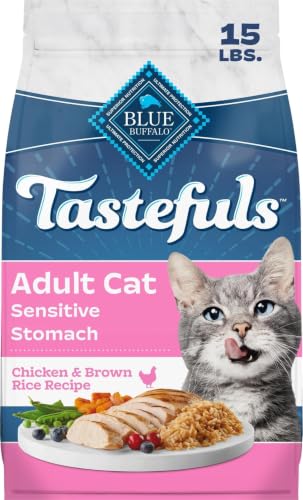
Blue Buffalo Tastefuls Sensitive Stomach Dry Cat Food
What We Like
- Real chicken as first ingredient
- Contains FOS prebiotic for digestion
- Includes Omega 3 & 6 fatty acids
- No corn, wheat, or soy
Trade-offs
- Contains grains like brown rice
- Not suitable for cats on a grain-free diet
Real chicken leads the ingredient list, which means your cat gets a high-quality protein source that supports muscle maintenance and energy. The inclusion of FOS prebiotic is the key feature here, as it helps support healthy digestion for adult cats with stomach sensitivities. The brown rice provides gentle, digestible carbohydrates, and the omega fatty acids support skin and coat health without adding unnecessary fillers.
This is a grain-inclusive formula, so if you’re looking for a grain-free option, you’d need to look elsewhere. The 15-pound bag is a standard size for dry cat food. Still, for a cat that needs digestive support without a complete overhaul of their diet, this Blue Buffalo recipe hits the right notes with real ingredients and targeted prebiotics.
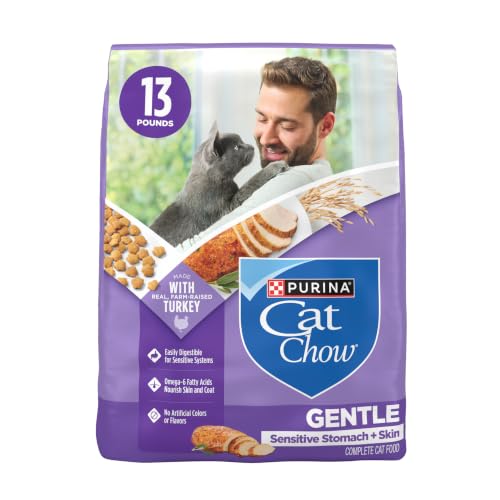
Purina Cat Chow Gentle Sensitive Stomach Dry Cat Food
What We Like
- Natural prebiotic fiber for digestive health
- Real farm-raised turkey as protein source
- No artificial colors or flavors
- Includes all 25 essential vitamins and minerals
Trade-offs
- Lacks the broader fatty acid profile of lamb-based formulas
- No probiotic strains for additional digestive support
Natural prebiotic fiber in this formula supports digestive health, and real farm-raised turkey provides a high-quality protein source. The recipe contains no artificial colors or flavors, and it includes all 25 essential vitamins and minerals for whole-body well-being. For a cat with a sensitive stomach, this is a straightforward option that focuses on digestibility and fiber.
The natural prebiotic fiber in this formula supports digestive health, so cats with sensitive stomachs can get the nutrition they need without discomfort. Omega-6 fatty acids nourish the skin and coat, while real farm-raised turkey provides a protein-rich foundation. The recipe includes no artificial colors or flavors, and it delivers all 25 essential vitamins and minerals for whole-body well-being.
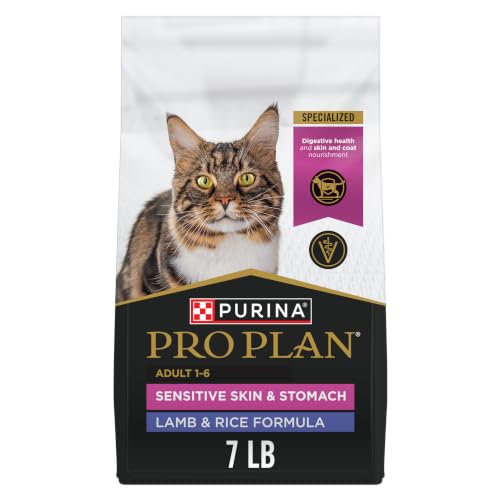
Purina Pro Plan Sensitive Skin & Stomach Dry Cat Food
What We Like
- Real lamb as first ingredient
- Guaranteed live probiotics for digestive health
- Rice and oat meal for easy digestion
- Omega-6 and vitamin A for skin and coat
Trade-offs
- 7 lb bag is smaller than some competitors
- Smaller bag size means more frequent reorders for multi-cat households
Real lamb leads the ingredients, so this formula prioritizes animal protein over cheap fillers. Rice and oat meal provide easily digestible carbohydrates, reducing the chance of undigested food fermenting in the gut and causing foul stool. The guaranteed live probiotics add another layer of digestive support, helping maintain a balanced gut microbiome that can cut down on odor. If your cat has a sensitive stomach that produces particularly smelly poop, this combination tackles the root cause rather than just masking symptoms.
At 7 pounds, this bag is smaller than many competitors like Blue Buffalo Tastefuls Sensitive Stomach (15 lb), so you’ll reorder more often if you have multiple cats. That said, if your main concern is reducing stool odor through targeted probiotic support and gentle ingredients, this is a focused, no-nonsense option that gets straight to the point.
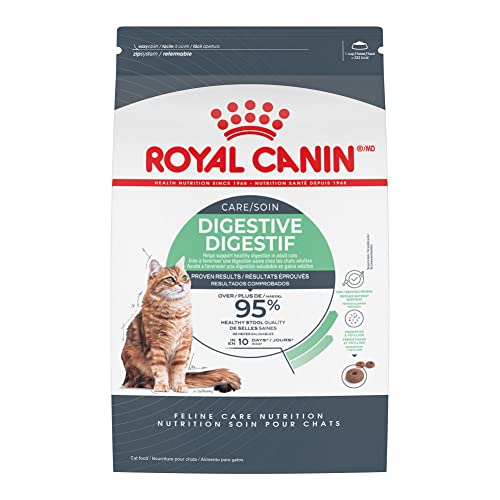
Royal Canin Digestive Care Adult Dry Cat Food
What We Like
- Ring-shaped kibble slows eating
- Prebiotics and fiber support digestion
- Pairs with wet food formulas
Trade-offs
- Requires 10 days for full effect
The ring-shaped kibble isn’t just for show, it encourages slower eating, which gives digestion a head start. This formula is built around prebiotics and dietary fiber, two ingredients that directly target gut health. If your cat’s sensitive stomach is the root of the odor problem, this addresses the cause rather than just masking the smell.
You’re committing to a 10-day trial before seeing the full benefit. That’s not instant gratification, but the data suggests it’s worth the wait. The 6 lb bag is on the smaller side, so frequent buyers might find themselves reordering sooner than with larger bags.
Blue Buffalo True Solutions Digestive Care Dry Cat Food
What We Like
- Clinically proven prebiotic fiber
- Real chicken as first ingredient
- No corn, wheat, or soy
- Vet-recommended formula
Trade-offs
- Only 3.5 lb bag size available
- Not suitable for cats needing a grain-inclusive diet
A clinically proven prebiotic fiber is the key feature here, that’s the ingredient directly tied to stool quality and digestive health, which is exactly what you want if smelly poop is the problem. Blue Buffalo puts real chicken first, skips corn, wheat, and soy, and the formula was developed by veterinarians and animal nutritionists. If your cat has a sensitive gut, this is a targeted, no-nonsense approach that focuses on the fiber source rather than marketing fluff.
The bag size is the catch: at 3.5 pounds, you’re buying a smaller quantity than many alternatives like Purina Cat Chow Gentle (13.2 lb) or Blue Buffalo Tastefuls Sensitive Stomach (15.2 lb). That makes it a premium-priced option per pound, but the clinical backing on the fiber is something those larger bags don’t offer. If your cat’s stool odor is stubborn and you want a formula built around a specific, proven ingredient, this is the one to try first.
Product photos
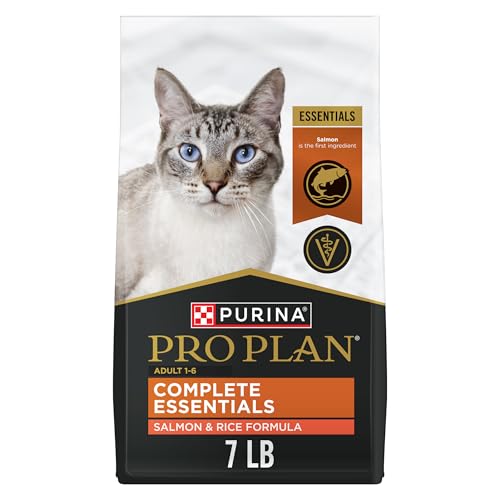
Purina Pro Plan Salmon & Rice Dry Cat Food
What We Like
- Real salmon as first ingredient
- Live probiotics for digestive health
- Prebiotic fiber supports intestinal bacteria
- Omega-6 for skin and coat
Trade-offs
- Salmon formula not for fish-averse cats
- Salmon formula not suitable for cats that avoid fish
Real salmon comes first in the ingredients, so this formula delivers a high-protein foundation that supports muscle maintenance and overall health. The natural prebiotic fiber and guaranteed live probiotics work together to nourish beneficial gut bacteria and promote digestive regularity, both critical when you’re trying to reduce litter box odor. For cat owners who want a straightforward protein-forward recipe with digestive support built in, this is a well-constructed option that doesn’t rely on gimmicks.
Real salmon is the first ingredient in this high-protein dry cat food, which means your cat gets a protein-rich meal from the start. The 7-pound bag is a practical size for a single cat household, and the formula includes both natural prebiotic fiber and guaranteed live probiotics to support digestive and immune health. Omega-6 fatty acids and vitamin A also help nourish skin and coat, so it’s a well-rounded option for everyday feeding.
Product photos
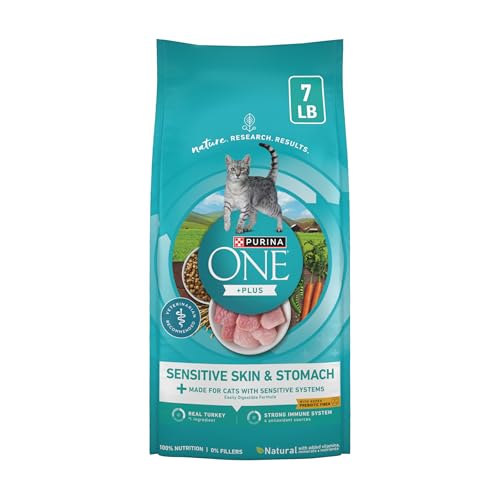
Purina ONE +Plus Sensitive Stomach Dry Cat Food
What We Like
- Real turkey as first ingredient
- Added prebiotic fiber for digestion
- Four antioxidant sources support immunity
- No artificial flavors or preservatives
Trade-offs
- Not suitable for cats needing a grain-free diet
- Lacks added probiotics found in some sensitive stomach formulas
Real turkey is the first ingredient here, which means the protein foundation is straightforward and muscle-supporting for your cat. This dry food is built around an easily digestible formula with added prebiotic fiber, so it’s aimed at cats with sensitive systems. The inclusion of calcium for teeth and gums and four antioxidant sources for immune support rounds out a no-nonsense nutritional profile. If you want a formula that prioritizes digestion without flashy marketing, this one gets straight to the point.
The ingredient list is clean, with no artificial flavors or preservatives, and the crunchy kibble texture helps with oral health in a basic way. It’s a practical, no-fuss option for a single cat with a touchy stomach.
Product photos
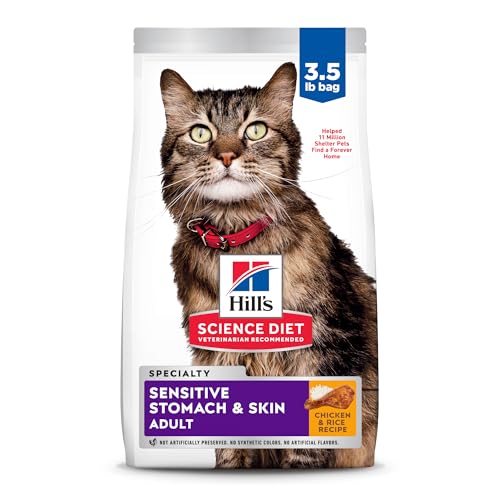
Hill's Science Diet Sensitive Stomach Dry Cat Food
What We Like
- Prebiotic fiber for gentle digestion
- Vitamin E and Omega-3 & 6 for skin
- Chicken is the #1 ingredient
- Made in the USA with trusted ingredients
Trade-offs
- Only 3.5 lb bag, smaller than many alternatives
- Targets sensitive stomachs, not specifically odor control
The #1 veterinarian-recommended brand brings you a dry cat food that puts digestibility first, with chicken as the top ingredient and prebiotic fiber to help nutrient absorption go easy on the stomach. Vitamin E and Omega-3 & 6 fatty acids work together for healthy skin and a shiny coat, while clinically proven antioxidants like Vitamins C and E support the immune system. It’s a complete and balanced recipe with 29 key nutrients, made in the USA from natural ingredients you can trust.
The main trade-off here is bag size: at 3.5 pounds, it’s smaller than Purina Cat Chow Gentle Sensitive Stomach’s 13.2-pound bag. So if you have multiple cats or a heavy eater, you’ll be reordering more often. That said, the formula’s focus on digestibility and 29 key nutrients means you’re paying for ingredient quality, not bulk. For someone whose cat has a truly sensitive stomach, this formula is designed to be gentle and easily digestible. It’s a straightforward pick that delivers on its label claims.
Product photos
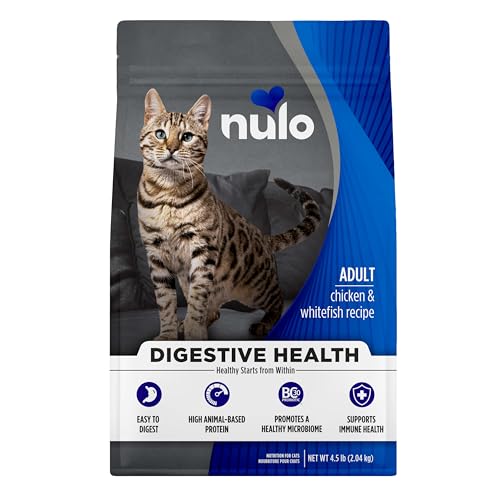
Nulo Digestive Health High Protein Dry Cat Food
What We Like
- 90% animal-based protein for lean muscle
- BC30 probiotic supports digestive health
- Natural prebiotic fiber from Miscanthus grass
- No grains, corn, soy, or artificial ingredients
Trade-offs
- Dry kibble only, no wet food option
- Not suitable for cats with grain-free preferences
Ninety percent of the protein comes from animal sources, so this food supports lean muscle and a healthy heart without relying on plant-based fillers. The BC30 probiotic and natural fibers from Miscanthus grass work together to aid digestive and immune health, which can help reduce litter box odor. It’s a straightforward formula for owners focused on gut health and high-quality protein.
This is a dry kibble, so if your cat needs wet food for hydration, you’ll have to supplement separately. Compared to Royal Canin Digestive Care, Nulo emphasizes its probiotic-prebiotic pairing and higher animal-protein content. It targets digestive health specifically, not a broad-spectrum solution.
Product photos
How We Evaluated Cat Foods For Smelly Poop
We started with the science of digestion. Stool odor is largely a byproduct of fermentation in the large intestine, and the best way to control it is to improve how food is broken down earlier in the gut. That meant we focused on fiber type, prebiotic and probiotic content, and protein digestibility, not marketing claims on the front of the bag.
The three criteria that mattered most were fiber composition, probiotic support, and protein source quality. Insoluble fiber adds bulk and moves waste through the system faster, reducing the time bacteria have to produce smelly gases. Soluble fiber feeds beneficial gut bacteria directly. Live probiotics, meanwhile, help colonize the gut with the right microorganisms. We also looked for whole animal proteins as first ingredients, since highly digestible protein leaves less undigested material for bacteria to act on.
This is a research-led evaluation, not a feeding trial. We read labels, cross-referenced manufacturer claims against published nutritional data, and looked for patterns in what owners of cats with smelly stool report working over time. A food that works for one cat may not work for another, individual gut microbiomes vary, but the formulas here share the structural features that digestive health research points to as most effective.
What To Look For In Cat Foods For Smelly Poop
Choosing a food to reduce stool odor comes down to understanding what happens inside your cat’s digestive tract. The key is to look for ingredients that support complete digestion and a healthy gut environment.
Look for named animal protein as the first ingredient, a source of prebiotic fiber (like beet pulp or FOS), and either added probiotics or ingredients that naturally support beneficial bacteria. Avoid vague meat meals and artificial additives.
Fiber Type and Source
Not all fiber is the same. Insoluble fiber (like cellulose) adds bulk and helps move stool through the colon faster, which can reduce odor simply by limiting fermentation time. Soluble fiber (like beet pulp, inulin, or FOS) feeds good bacteria and produces short-chain fatty acids that support gut health. The best formulas for odor control include a blend of both. Look for specific fiber sources on the ingredient list rather than generic “fiber” or “cellulose.”
Probiotics and Prebiotics
Prebiotics are food for the good bacteria already living in your cat’s gut. Probiotics are live bacteria added to the food. A formula with both, like the Nulo Digestive Health blend, gives the gut a double advantage. If you see “dried fermentation products” or specific strains like Bacillus coagulans (BC30) on the bag, that’s a sign the manufacturer has added live probiotics. Not all probiotics survive the kibble manufacturing process, so look for guaranteed levels on the label.
Protein Digestibility
The less protein that reaches the large intestine undigested, the less fuel bacteria have to produce smelly gases. Highly digestible animal proteins, chicken, turkey, lamb, or salmon listed as the first ingredient, are easier for cats to break down than plant-based proteins or meat meals from unnamed sources. A food that lists a specific animal protein first and avoids corn, wheat, and soy fillers is usually more digestible.
- Look for a named animal protein (chicken, turkey, lamb, salmon) as the first ingredient.
- Check for a specific prebiotic fiber source like beet pulp, FOS, or inulin.
- Seek guaranteed live probiotics if your cat has chronic digestive issues.
- Avoid generic “meat meal” or “poultry meal”, specific sources are more digestible.
- Choose formulas free of corn, wheat, and soy when possible.
A simple rule: if the ingredient list starts with a real animal protein and includes a named fiber source, you’re on the right track for reducing stool odor.
Cat Foods For Smelly Poop Compared
The table below compares all ten foods side by side on the features that matter most for reducing stool odor, fiber type, probiotic content, and protein source. This way you can see at a glance which formula fits your cat’s needs.
| Product | Protein Source | Fiber Type | Key Benefit | Weight |
|---|---|---|---|---|
| Royal Canin Indoor Adult Dry Cat Food | Highly digestible proteins | Optimal blend for hairball management | Odor control | 7.0 pounds |
| Blue Buffalo Tastefuls Sensitive Stomach Dry Cat Food | Real Chicken | FOS | Prebiotic support | 15.2 pounds |
| Purina Cat Chow Gentle Sensitive Stomach Dry Cat Food | Farm-raised turkey | Natural prebiotic fiber | Easily digestible | 13.2 pounds |
| Purina Pro Plan Sensitive Skin & Stomach Dry Cat Food | Real Lamb | Guaranteed Live Probiotics | Easily digestible | 3.5 pounds |
| Royal Canin Digestive Care Adult Dry Cat Food | N/A | Prebiotics and dietary fiber | Optimal stool quality | 6.0 pounds |
| Blue Buffalo True Solutions Digestive Care Dry Cat Food | Real Chicken | Clinically Proven Prebiotic Fiber | Digestive health | 3.5 pounds |
| Purina Pro Plan Salmon & Rice Dry Cat Food | Real salmon | Natural prebiotic fiber | Digestive health | 7.0 pounds |
| Purina ONE +Plus Sensitive Stomach Dry Cat Food | Real turkey | Prebiotic fiber | Easily digestible | 7.0 pounds |
| Hill's Science Diet Sensitive Stomach Dry Cat Food | Chicken | Prebiotic fiber | Highly digestible | 3.5 pounds |
| Nulo Digestive Health High Protein Dry Cat Food | 90% from animal sources | BC30 probiotic | Easy digestion | N/A |
Frequently Asked Questions
What ingredient in cat food causes smelly poop?
Low-quality protein sources and excess filler ingredients like corn, wheat, and soy are the most common culprits. When a cat’s digestive system can’t fully break down these ingredients, undigested material ferments in the colon and produces foul-smelling gas. Switching to a food with a named animal protein as the first ingredient and limited fillers often reduces odor significantly.
How long does it take for a new cat food to improve stool smell?
Most cats need a transition period of 7 to 10 days to adjust to a new food. The Royal Canin Digestive Care formula specifically notes that it takes about 10 days for its full effect on stool quality. You may notice some improvement in odor within a few days, but give the food at least two weeks before deciding whether it’s working.
Is wet or dry food better for smelly cat poop?
Both can work, but dry food is often more convenient for odor control because the kibble texture can include fiber blends and probiotics that survive the manufacturing process. Wet food has higher moisture content, which can help with overall digestion, but many of the best odor-control formulas are dry foods designed to be fed alone or mixed with wet food for variety.
Can probiotics in cat food really reduce stool odor?
Yes, when the probiotics are guaranteed live and present in sufficient amounts. Probiotics help balance the gut microbiome by crowding out odor-producing bacteria. Foods like Purina Pro Plan Sensitive Skin & Stomach and Nulo Digestive Health include specific probiotic strains with guaranteed levels, which gives them a better chance of surviving storage and reaching the gut alive.
What is the best protein for cats with smelly poop?
Highly digestible animal proteins like chicken, turkey, lamb, and salmon are best because they leave less undigested material for bacteria to ferment. Fish-based proteins like salmon can be particularly digestible for some cats, though others may be sensitive to fish. The key is choosing a single, named animal protein source and avoiding blends of unnamed meat meals.
The Bottom Line
If your cat’s litter box odor has become a daily problem, start with the Royal Canin Indoor Adult Dry Cat Food. It’s formulated specifically for indoor cats, whose lower activity levels and slower digestion can contribute to smellier stool. The fiber blend targets both odor and hairballs, making it a strong all-around choice for the most common scenario.
For cats with known sensitive stomachs, the Blue Buffalo Tastefuls Sensitive Stomach formula adds FOS prebiotic fiber to support digestion. Meanwhile, the Purina Pro Plan Sensitive Skin & Stomach delivers live probiotics for more direct gut support. If you want a grain-free option with a probiotic-prebiotic blend, the Nulo Digestive Health formula is worth a close look.
The single most important factor in reducing stool odor is digestibility. A food your cat can break down completely will always produce less smelly waste than one that leaves undigested protein to ferment. Read the ingredient list, check for a named animal protein first, and give the new food two weeks to work.
