
10 Best Cat Food For Nursing Mother in 2026
This post contains affiliate links. As an Amazon Associate, we earn from qualifying purchases.
The best overall cat food for nursing mothers is Royal Canin Mother and Babycat Wet Cat Food, with an ultra-soft mousse that eases the weaning transition and prebiotics that support digestive balance. For owners who prefer a rehydratable kibble, the Royal Canin Mother & Babycat Dry Cat Food offers the same developmental support in a different texture. The Fromm Kitten Gold Dry Cat Food earns the title of Best Family-Owned Recipe, thanks to its added probiotics.
A nursing mother cat needs significantly more calories, protein, and moisture than a typical adult cat. Her body is producing milk around the clock, and her nutritional reserves directly affect her kittens’ growth and immune development. Choosing a formula designed for lactation or growth is not optional, it is the single most important decision you will make during the first weeks postpartum.
This guide is research-based, drawing on manufacturer specifications, ingredient comparisons, and patterns in owner feedback. We focus on the nutrients that matter most for lactation and early kitten development: protein density, DHA for brain growth, digestibility, and moisture content. Each product was evaluated against these criteria, not marketing claims.
Top 10 Cat Foods For Nursing Mothers in the Market
Certain content that appears on this site comes from Amazon. This content is provided "as is" and is subject to change or removal at any time.
The Best Cat Foods For Nursing Mothers, Reviewed
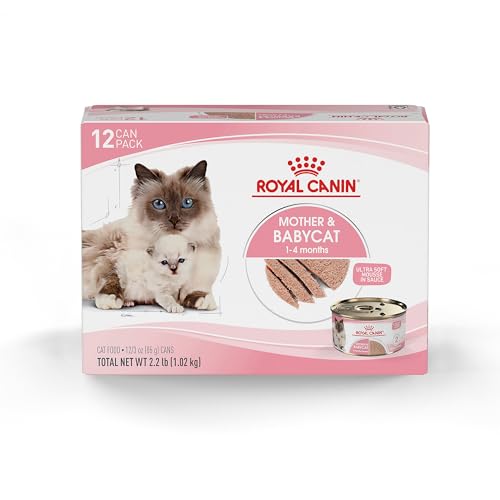
Royal Canin Mother and Babycat Wet Cat Food
What We Like
- Ultra soft mousse eases weaning transition
- Prebiotics support digestive microbiome balance
- Antioxidants help develop immune system
- Formulated for pregnant or nursing mothers
Trade-offs
- Wet food requires refrigeration after opening
- Only formulated for first 4 months of kittenhood
- Small 3 oz cans mean frequent feeding for multiple cats
The ultra soft mousse texture is the single most practical feature here. It’s soft enough for newborn kittens to eat without teeth, which makes the switch from milk to solid food far less stressful for both the queen and her litter. It also packs prebiotics and highly digestible proteins to keep the mother’s digestive system running smoothly while she’s under the extra demands of lactation, plus vitamins E and C to support the kittens’ developing immune systems during those fragile early weeks.
Because it’s a wet food, any leftovers from an opened can need to be refrigerated and used within a day or two. That’s something to keep in mind if you’re feeding multiple cats or prefer the convenience of dry kibble you can leave out. The ultra soft mousse texture is designed to be easy for baby teeth and to help with the transition from milk to solid food for newborn kittens, making it a good complement to the Royal Canin Mother & Babycat Dry Cat Food.
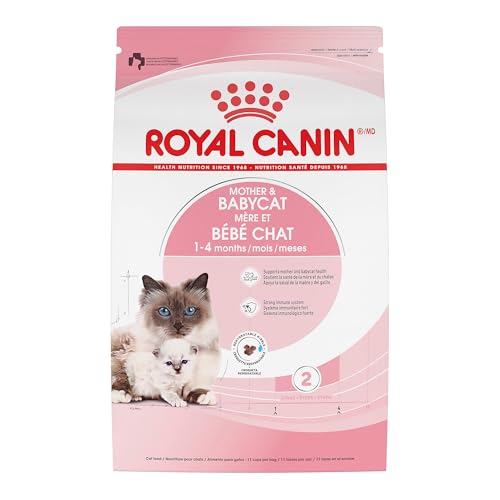
Royal Canin Mother & Babycat Dry Cat Food
What We Like
- Rehydratable kibble eases weaning transition
- Antioxidants support immune system development
- Prebiotics and digestible proteins aid digestive health
- Formulated for nursing mothers and kittens 1-4 months
Trade-offs
- Only covers kittens up to 4 months old
- Dry kibble needs moisture added for rehydration
A 6-pound bag of rehydratable kibble means you can soften the pieces for kittens just starting solid food, while still offering a crunchy texture for nursing mothers who need extra calories. The formula includes a blend of clinically proven antioxidants such as vitamins E and C to support immune development, plus prebiotics and highly digestible proteins to keep gut bacteria balanced. This makes it a practical choice for multi-cat households where a queen and her litter eat from the same bowl during the weaning period.
The trade-off is that this formula is designed only for kittens from 1 to 4 months, so you’ll need to switch to a different food once they outgrow that window. Compared to Fromm Kitten Gold, which is also formulated for pregnant and nursing cats, Royal Canin’s narrower window means more label-reading later. But if you want a kibble that doubles as a weaning tool and a mother’s maintenance diet in one bag, the rehydratable design delivers on that specific need.
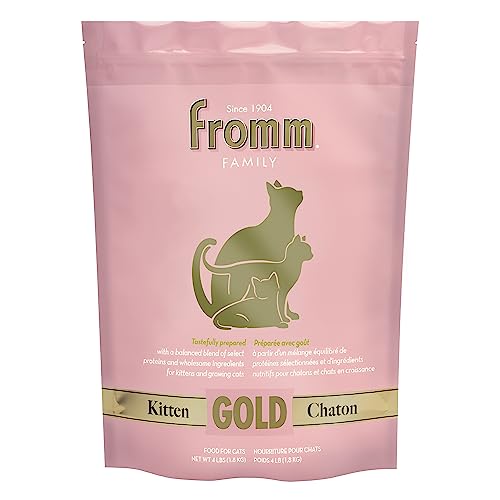
Fromm Kitten Gold Dry Cat Food
What We Like
- Formulated for nursing mothers and kittens
- High-quality chicken and duck protein
- Added probiotics for digestive health
- Family-owned company since 1904
Trade-offs
- Only one protein recipe available
- Not suitable for cats with poultry allergies
This dry food is formulated to meet AAFCO nutrient profiles for gestation, lactation, and growth, so it’s built to support a nursing queen’s increased nutritional demands and her kittens’ development. The chicken and duck provide highly digestible protein for tissue repair and milk production, while the added probiotics help maintain gut health during this stressful period. It comes from a family-owned operation with over a century of pet food experience, which appeals to label readers who value ingredient transparency over marketing hype.
Compared to the Royal Canin Mother and Babycat wet mousse, which is ultra-soft and highly palatable straight from the pouch, this dry formula requires a bit more coaxing for finicky cats. But if your queen is a good eater and you prefer a straightforward, protein-focused kibble from a long-standing independent brand, this is a practical choice.
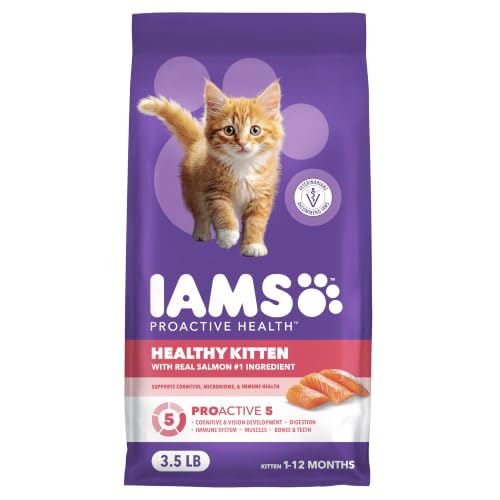
IAMS Proactive Health Kitten Dry Cat Food
What We Like
- Salmon is the #1 ingredient
- DHA omega-3 for brain development
- Vitamin E supports immune system
- Prebiotics for healthy digestion
Trade-offs
- Dry kibble only, no moisture for nursing mothers
- Formulated for kittens, not specifically for lactating queens
- Contains beet pulp, which some cats avoid
Real salmon is the first ingredient, so this kitten food puts a named animal protein front and center. For a growing kitten, that high-quality protein supports a developing body that loves to play. The DHA omega-3 targets brain and vision development, and the prebiotics and beet pulp aim to keep digestion smooth. Vitamin E adds immune support, which matters for a young cat whose immune system is still developing. This dry kibble covers the basics for kittens.
Veterinarians recommend IAMS Proactive Health Kitten Dry Cat Food for supporting whole-body health in kittens, with real salmon as the first ingredient and DHA omega-3 for brain and vision development. The formula includes prebiotics and beet pulp to support healthy digestion, plus Vitamin E to help develop a strong immune system. Compared to Royal Canin Mother and Babycat wet food, which is a soft mousse formulated for both queen and kittens, this dry kibble lacks the moisture content of wet food. For a dry option with real salmon as the first ingredient, it provides targeted nutrition for growing kittens.
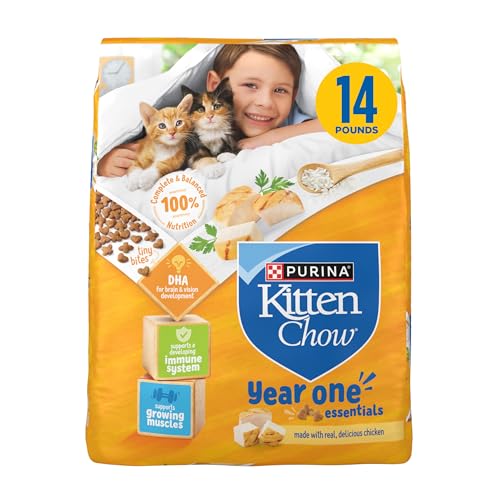
Purina Kitten Chow Year One Essentials Dry Food
What We Like
- 25% more protein for lean muscle growth
- DHA for brain and vision development
- Complete and balanced for first year
Trade-offs
- Dry food only, no moisture for nursing mothers
- Not formulated specifically for lactating queens
A 25% protein boost over adult formulas means this kibble is built for rapid growth, the kind of nutritional head start a kitten needs in its first year. For a nursing mother who’s weaning her litter, this dry food offers a straightforward, high-protein option that keeps energy up without guesswork.
The crunchy kibble texture works well for kittens already comfortable with dry food. In contrast to Royal Canin Mother & Babycat Dry Food, this Purina formula is a simpler, protein-focused choice for kittens in the growth phase. It’s not a specialized nursing mother formula, but for the growth phase, the protein and DHA numbers speak for themselves.
Product photos
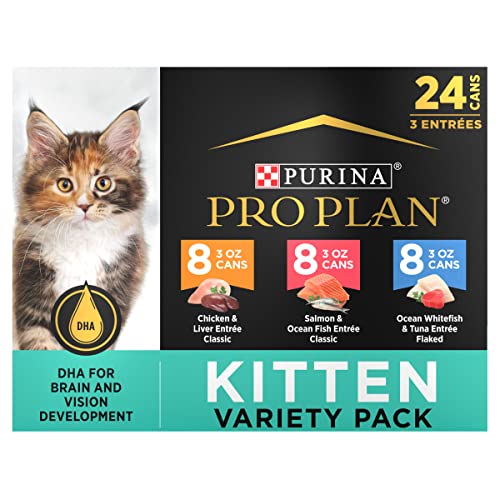
Purina Pro Plan Kitten Wet Food Variety Pack
What We Like
- DHA for brain and vision development
- High protein supports healthy growth
- Antioxidants support developing immune system
- Made in Purina-owned U.S. facilities
Trade-offs
- Wet food only; no dry option in this pack
- Contains taurine, which some owners avoid
The most decisive fact here is that each of the 24 cans includes DHA for brain and vision development and antioxidants for immune support, so you’re covering two critical kitten needs in every meal. Three protein sources. Chicken & Liver, Salmon & Ocean Fish, and Ocean Whitefish & Tuna, give kittens variety without forcing you to buy separate cases. The high protein content is specially formulated to support healthy growth during the first year, and the entire pack is made in Purina-owned U.S. facilities. If you want a wet food lineup that covers nutritional bases while keeping mealtime interesting, this pack does exactly that.
This is strictly wet food, so if you need a dry option for grazing, you’d have to buy a separate bag. Each 3-ounce can is a single serving, which means for a hungry kitten you might open multiple cans per meal, adding to prep time. That said, the variety pack format gives you three flavors to rotate, which can help prevent a picky eater from refusing meals, a real advantage when a kitten needs consistent nutrition.
Tiki Cat Baby Shreds Kitten Food Variety Pack

What We Like
- High protein supports muscle growth
- DHA for brain and vision development
- Grain-free with no fillers
- Variety pack with four recipes
Trade-offs
- Small 2.4 oz cans require multiple per feeding
- Not suitable for kittens under 8 weeks old
Each 2.4 oz can delivers a high-protein, grain-free formula with DHA for brain and vision development, plus added taurine and balanced calcium and phosphorus for healthy growth. That makes this variety pack a strong option for kittens 8 weeks and older who need rapid muscle development without fillers or artificial ingredients. The four-recipe mix. Chicken & Salmon, Chicken, Tuna & Chicken Liver, Chicken, Duck & Duck Liver, and Chicken & Egg, keeps mealtime interesting, and the prebiotics help gentle digestion, which is useful for growing kittens.
Portion size is a key consideration: at 2.4 ounces per can, a kitten with a hearty appetite may need more than one can per meal, which adds up quickly compared to larger wet food formats. Royal Canin Mother and Babycat Wet Cat Food comes in 3-ounce cans, offering a slightly bigger serving per can. If your kitten prefers a softer mousse texture, the shreds here might not be their favorite, though the high-protein, nutrient-dense recipe still delivers for muscle growth.
Product photos
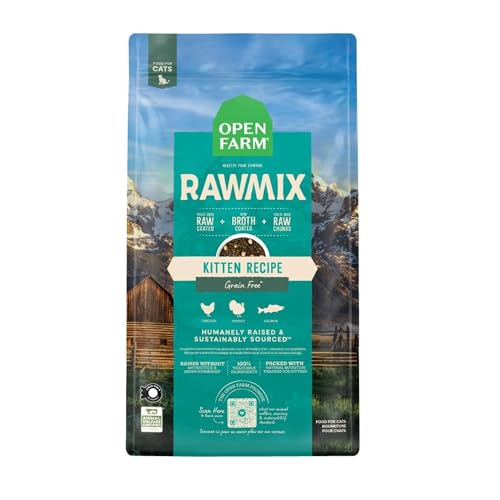
Open Farm RawMix Dry Cat Food for Kittens
What We Like
- Humanely raised, certified meats
- Freeze-dried raw chunks for variety
- High protein with organ meats
- Traceable, non-GMO ingredients
Trade-offs
- Small 2.25 lb bag for nursing mothers
- Not suitable for adult cats
The protein lineup here is chicken, turkey, and wild-caught salmon, three animal sources, plus nutrient-dense organ meats, all packed into a kibble that’s coated in bone broth and studded with freeze-dried raw chunks. That’s a lot of variety in one bowl, which can help keep a kitten eating well when her appetite is finicky. The meats carry G.A.P. and OceanWise certifications, so you’re not guessing where they came from. For someone who reads ingredient lists the way I do, the traceability and non-GMO produce are the kind of details that separate a thoughtful formula from a generic one.
The 2.25-pound bag means you’ll be reordering more often than with a 6-pound bag of Royal Canin Mother & Babycat Dry. That’s fine if you want to rotate proteins or keep the food fresher, but it’s a practical consideration for a multi-cat household. The freeze-dried raw chunks also mean you might want to transition slowly if the kitten isn’t used to that texture. It’s a premium approach to nutrition, one that rewards label readers who value ingredient sourcing over convenience.
Product photos
Tiki Cat Baby Kitten Wet Food Mousse & Shreds

What We Like
- Mousse & shreds texture eases milk-to-food transition
- High protein from real poultry sources
- DHA supports brain development
- Prebiotics aid gentle digestion
Trade-offs
- Small 1.9 oz cans mean frequent openings
- Not suitable for kittens under 4 weeks old
The mousse-and-shreds texture is the key feature here: it’s designed to help kittens move from nursing to solid food without upsetting tiny stomachs. With real chicken, salmon, and chicken liver as protein sources, plus added DHA for brain development and prebiotics for digestion, this formula targets the delicate weaning stage directly. It’s grain- and potato-free, which matters for sensitive systems, and the high-protein recipe supports growth without overloading a kitten’s gut. For a kitten starting to explore solids, this is a smart transitional option that prioritizes easy digestion over flashy marketing.
Portion size and packaging are worth noting: each can holds only 1.9 oz, and the pack contains just three cans, so you’ll be opening a lot of them during the weaning period. Still, if your priority is a gentle, high-protein transition food that’s easy on tiny digestive tracts, this Tiki Cat formula delivers exactly that.
Product photos
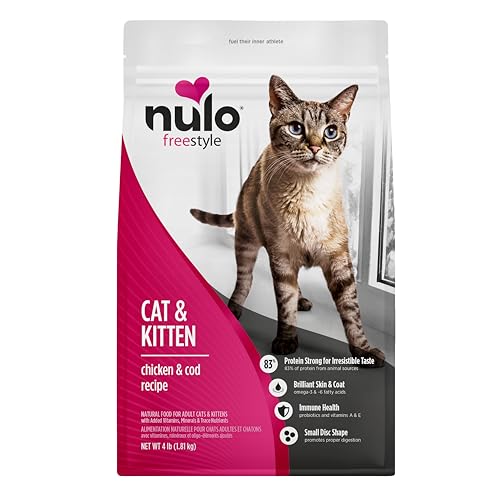
Nulo FreeStyle Grain-Free Dry Cat & Kitten Food
What We Like
- 83% animal-based protein from deboned chicken
- BC30 probiotics for digestive health
- Omega fatty acids for skin and coat
- Grain-free, no corn, wheat, or soy
Trade-offs
- Dry kibble only, no moisture for nursing queens
- No specific nursing mother formula adjustments
With 83% animal-based protein from real deboned chicken, this Nulo formula supplies the concentrated amino acids a nursing mother needs to maintain her own muscle while producing milk. The inclusion of BC30 probiotics, a spore-forming strain that survives stomach acid, means digestive support that actually reaches the gut, which is helpful when a queen’s appetite and digestion are under stress from lactation. Omega-3 and omega-6 fatty acids from fish also support skin and coat condition, something that can suffer during the demands of nursing.
This is a dry kibble, so it won’t contribute to the fluid intake a nursing cat needs. You’ll want to pair it with wet food or ensure fresh water is always available. Unlike Royal Canin Mother and Babycat Wet Cat Food, which is a high-moisture mousse designed specifically for queens, Nulo’s dry format requires more attention to hydration. For someone who prefers a grain-free, probiotic-rich dry food that works for all life stages, this is a reasonable choice, but it’s not a complete hydration solution on its own.
Product photos
How We Evaluated Cat Foods For Nursing Mothers
We started with the nutritional requirements specific to lactation. A nursing queen’s energy needs can triple during peak milk production, so we looked for formulas with elevated protein and fat levels, plus DHA for kitten brain and vision development. We cross-referenced each product’s guaranteed analysis against AAFCO growth and lactation nutrient profiles.
Moisture content was a critical factor. Nursing mothers need extra hydration to support milk production, and wet food delivers that naturally. We prioritized canned and rehydratable options while still evaluating dry kibble formulas that use high-quality proteins and probiotics. Owner feedback patterns helped us identify which products queens actually eat willingly, a picky eater is a problem when she needs maximum calories.
We also examined ingredient sourcing and company reputation. A product’s label tells you what is inside, but how that company handles quality control and recalls matters. Our evaluation is research-led, not tested in a lab, so we recommend checking the ingredient panel on any bag or can yourself and consulting your veterinarian before making a switch.
What To Look For In Cat Foods For Nursing Mothers
A nursing mother’s diet must support two bodies at once. The right formula delivers concentrated nutrition without upsetting her digestion or making her refuse to eat.
Look for a formula labeled for growth and reproduction, with high protein on a dry-matter basis, DHA for kitten brain development, and a texture your queen will actually eat. Moisture matters, wet food helps maintain milk supply.
Protein and Fat Density
Nursing mothers burn through calories fast. A diet designed for growth and lactation should provide high protein on a dry-matter basis, with fat content around 20-25% to meet her energy needs. Products labeled “kitten” or “all life stages” typically meet these levels, but check the guaranteed analysis. The Purina Kitten Chow Year One Essentials Dry Food, for example, offers 25% more protein than standard adult formulas, which supports lean muscle growth in both mother and kittens.
DHA and Brain Development
DHA is an omega-3 fatty acid critical for kitten brain and vision development, and it passes through the mother’s milk. Formulas that include DHA from fish oil or marine sources give kittens a measurable head start. The IAMS Proactive Health Kitten Dry Cat Food lists salmon as the first ingredient and adds DHA specifically for this purpose. If you are feeding a nursing mother, a DHA-fortified diet is worth paying more for.
Texture and Palatability
A queen who does not eat cannot produce milk. Soft textures like mousse, pâté, or shredded meat are often more appealing to a postpartum cat than hard kibble. The Tiki Cat Baby Kitten Wet Food Mousse & Shreds uses a dual texture that helps kittens transition from milk to solids while keeping the mother interested. For queens that prefer dry food, rehydratable kibble like the Royal Canin Mother & Babycat Dry Cat Food softens when mixed with warm water, mimicking the moisture content of wet food.
- Check the label for “complete and balanced for growth and reproduction” or “all life stages.”
- Look for DHA from a named source (fish oil, salmon oil) rather than generic “omega-3.”
- Choose a texture your cat has eaten before, do not experiment with a new texture during lactation.
- Confirm the formula is calorie-dense enough for her increased needs; compare kcal per cup or can.
- Avoid formulas with artificial colors, flavors, or preservatives that add no nutritional value.
A nursing mother should eat as much as she wants, whenever she wants, for as long as she is nursing.
Cat Foods For Nursing Mothers Compared
The table below compares the key nutritional specs and feeding features of each product so you can see at a glance which formula fits your queen’s needs.
| Product | Form | Protein Sources | Key Nutrients | Size |
|---|---|---|---|---|
| Royal Canin Mother and Babycat Wet Cat Food | Ultra Soft Mousse | Prebiotics & Digestible Proteins | Vitamins E and C | 3 oz cans, pack of 12 |
| Royal Canin Mother & Babycat Dry Cat Food | Rehydratable Kibble | Antioxidants, prebiotics, digestible proteins | Antioxidants, prebiotics, digestible proteins | 6.0 pounds |
| Fromm Kitten Gold Dry Cat Food | Dry kibble | Chicken & duck | Probiotics | 4 lb bag |
| IAMS Proactive Health Kitten Dry Cat Food | Dry kibble | Salmon #1 ingredient | DHA Omega-3, Vitamin E, prebiotics & beet pulp | 3.5 lb |
| Purina Kitten Chow Year One Essentials Dry Food | Crunchy dry kibble | Real farm-raised chicken | DHA | 14 lb bag |
| Purina Pro Plan Kitten Wet Food Variety Pack | Wet food pate | Chicken & Liver, Salmon & Ocean Fish, Ocean Whitefish & Tuna | DHA, antioxidants, 25 vitamins & minerals | 3 oz |
| Tiki Cat Baby Shreds Kitten Food Variety Pack | Shreds | Chicken, Salmon, Duck, Egg | DHA, taurine, prebiotics | 2.4 oz cans, 12-pack |
| Open Farm RawMix Dry Cat Food for Kittens | Freeze-dried raw chunks in kibble | Chicken, turkey, salmon | Bone broth coated kibble | 2.25 lb bag |
| Tiki Cat Baby Kitten Wet Food Mousse & Shreds | Mousse & Shreds | Chicken, Salmon & Chicken Liver | DHA, taurine, prebiotics | 1.9 oz Can, 3ct |
| Nulo FreeStyle Grain-Free Dry Cat & Kitten Food | Dry kibble | Deboned chicken, 83% animal-based | Omega-3 & Omega-6, taurine, biotin | 4 lb bag |
Frequently Asked Questions
Can nursing mother cats eat regular adult cat food?
No. Regular adult cat food does not have enough calories, protein, or DHA to support lactation and kitten development. A formula labeled for growth and reproduction or all life stages is necessary during nursing.
How much should I feed a nursing mother cat?
A nursing queen may need two to three times her normal food intake, especially during peak milk production around weeks three and four. Free-feeding is recommended, leave food available at all times and let her eat as much as she wants.
When should I switch a nursing cat to kitten food?
Switch to a growth formula as soon as you confirm pregnancy, ideally by the fourth week of gestation. This gives her body time to build nutritional reserves before the kittens arrive. Continue the high-calorie diet until all kittens are fully weaned.
Is wet or dry food better for a nursing mother cat?
Wet food is generally better because the high moisture content supports milk production and helps prevent dehydration. A combination of wet and dry food works well, wet food for hydration and palatability, dry food for free-feeding convenience.
How long does a mother cat need special food?
A nursing mother should eat a growth or lactation formula from the time kittens are born until at least two weeks after they are fully weaned, which is typically around 10 to 12 weeks postpartum. Some queens benefit from staying on kitten food a bit longer to rebuild their own body condition.
The Bottom Line
The Royal Canin Mother and Babycat Wet Cat Food is the best overall choice for nursing mothers because it addresses the two biggest challenges of postpartum feeding: palatability and digestibility. The ultra-soft mousse texture encourages queens to eat when their appetite may be low, and the prebiotics support the digestive microbiome during a period of stress. It is designed specifically for the first four months of kittenhood, which covers the entire nursing window.
If your queen prefers dry food or you need something that can sit in a bowl without refrigeration, the Royal Canin Mother & Babycat Dry Cat Food offers the same nutritional philosophy. Its rehydratable kibble makes it easy for kittens to chew. For owners who want a family-owned brand with a straightforward ingredient list, the Fromm Kitten Gold Dry Cat Food delivers quality protein and probiotics without unnecessary additives.
The single most important factor is choosing a formula that your cat will actually eat consistently. A nutritionally perfect diet does nothing if the bowl stays full. Start with a texture and protein source your queen already likes, then verify the label meets her increased needs for calories, protein, and DHA. Your veterinarian can help you adjust portion sizes as lactation progresses.
