
10 Best Cat Food For Gastrointestinal Problems in 2026
This post contains affiliate links. As an Amazon Associate, we earn from qualifying purchases.
The best cat food for gastrointestinal problems is Hill’s Prescription Diet GI Biome Dry Cat Food. Its ActivBiome+ technology supports the gut microbiome and helps promote regular stool in as little as 24 hours. For cats that need wet food for hydration, the Royal Canin Veterinary Gastrointestinal Wet Cat Food takes the top spot, while the Royal Canin Digestive Care Dry Cat Food leads for improving stool quality.
A cat with digestive issues presents a frustrating puzzle: loose stools, vomiting, or a cat that simply stops eating. The cause could be anything from a food sensitivity to inflammatory bowel disease, and guessing wrong means more discomfort for your cat and more cleanup for you.
We built this guide by analyzing manufacturer specifications, veterinary nutrition guidelines, and patterns in owner-reported outcomes across dozens of formulas. Our focus stayed on ingredients that actually support digestion, prebiotics, probiotics, hydrolyzed proteins, and highly digestible protein sources, rather than marketing claims on the front of the bag.
Top 10 Cat Foods For Gastrointestinal Problems in the Market



Certain content that appears on this site comes from Amazon. This content is provided "as is" and is subject to change or removal at any time.
The Best Cat Foods For Gastrointestinal Problems, Reviewed
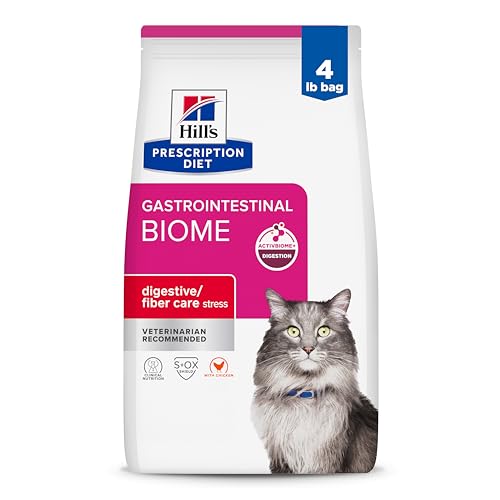
Hill's Prescription Diet GI Biome Dry Cat Food
What We Like
- ActivBiome+ supports healthy gut microbiome
- Helps promote regular stool in as little as 24 hours
- Contains hydrolyzed casein and L-tryptophan to help reduce stress
Trade-offs
- Requires vet consultation before use
- Only available in one chicken recipe
It’s a prescription diet, so your vet needs to sign off, but the formulation is built around the kind of targeted support you want when the problem is chronic.
The trade-off is that you’re locked into dry kibble, which can be less appealing for cats that prefer the moisture and texture of wet food. Compared to Royal Canin’s Gastrointestinal Wet Food, this Hill’s formula offers the convenience of a shelf-stable bag, but it won’t provide the extra moisture that some cats need. If your cat is a picky eater or needs additional hydration, you might consider mixing or alternating with a wet option. Still, for straightforward digestive support with a fast-acting formula, this is a well-designed dry food.
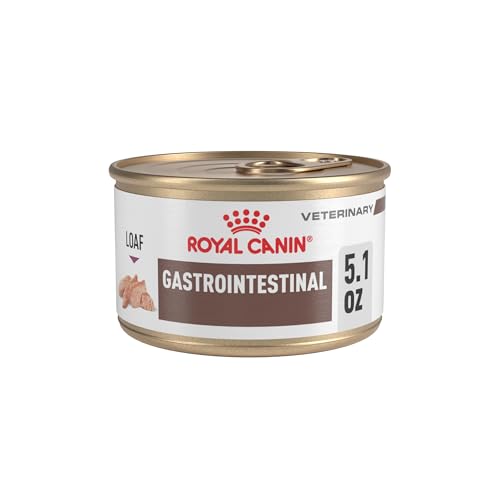
Royal Canin Veterinary Gastrointestinal Wet Cat Food
What We Like
- Veterinary-exclusive formula for digestive sensitivities
- Highly digestible proteins and balanced fibers
- Prebiotics support intestinal and microbiome health
- High energy content aids underweight cats
Trade-offs
- Only available as wet food, not dry
- Only for cats with digestive issues, not general use
This wet food delivers 60% more energy than Royal Canin’s Gastrointestinal Moderate Calorie version, making it a good option for underweight cats or those with a reduced appetite. The highly digestible proteins and balanced fibers reduce the workload on a sensitive gut, while selected prebiotics support intestinal and microbiome health. For a cat that needs to regain weight while managing digestive sensitivities, this formula addresses both the energy deficit and the need for gentle nutrition.
Because this is a veterinary-exclusive wet food, you’ll need a vet’s guidance to get it, which makes sense for cats with diagnosed digestive issues. For a cat that needs short- or long-term digestive support and higher calorie intake, the targeted formulation here is hard to beat.
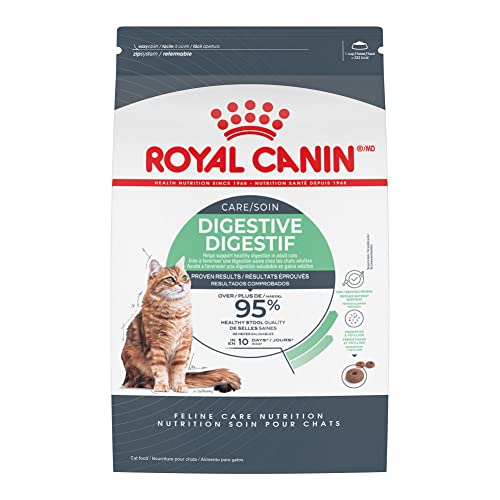
Royal Canin Digestive Care Dry Cat Food
What We Like
- Ring-shaped kibble encourages slower eating
- Prebiotics and fiber support digestive health
- 95% healthy stool quality in 10 days
- Formulated for adult cats with sensitive stomachs
Trade-offs
- Results measured after 10 days
- Not suitable for kittens or senior cats
A 95% healthy stool quality rate after 10 days is the kind of specific claim that makes a label-reader pause and check the math. Royal Canin backs it with an internal study, and the ring-shaped kibble is a clever mechanical trick to slow down cats who inhale their food. For a cat whose stool consistency is the main concern, this dry formula delivers a targeted solution with prebiotics and fiber working together to firm things up. It’s a practical pick for owners who want predictable results without guessing which ingredient is causing the trouble.
This is strictly a dry food, so if your cat needs extra hydration or prefers wet texture, you’ll be mixing in their Digestive Care wet formula separately. Compared to other digestive-support dry foods, Royal Canin’s approach combines slower eating with a precise fiber balance. That works well for cats with stool issues that don’t require prescription intervention, but for severe gastrointestinal cases, a veterinary diet might be more appropriate. Either way, the stool quality data gives you a concrete benchmark to watch for.
Blue Buffalo True Solutions Digestive Care Dry Cat Food
What We Like
- Real chicken as first ingredient
- Clinically proven prebiotic fiber
- No chicken by-product meals
- Vet-recommended high-protein formula
Trade-offs
- Only one bag size available
- Not suitable for cats needing wet food
Real chicken is the very first ingredient, which gives this dry food a protein base that supports muscle maintenance while the clinically proven prebiotic fiber targets stool quality and digestive health directly. That combination makes it a strong option for cat owners who want a high-protein diet without sacrificing gastrointestinal support, especially since it avoids corn, wheat, and soy that can trigger sensitivities in some cats.
This 3.5-pound bag is smaller than the 6-pound bag of Royal Canin Digestive Care Dry Cat Food, so you may need to buy more frequently if you have multiple cats or a heavy eater.
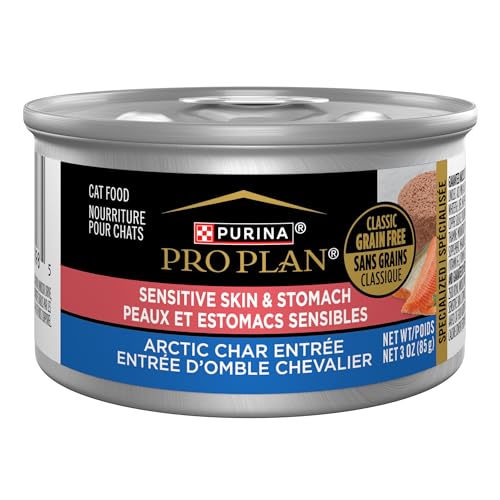
Purina Pro Plan Sensitive Skin & Stomach Wet Cat Food
What We Like
- Natural prebiotic fiber for digestion
- No artificial colors or preservatives
- Includes 25 essential vitamins and minerals
Trade-offs
- Not a veterinary diet for severe GI issues
- Not suitable for cats with severe medical GI conditions
This is a wet food that keeps the ingredient list short and the focus on what helps a sensitive stomach, which makes it a sensible starting point for cats who need gentle nutrition.
Pate texture isn’t for every cat, some prefer shreds or chunks, and if your cat turns up its nose, you’re stuck with 24 cans. Compared to the Royal Canin Veterinary Gastrointestinal Wet Cat Food, which comes in a larger 5.1 oz can and is formulated for digestive sensitivity support, this Purina option is a non-veterinary diet. It’s a good fit for cats with mild sensitivity, but for chronic or severe cases, a veterinary diet might be the better call.
Wellness CORE+ Digestive Health Pate Wet Cat Food
What We Like
- Prebiotic fiber supports gut health
- Grain-free with no corn, wheat, or soy
- Real salmon or whitefish as first ingredient
Trade-offs
- Wet food requires refrigeration after opening
- No dry food option for dental health
Prebiotic fiber supports gut health in this grain-free pate, which skips corn, wheat, and soy. The smooth texture is designed for easy eating, and real salmon or whitefish is the first ingredient. It’s a clean-label wet food that focuses on digestive support without added carrageenan, artificial colors, or preservatives.
Flavor variety is limited: you get salmon and whitefish, but no poultry or red meat options, so a cat that turns up its nose at seafood may leave you with half a case. Compared to Hill’s Prescription Diet GI Biome dry kibble, this Wellness pate is a grain-free wet alternative that adds moisture to the diet and uses prebiotic fiber for digestive health.
Product photos
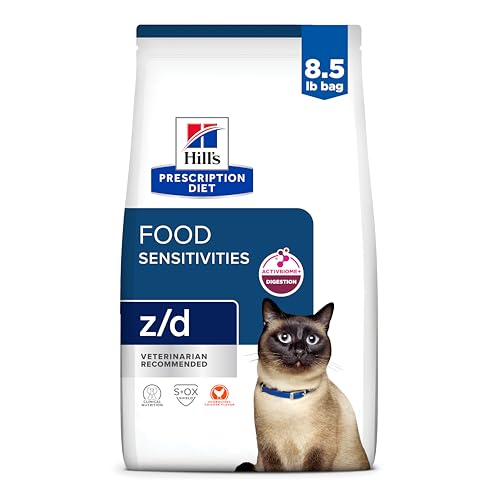
Hill's Prescription Diet z/d Dry Cat Food
What We Like
- Omega-6 & 3 fatty acids support skin health
- Formulated to improve stool quality
- Hydrolyzed proteins avoid immune detection
Trade-offs
- Single hydrolyzed chicken protein limits variety
- Prescription diet requires veterinary authorization
You’re locked into a single protein source and a prescription-only purchase, so it’s not a grab-and-go option for mild or occasional stomach issues. Compared to Hill’s own GI Biome formula, which focuses on fiber and digestive care, z/d is built specifically for immune-mediated food reactions. It’s a more specialized tool, and that’s exactly the point. If your vet has pinpointed a food sensitivity, this is the logical next step.
Product photos
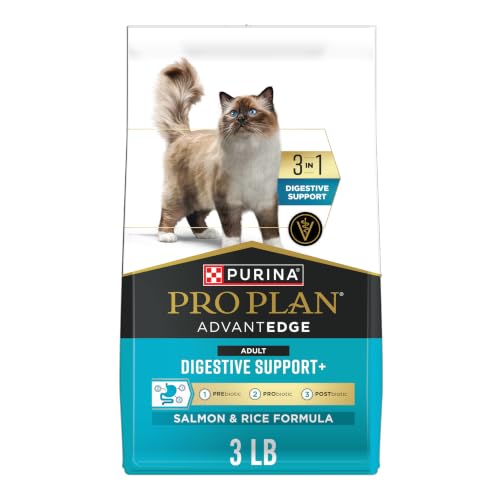
Purina Pro Plan AdvantEDGE Digestive Support Dry Cat Food
What We Like
- Real salmon as first ingredient
- Prebiotics, probiotics, and postbiotics included
- Highly digestible formula
- Backed by decades of veterinary research
Trade-offs
- Only available in 3 lb bag size
- Not suitable for cats with fish allergies
Purina Pro Plan AdvantEDGE Digestive Support Dry Cat Food delivers 3-in-1 digestive support with prebiotics, probiotics, and postbiotics in a highly digestible formula. Real salmon is the first ingredient, providing a protein source that supports digestive and immune health. The formula is backed by decades of Purina research and is 100% complete and balanced for adult cats, with no artificial colors or flavors. For cat owners seeking a science-backed, non-prescription digestive support food, this is a straightforward choice that covers the basics.
The 3 lb bag size means you may need to reorder more frequently than with larger bags from some competitors, such as Royal Canin Digestive Care which offers a 6 lb option. For single-cat households, this is manageable. The rice-based formula is generally gentle, but if your cat has a known grain sensitivity, you might consider a grain-free alternative. For most cats with general digestive issues, this is a straightforward, science-backed choice.
Product photos
Purina Pro Plan Veterinary Diets HA Hydrolyzed Dry Cat Food
What We Like
- Hydrolyzed protein for sensitive stomachs
- Single carbohydrate source aids digestion
- St/Ox Defense supports urinary health
- Antioxidants support immune health
Trade-offs
- Only one protein source limits variety
- Veterinary diet requires vet approval
A single carbohydrate source and hydrolyzed protein mean this kibble strips away most of the guesswork for a cat with a sensitive gut. The formula uses hydrolyzed protein sources to promote optimal nutrient absorption, and the St/Ox Defense system promotes a urinary environment unfavorable to the development of both struvite and calcium oxalate crystals. For a cat that needs a clean, low-variable diet to settle chronic digestive issues, this formula gives you a tightly controlled ingredient list without sacrificing palatability.
The hydrolyzed protein sources in this cat food make it a precise tool for elimination diets when you suspect a food sensitivity. It uses a single carbohydrate source and is highly digestible to promote optimal nutrient absorption, which is exactly what you need when ruling out triggers. For cats with a suspected protein allergy, this targeted approach is cleaner than a general digestive formula.
Product photos
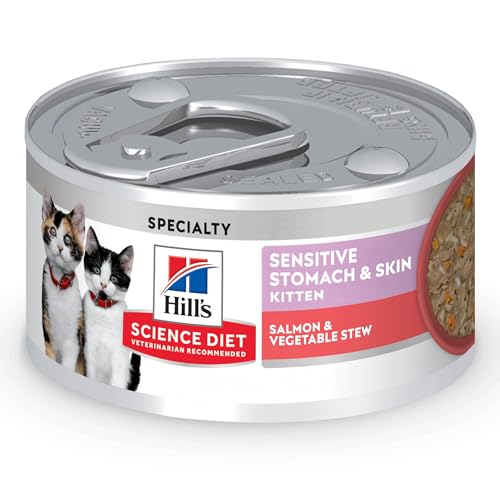
Hill's Science Diet Kitten Sensitive Stomach & Skin Wet Cat Food
What We Like
- Triple support for stomach, skin, immune system
- Highly digestible formula for gentle digestion
- Enriched with Vitamin E and Omega-3 & 6
- Clinically proven antioxidants Vitamin C+E
Trade-offs
- Wet food only, no dry option for dental health
- Designed for kittens, not adult cats
- Limited to one flavor variety in this pack
A highly digestible formula that is gentle on the stomach means this wet food is built for kittens with sensitive digestion, allowing optimal nutrient absorption without upset. The triple support for stomach, skin, and immune system health makes it a well-rounded choice for young cats who need more than just basic nutrition. With added Vitamin E and Omega-3 & 6 fatty acids, it also supports healthy skin and a shiny coat, which is a nice bonus when you’re already dealing with a finicky eater. Hill’s Pet Nutrition is the US Veterinarians’ #1 recommended brand, so you’re choosing a brand that vets trust most.
The 24-pack provides a month’s supply for a single kitten, so you won’t need to reorder every week. This is a wet-only formula, so if you prefer dry food for convenience or dental benefits, you’ll need to look elsewhere. For a kitten that needs gentle, complete nutrition from a brand that US veterinarians recommend most, this is a solid fit, but it won’t cover every cat’s needs.
Product photos
How We Evaluated Cat Foods For Gastrointestinal Problems
We started by cross-referencing manufacturer nutritional data against established veterinary guidelines for managing feline digestive conditions. This meant looking at guaranteed analysis sheets, ingredient lists, and published feeding trials where available. We also reviewed patterns in owner feedback to understand which formulas consistently produced better stool quality and fewer digestive episodes.
Three criteria carried the most weight. First, the type and source of fiber, prebiotics like inulin and psyllium matter more than crude fiber percentages for most GI issues. Second, protein digestibility: hydrolyzed proteins score higher because they bypass immune detection, while single-source novel proteins reduce the chance of triggering a reaction. Third, the presence of probiotics or postbiotics directly supports the gut microbiome that drives most digestive health.
A research-led evaluation has limits. We did not run feeding trials or analyze stool samples. Our conclusions come from published data and what owners consistently report working for their cats. For a cat with chronic or severe symptoms, a veterinarian’s guidance should always come before any food choice. For a deeper look at the full category, see our guide on digestive problems in cats.
What To Look For In Cat Foods For Gastrointestinal Problems
Every bag or can of cat food for sensitive stomachs should be judged on its ingredient list, not its label claims. The key is understanding which components actually help a troubled digestive system.
Look for a single, highly digestible protein source, a prebiotic fiber (inulin, psyllium, or beet pulp), and added probiotics or postbiotics. Avoid vague “meat meal” and artificial additives. For chronic issues, a hydrolyzed protein diet is the standard of care.
Protein Source and Digestibility
The protein in a GI-support diet must be easy to break down and unlikely to trigger an immune response. For cats with confirmed food allergies, hydrolyzed proteins, broken into fragments too small for the immune system to detect, are the gold standard. Hill’s Prescription Diet z/d and Purina Pro Plan Veterinary Diets HA both use this approach.
For cats with milder sensitivities, a single novel protein like Arctic char or rabbit reduces the odds of a reaction. Always check that the named protein is the first ingredient, not a by-product meal. If your cat has a suspected protein sensitivity, our guide on limited ingredient diets explains the trade-offs between hydrolyzed and novel protein approaches.
Fiber and Prebiotic Content
Fiber in a GI diet serves two jobs: bulking loose stool and feeding beneficial gut bacteria. Look for prebiotic fibers like inulin (from chicory root), psyllium, or beet pulp rather than generic “cellulose.” The Royal Canin Digestive Care formula uses a precise fiber blend. It produced 95% healthy stool quality in 10 days.
Probiotics add live bacteria to the gut, while postbiotics (like those in Purina Pro Plan AdvantEDGE) provide the beneficial compounds those bacteria produce without needing live cultures. For a full breakdown of which formulas include these components, see our comparison of cat food for sensitive stomachs.
Wet vs. Dry Format
Cats with GI problems often need extra moisture to stay hydrated, especially if they are vomiting or have diarrhea. Wet food provides that moisture and is typically easier to digest than dry kibble. However, dry food has advantages: the ring-shaped kibble in Royal Canin Digestive Care slows eating, and dry formulas can pack more fiber per calorie.
The right choice depends on your cat’s specific symptoms. A cat with chronic loose stool may benefit from the fiber density of a dry food, while a cat that vomits dry kibble needs the gentler texture of a pate.
- Check whether the formula is a veterinary diet, these require a vet’s approval and are designed for diagnosed conditions, not general sensitivity.
- Look for the phrase “highly digestible” on the label, which indicates the protein and carbohydrate sources are selected for easy breakdown.
- Avoid formulas with carrageenan, guar gum, or artificial colors, which can irritate sensitive guts.
- If your cat has IBD specifically, review our IBD feeding guide for transition protocols.
A cat with chronic GI issues should never be switched between foods rapidly. Plan a transition over several days to a week and a half, and keep a stool diary to track what works.
Cat Foods For Gastrointestinal Problems Compared
The table below compares all 10 formulas across protein source, fiber type, format, and prescription status so you can match the right food to your cat’s specific digestive needs.
| Product | Form | Key Ingredients | Weight |
|---|---|---|---|
| Hill's Prescription Diet GI Biome Dry Cat Food | Dry kibble | Hydrolyzed casein, L-tryptophan, ActivBiome+ | 4.0 lb bag |
| Royal Canin Veterinary Gastrointestinal Wet Cat Food | Wet cat food | Highly digestible proteins, Prebiotics, omega-3s (EPA+DHA) | 5.1 oz, 24-pack |
| Royal Canin Digestive Care Dry Cat Food | Dry kibble | Prebiotics and dietary fiber | 6 lb bag |
| Blue Buffalo True Solutions Digestive Care Dry Cat Food | Dry cat food | Real Chicken First, Clinically Proven Prebiotic Fiber | 3.5 lb |
| Purina Pro Plan Sensitive Skin & Stomach Wet Cat Food | Wet cat food | Real Arctic char, Natural prebiotic fiber | 3 oz, 24 cans |
| Wellness CORE+ Digestive Health Pate Wet Cat Food | Wet cat food | Salmon and Whitefish, Prebiotic fiber, Omega 3 | 12 x 3 oz cans |
| Hill's Prescription Diet z/d Dry Cat Food | Dry cat food | Hydrolyzed Chicken, ActivBiome+ Digestion | 8.5 lb |
| Purina Pro Plan AdvantEDGE Digestive Support Dry Cat Food | Dry cat food | Salmon, Prebiotics, probiotics, postbiotics | 3 lb |
| Purina Pro Plan Veterinary Diets HA Hydrolyzed Dry Cat Food | Dry cat food | Hydrolyzed protein sources, Single carbohydrate source | 4.1 pounds |
| Hill's Science Diet Kitten Sensitive Stomach & Skin Wet Cat Food | Wet cat food | Vitamin E, Omega-3 & 6 | 4.2 pounds |
Frequently Asked Questions
What is the best cat food for gastrointestinal problems?
The best overall option is Hill’s Prescription Diet GI Biome Dry Cat Food, which uses ActivBiome+ technology to support the gut microbiome and can promote regular stool in as little as 24 hours. For cats that need wet food, Royal Canin Veterinary Gastrointestinal Wet Cat Food is the top choice.
Can I give my cat over-the-counter digestive food without a vet prescription?
Yes. Several non-prescription options like Royal Canin Digestive Care and Blue Buffalo True Solutions Digestive Care are available without a vet visit. However, if your cat has chronic vomiting, diarrhea, or weight loss, a veterinary diagnosis should come first because the underlying cause may require a prescription diet.
What is the difference between hydrolyzed protein and novel protein cat food?
Hydrolyzed protein is broken into fragments so small the immune system does not recognize them, making it ideal for cats with suspected food allergies. Novel protein diets use a single protein source the cat has never eaten before, like rabbit or venison. Hydrolyzed diets are typically prescription-only and more reliable for elimination trials. For cats with diarrhea specifically, our guide on cat food for diarrhea covers both approaches.
How long does it take for a new cat food to improve digestive issues?
Most formulas show improvement in stool quality within a week and a half. Royal Canin Digestive Care reports over 95% healthy stool quality at the ten-day mark. If you see no improvement after two weeks, or if symptoms worsen, consult your veterinarian.
Should I choose wet or dry food for a cat with gastrointestinal problems?
It depends on the symptom. Wet food provides hydration and is gentler on the stomach, making it better for cats that vomit or have reduced appetite. Dry food can deliver more fiber per serving and the kibble shape can slow eating. Some cats do best on a combination, but switching between formats should be done gradually.
The Bottom Line
For most cats with gastrointestinal problems, Hill’s Prescription Diet GI Biome Dry Cat Food is the best starting point. Its ActivBiome+ technology addresses the gut microbiome directly, and the added hydrolyzed casein and L-tryptophan help reduce stress-related digestive upset. This is the formula to try first if your cat has chronic loose stool or irregular bowel movements.
If your cat needs wet food for hydration or is underweight, the Royal Canin Veterinary Gastrointestinal Wet Cat Food delivers high energy density and highly digestible proteins. For owners who want a non-prescription option focused on stool quality, the Royal Canin Digestive Care Dry Cat Food has the best published results. Cats with confirmed food allergies should go straight to the hydrolyzed protein formulas from Hill’s or Purina Pro Plan Veterinary Diets.
The single most important factor in managing feline digestive problems is consistency. Pick one formula, transition slowly over several days to a week and a half, and give it time to work. Jumping between foods every few days will only make the problem worse.
