
6 Best Bird Seed For Southern California in 2026
This post contains affiliate links. As an Amazon Associate, we earn from qualifying purchases.
The Kaytee Western Regional Wild Bird Seed is the best overall pick for Southern California birders because it was field tested by university researchers and preferred 3-to-1 over black oil sunflower by regional birds. For a budget-friendly large bag, the Wagner’s Western Regional Blend delivers a 20-pound option, while the Nature Anywhere No Mess Sunflower Hearts Blend keeps patios tidy.
Southern California’s unique mix of coastal, chaparral, and desert habitats means the birds at your feeder are different from those in the Midwest or Northeast. A generic national blend often includes milo or wheat that local songbirds ignore, leaving you with wasted seed and messy hulls.
This guide is research-based, drawing on manufacturer specifications, expert round-ups, and patterns in owner feedback across six regional and specialty blends. We evaluated each on ingredient quality, regional relevance, waste level, and feeder compatibility so you can match the right bag to your yard.
Top 6 Bird Seeds For Southern California in the Market
Certain content that appears on this site comes from Amazon. This content is provided "as is" and is subject to change or removal at any time.
The Best Bird Seeds For Southern California, Reviewed
Kaytee Western Regional Wild Bird Seed

What We Like
- Preferred 3-to-1 over black oil sunflower
- Formulated for regional bird species
- Independently field tested by university researchers
Trade-offs
- 7 lb bag is smaller than some regional blends
- Not a no-mess blend like shell-free options.
Songbirds show a 3-to-1 preference for this blend over black oil sunflower seed, which is a strong signal for anyone trying to actually see birds at the feeder, not just fill it. Kaytee designed this mix specifically for Western birds, and the university field testing backs up the claim that it outperforms generic blends. For a Southern California backyard, that regional focus matters: local species like house finches, white-crowned sparrows, and California towhees are more likely to show up when the seed mix matches what they naturally seek. It’s a straightforward option for someone who wants results without guessing which seed works.
The trade-off is bag size: at 7 pounds, this is a smaller bag than Wagner’s 20-pound Western Regional Blend, so if you’re feeding a busy feeder or multiple stations, you’ll restock more often. That’s fine for a single feeder or a smaller yard, but heavy users may prefer the larger volume. The suet-based formula also means it’s not a no-mess blend, shells and hulls will accumulate underneath, unlike the Freebird or Nature Anywhere options. Still, if your priority is attracting the right birds with a blend that’s been tested against the competition, this one earns its place as the top pick.
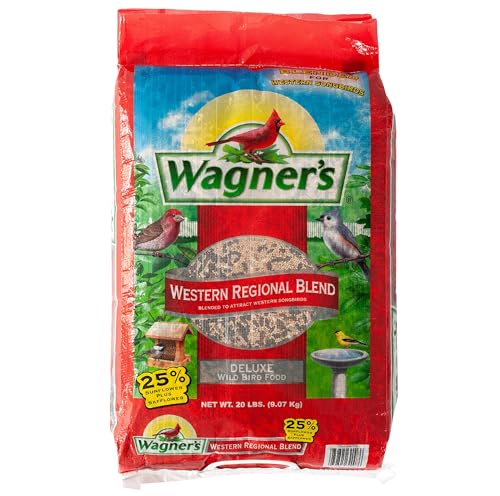
Wagner's Western Regional Blend Wild Bird Food
What We Like
- Attracts Western perching and ground songbirds
- Contains sunflower and safflower seeds
- Works in tube, hopper, or platform feeders
- 20-pound bag for extended feeding
Trade-offs
- Not a no-mess blend; shells will accumulate
- Not ideal for Eastern songbird species
A 20-pound bag of Wagner’s Western Regional Blend gives you a lot of seed for the money, so you won’t need to restock as often if you have a busy feeder station. The blend is built around sunflower and safflower, two seeds that Western songbirds actually want, meaning you are not paying for filler that ends up on the ground. It works in tube, hopper, or platform feeders, so you can use whatever setup you already have without buying new gear. If you go through seed quickly or have a busy feeder station, this bag keeps you from restocking every few days.
This blend leaves hulls and debris under the feeder, so it’s not ideal for a deck or patio where you want a tidy setup. That is fine if you have a spot where cleanup is easy, but if you want a shell-free option, something like the Freebird Premium No Mess Bird Seed reduces waste and keeps feeders cleaner. For anyone who just wants a straightforward, large-volume Western blend without paying extra for fancy processing, this bag delivers on the basics.
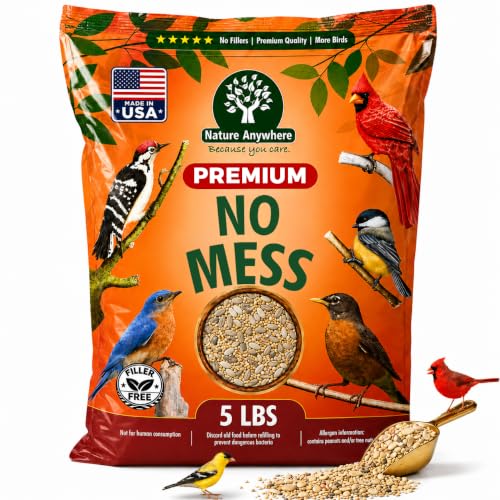
Nature Anywhere No Mess Sunflower Hearts Blend
What We Like
- Shell-free sunflower hearts and hulled millet
- No fillers like milo or wheat
- Birds eat every kernel with no waste
- Resealable bag keeps seed fresh
Trade-offs
- 5 lb bag is smaller than many regional blends
Every kernel in this 5-pound bag of shelled sunflower hearts, kernel peanuts, and hulled millet gets eaten, no husks or fillers left behind on your patio or in your feeder. That’s the core idea behind a no-mess blend, and Nature Anywhere executes it cleanly. For anyone feeding finches, cardinals, chickadees, robins, and blue jays, this mix skips the cheap milo and wheat that birds often toss aside, so you’re not paying for waste. The resealable bag is a practical touch for keeping seed fresh between fills, especially if you store it near the feeder.
At 5 pounds, this bag is noticeably smaller than many regional blends like Wagner’s Southwest Regional Blend (8 lb) or Kaytee Western Regional (7 lb). If you have a busy feeder with a flock of hungry birds, you’ll be refilling more often. That said, the no-waste design means each pound goes further because nothing gets kicked to the ground. For someone who prioritizes a tidy feeding station and wants a straightforward, filler-free seed mix that birds actually finish, this is a smart, no-nonsense option.
Product photos
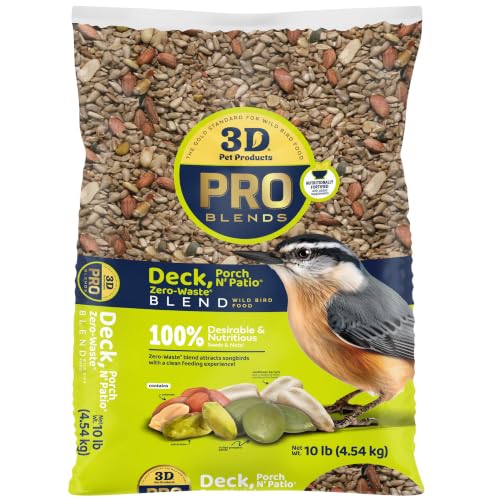
3-D Pro Blends Deck Porch Patio Zero-Waste Blend
What We Like
- Zero-waste formula leaves no mess
- Attracts songbirds, cardinals, finches, jays
- Nutritionally fortified with vitamins and electrolytes
- Locked formula ensures consistent ingredients
Trade-offs
- Not tailored for specific regional bird species
- Requires a sturdy feeder due to 10lb weight
The zero-waste claim is the headline here: this blend contains only ingredients birds actually eat, so nothing gets kicked onto the deck or left to rot in the feeder. For anyone feeding on a porch or patio, that means less sweeping and fewer moldy surprises. It’s also fortified with added vitamins and electrolytes, which is a nice touch for supporting year-round energy, and the locked formula means the bag you buy next month will have the same mix. That consistency matters when you’re trying to keep a steady flock coming back.
Product photos
Freebird Premium No Mess Bird Seed

What We Like
- Shell-free blend eliminates yard mess
- High protein and fat for bird energy
- Attracts finches, chickadees, cardinals
- No fillers or shells in the mix
Trade-offs
- Not tailored for southwestern desert bird species
- No whole seeds for birds that prefer cracking shells
With 48% crude fat and 21% crude protein, this blend packs serious energy into every bite, birds get the calories they need without having to pick through shells. The shell-free design means zero hulls on your patio or lawn, which is exactly what you want if you’re feeding near a deck or walkway. It’s a premium no-mess option that appeals to finches, chickadees, and cardinals, making it a strong fit for backyard birders who prioritize cleanliness over volume.
The 7-pound bag is smaller than some alternatives, like Wagner’s Southwest Regional Blend which comes in an 8-pound bag. If you go through seed quickly or have a large feeder setup, you’ll be restocking more often. That said, for a patio or small feeder station where you want to avoid sprouting weeds and wasted seed, this mix does exactly what it promises: no shells, no cleanup, just nutrition.
Product photos
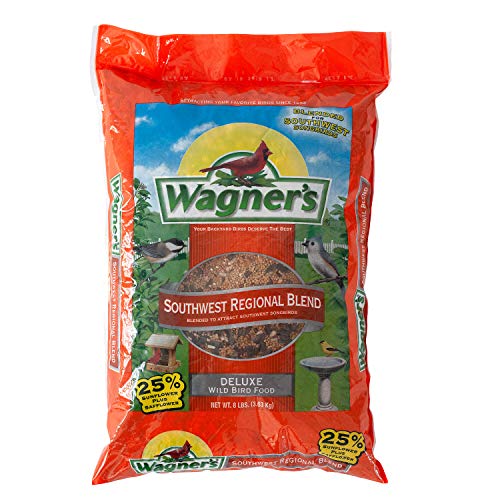
Wagner's Southwest Regional Blend Wild Bird Food
What We Like
- Attracts Southwestern songbirds
- Contains sunflower and safflower seeds
- Works in tube, hopper, platform feeders
- Made in the USA
Trade-offs
- Not a no-mess or shell-free blend
- 8-pound bag requires frequent refills for multiple feeders
The sunflower and safflower seed mix is the main draw here, those are exactly the seeds that draw in the perching and ground-feeding songbirds common across the Southwest. You can use it in a tube, hopper, or platform feeder, which gives you flexibility depending on what birds you’re targeting or what hardware you already own. It’s a straightforward regional blend that uses highest quality grains, and it’s made in the USA. If you want something that matches what local birds actually eat without paying for a bunch of stuff they’ll ignore, this is the kind of bag you grab.
At 8 pounds, you’ll be refilling feeders more often than with something like Wagner’s Western Regional Blend (20 pounds). That’s fine if you have a single feeder or don’t want a giant bag sitting around, but for a larger yard or multiple stations, you’ll be buying more frequently. This blend also produces hulls under the feeder, which is normal for whole-seed mixes. If you want zero waste, Freebird Premium No Mess Bird Seed skips the shells entirely, but then you lose the whole seeds that this blend specifically targets.
Product photos
How We Evaluated Bird Seeds For Southern California
We started by reading ingredient lists and guaranteed analysis panels on every bag, then cross-referenced those specs against university field test data and expert round-ups on Western bird feeding. Owner feedback patterns helped us understand which blends actually get eaten versus ignored in Southern California feeders.
Four criteria drove our rankings. Regional formulation came first, a blend tailored for Western or Southwestern species will outperform a generic mix at your feeder. Waste level mattered next: shell-free and no-mess blends cost more per pound but leave zero hulls on your patio. Feeder versatility determined whether a seed works in tube, hopper, or platform feeders. Bag size and value separated the blends you refill weekly from those that last a month.
An evaluation like this has limits. Individual bird preferences vary by neighborhood, season, and nearby natural food sources. The best approach is to check the ingredient list on the bag in your hand against what your local birds actually visit.
What To Look For In Bird Seeds For Southern California
The right seed blend brings more species to your feeder and leaves less waste on the ground. Focus on regional ingredients, shell content, and feeder type.
Choose a blend with sunflower, safflower, and millet tailored to Western songbirds, skip fillers like milo or wheat, and decide whether you want shells for cracking or shell-free hearts for zero mess.
Regional Ingredients Over Generic Mixes
Southern California’s bird population includes house finches, white-crowned sparrows, California towhees, and western scrub-jays, species that prefer sunflower and safflower over the milo and wheat found in cheap national blends. The Kaytee Western Regional blend was independently field tested and preferred 3-to-1 over black oil sunflower, which tells you regional formulation makes a real difference. For a Southwestern-specific option, Wagner’s Southwest Regional Blend targets desert and chaparral species directly.
Shell-Free vs. Whole Seed
Whole seeds with shells give birds the satisfying work of cracking and tend to attract a wider variety of species. But the hulls accumulate under your feeder. If your feeder sits over a deck, patio, or lawn you want to keep clean, a no-mess blend like the Nature Anywhere Sunflower Hearts Blend or the 3-D Pro Blends Deck Porch Patio Zero-Waste Blend eliminates hulls entirely. The trade-off is smaller bag sizes and a higher cost per pound.
Feeder Compatibility
Tube feeders work best with smaller seeds like millet and sunflower chips, while hopper and platform feeders handle whole sunflower and safflower. The Wagner’s Western Regional Blend works in all three feeder types, making it a flexible choice if you have multiple feeder styles. For specialty feeders, check that the seed size matches your port openings, safflower is larger than millet and can jam small-tube ports.
- Check the ingredient list for sunflower, safflower, and millet as the first three ingredients
- Look for “Western” or “Southwest” on the label rather than “Premium” or “Deluxe”
- Match bag size to your feeder volume, a 7-pound bag refills a single tube feeder weekly
- Choose resealable bags if you store seed in a garage or shed where moisture is a concern
- Avoid blends listing milo, wheat, or red millet as primary ingredients
A 20-pound bag of regional blend costs less per pound than a 5-pound no-mess bag, but you pay for the convenience of zero hulls.
Bird Seeds For Southern California Compared
The table below compares all six blends side by side on regional focus, waste level, bag size, and best use so you can see the differences at a glance.
| Product | Weight | Dimensions | Key Ingredients |
|---|---|---|---|
| Kaytee Western Regional Wild Bird Seed | 7.0 pounds | 2.5 x 10.5 x 18.0 inches | N/A |
| Wagner's Western Regional Blend Wild Bird Food | 20 pounds | 22.0 x 13.0 x 3.0 inches | Sunflower and safflower |
| Nature Anywhere No Mess Sunflower Hearts Blend | 5 lb | 3.7 x 15.0 x 11.5 inches | Sunflower hearts, kernel peanuts, hulled millet |
| 3-D Pro Blends Deck Porch Patio Zero-Waste Blend | 10.0 pounds | 17 x 12 x 3 inches | N/A |
| Freebird Premium No Mess Bird Seed | 7 lb | N/A | Sunflower hearts, peanut pieces |
| Wagner's Southwest Regional Blend Wild Bird Food | 8 pounds | 13.7 x 9.2 x 4.1 inches | Sunflower, safflower |
Frequently Asked Questions
What is the best bird seed for Southern California?
The Kaytee Western Regional Wild Bird Seed is the best overall choice. It was formulated for regional bird species and independently field tested by university researchers, who found it was preferred 3-to-1 over black oil sunflower by Western songbirds.
What birds will a Western regional blend attract?
A Western regional blend like the Kaytee or Wagner’s Western options attracts house finches, white-crowned sparrows, California towhees, western scrub-jays, mourning doves, and dark-eyed juncos. These species are common in Southern California’s coastal, chaparral, and foothill habitats.
Is no-mess bird seed worth the higher cost?
No-mess blends cost more per pound, but they eliminate hull accumulation under the feeder, which saves you cleanup time and prevents sprouting weeds. If your feeder is on a deck or patio, the 3-D Pro Blends Zero-Waste or Nature Anywhere Sunflower Hearts Blend are worth the premium.
Can I use a Southwest regional blend in Southern California?
Yes. Wagner’s Southwest Regional Blend targets Southwestern songbirds and works well in Southern California’s inland and desert areas. It contains sunflower and safflower seeds and fits tube, hopper, or platform feeders, though it is not a no-mess blend.
What seeds do California finches prefer?
California’s house finches and lesser goldfinches prefer sunflower hearts and hulled millet. Shell-free blends like the Freebird Premium No Mess Bird Seed or Nature Anywhere Sunflower Hearts Blend provide high-protein, high-fat nutrition that finches readily eat without leaving hulls.
The Bottom Line
The Kaytee Western Regional Wild Bird Seed is the best overall pick for Southern California birders who want a regionally tailored blend that local songbirds actually eat. Its university field testing and 3-to-1 preference over black oil sunflower give you confidence that the birds in your yard will visit your feeder, not ignore it.
If you need a larger bag for multiple feeders or want to stretch your budget, the Wagner’s Western Regional Blend at 20 pounds delivers the same regional formulation at a lower cost per pound. For patio or deck feeders where mess matters, the Nature Anywhere No Mess Sunflower Hearts Blend or the 3-D Pro Blends Zero-Waste Blend keep things tidy.
The single most important factor is regional formulation. A blend designed for Western birds will outperform any generic mix at your feeder, so start with the ingredient list on the bag, not the picture on the front.
