
9 Best Canned Dog Food For Puppies in 2026
This post contains affiliate links. As an Amazon Associate, we earn from qualifying purchases.
The best canned dog food for puppies is Purina Pro Plan Puppy Pate Chicken & Rice. It leads with chicken as the first ingredient, includes DHA for brain and vision development, and skips artificial colors, flavors, and preservatives. For owners of extra-small breeds, the Royal Canin X-Small Puppy Wet Food is a targeted alternative, while Hill’s Science Diet Puppy Chicken & Rice carries strong veterinarian backing.
A puppy’s first year is a sprint of growth. Their bones, brains, and immune systems are developing fast, and the food you choose needs to deliver concentrated nutrition in a form small teeth can manage. Wet food adds moisture and palatability, which helps picky eaters and supports hydration.
We built this guide by reviewing manufacturer specifications, ingredient lists, and nutritional adequacy statements, then cross-checking those details against expert round-ups and patterns in owner feedback. The result is a focused list of nine canned foods that meet AAFCO growth standards and address specific needs like breed size, protein sources, and digestive sensitivity.
Top 9 Canned Dog Foods For Puppies in the Market
Certain content that appears on this site comes from Amazon. This content is provided "as is" and is subject to change or removal at any time.
The Best Canned Dog Foods For Puppies, Reviewed
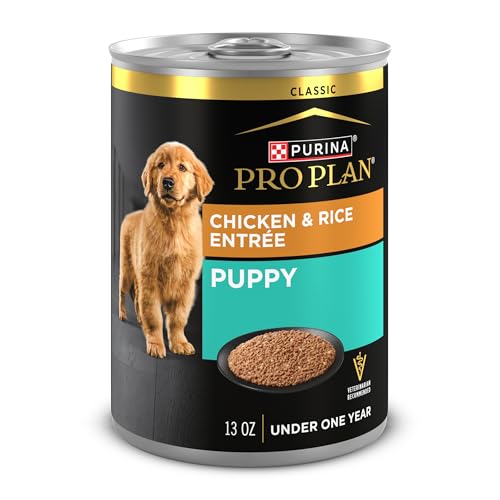
Purina Pro Plan Puppy Pate Chicken & Rice
What We Like
- Chicken is the first ingredient
- DHA supports brain and vision development
- No artificial colors, flavors, or preservatives
- Made in Purina-owned U.S. facilities
Trade-offs
- Not grain-free (contains rice)
Chicken is the first ingredient here, which is exactly what you want to see on a puppy food label, real protein, not a vague by-product meal. That, plus added DHA for brain and vision development, makes this a straightforward nutritional package for growing pups up to their first birthday (or second for larger breeds). The classic pate texture is easy to portion and mix with kibble, and the 13-ounce can provides a full serving for each meal. No artificial colors, flavors, or preservatives either, which is reassuring when you’re feeding a developing digestive system.
If your puppy prefers a pate texture, this formula delivers a uniform, protein-first option with chicken as the first ingredient. Picky eaters who favor slices in gravy might prefer Royal Canin’s Small Puppy Thin Slices in Gravy instead. The pate includes rice, so owners committed to a grain-free diet should consider Purina’s own Development Grain-Free Variety Pack.
Product photos
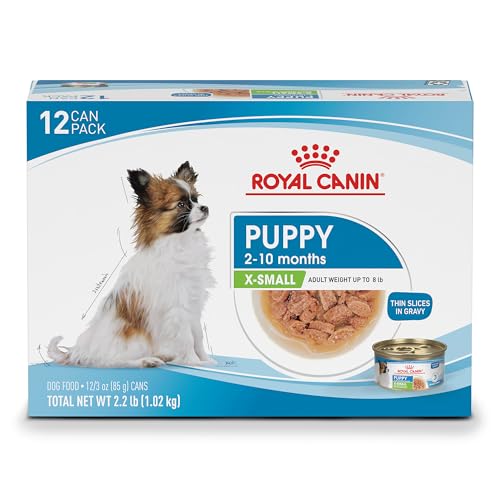
Royal Canin X-Small Puppy Wet Food
What We Like
- Formulated for extra-small breed puppies
- Prebiotics and digestible proteins for microbiome support
- DHA for brain development
- Soft texture easy for small mouths
Trade-offs
- Only 3 oz per can, small serving size
- Targeted at puppies under 8 lb adult weight
The 3-ounce can size is deliberately small because this food is built for puppies that will top out at 8 pounds as adults. That narrow focus means the thin slices in gravy texture is soft enough for tiny jaws. The recipe includes DHA for brain development plus prebiotics and highly digestible proteins to support a balanced gut microbiome. If you have a Chihuahua, Yorkie, or similar pocket-sized breed, this is a wet food that matches their scale rather than forcing them to tackle a 13-ounce can designed for a Lab puppy.
The catch is portion size: at 3 ounces per can, you will go through a 12-pack faster than you would with a larger can format. Compare that to the Purina Pro Plan Puppy Pate Chicken & Rice, which comes in 13-ounce cans and suits a wider range of puppy sizes. Royal Canin X-Small is the more precise tool for the job if your puppy is genuinely extra-small, but it is not a one-size-fits-all option for larger breed puppies or owners who prefer fewer can openings per week.
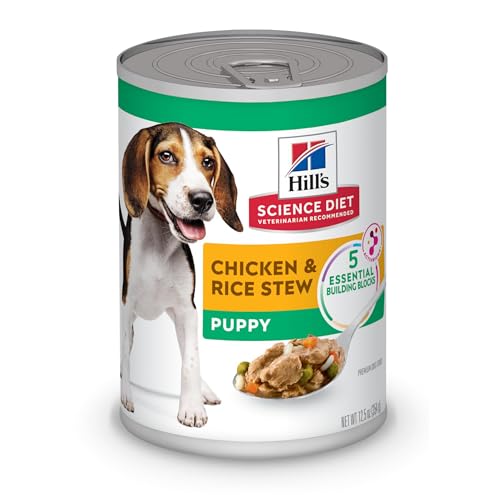
Hill's Science Diet Puppy Chicken & Rice
What We Like
- Clinically proven antioxidants for immune health
- Balanced minerals for strong bones and teeth
- High-quality protein for lean muscle
- Easily digestible ingredients for young dogs
Trade-offs
- Not suitable for puppies needing grain-free or novel protein diets
- Chicken and rice only, no variety in protein sources
The #1 Veterinarian Recommended brand tells you something right off the shelf: this isn’t a flashy marketing play. Hill’s Science Diet Puppy Chicken & Rice packs clinically proven antioxidants (Vitamin C+E) to support a developing immune system, plus balanced minerals for strong bones and teeth. High-quality protein helps your puppy build lean muscle, and the easily digestible ingredients mean less guesswork for a sensitive young stomach. It’s a straightforward, science-backed formula that prioritizes what a growing dog actually needs over trendy claims.
This is a chicken-and-rice formula, so if your puppy needs grain-free or a novel protein, you’ll want to look elsewhere, say, the Purina Pro Plan Development Grain-Free Variety Pack. But for most puppy owners who want a reliable, veterinarian-trusted option with proven immune support, Hill’s delivers exactly what it says on the label. No gimmicks, just solid nutrition from a brand that’s earned its reputation one bag at a time.
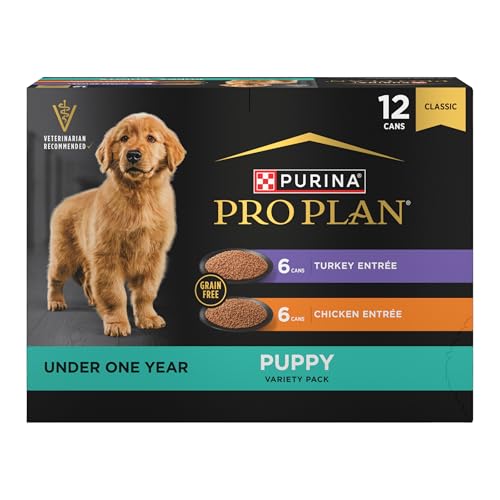
Purina Pro Plan Development Grain-Free Variety Pack
What We Like
- Real turkey or chicken first ingredient
- DHA for brain and vision development
- Grain-free formula
- No artificial colors, flavors, or preservatives
Trade-offs
- Only two protein varieties in the pack
- Not suitable for puppies over one year old
- Grain-free diet not needed for all puppies
Real turkey or chicken is the number one ingredient here, which is exactly what I look for when reading a wet puppy food label. That first ingredient sets the nutritional baseline, and this variety pack backs it up with DHA for brain and vision development and a grain-free formula. For a puppy owner who wants to rotate proteins without committing to a single flavor, this gives you two options in one case. The absence of corn, wheat, soy, and artificial additives matches what I’d expect from a line that puts ingredient quality ahead of marketing.
The variety pack is limited to turkey and chicken entrees, so if your puppy needs fish or red meat, you’ll want to look elsewhere. For most owners, though, having two grain-free protein options with DHA for brain and vision development makes feeding simple during that first year.
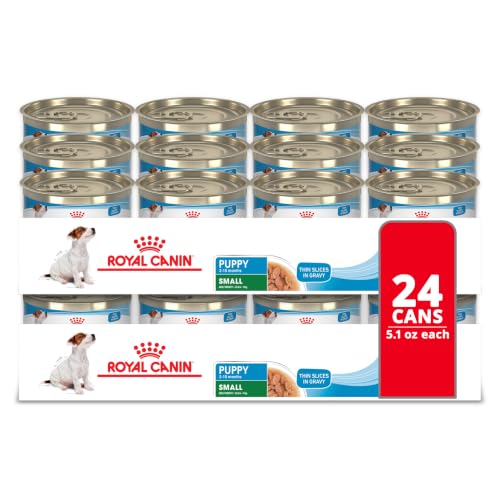
Royal Canin Small Puppy Thin Slices in Gravy
What We Like
- Thin slices in gravy for easy eating
- DHA supports brain development
- Prebiotics and digestible proteins for microbiome
- Antioxidants for immune support
Trade-offs
- Only for small breeds under 22 lb adult weight
- Contains grains, not grain-free
The 5.1-ounce can size is tailored for small breed puppies with expected adult weights up to 22 pounds, so you’re not wrestling with leftover portions that go stale. That thin-slices-in-gravy texture isn’t just marketing, it’s a practical choice for growing mouths that haven’t mastered crunching through thick pâtés. Royal Canin backs it with DHA for brain development, prebiotics for digestive balance, and antioxidants for immune support. All of those matter more when a puppy’s system is still figuring out how to handle the world. If you’ve got a tiny breed that needs gentle nutrition without guesswork, this formula lines up with what their developing bodies actually require.
This product commits to small breeds only; once your pup outgrows that 22-pound ceiling, you’ll need to switch to a different line. Compared to Purina Pro Plan Puppy Pate Chicken & Rice, which offers a larger 13-ounce can and a classic pate texture, Royal Canin’s smaller cans and gravy format provide a different texture option. For a small breed puppy that needs easy-to-eat, developmentally targeted wet food, this is a precise fit.
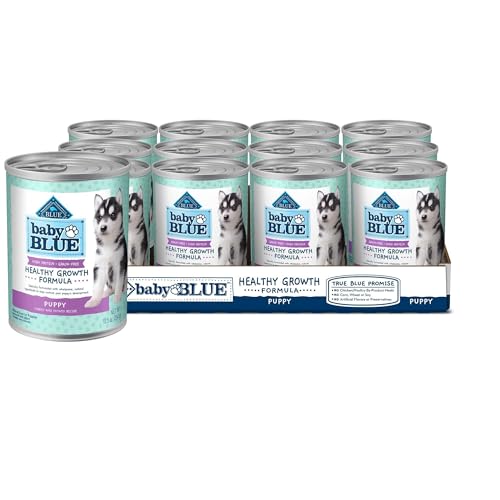
Blue Buffalo Baby Blue Turkey & Vegetable Puppy
What We Like
- Real turkey as first ingredient
- Grain-free, no corn/wheat/soy
- Contains DHA for cognitive development
- No poultry by-product meals
Trade-offs
- Grain-free diet not needed for all puppies
Real turkey is the very first ingredient here, which gives this formula a clear protein-forward profile for growing puppies. Combined with DHA to support cognitive development and a grain-free recipe that skips corn, wheat, and soy, it’s built around whole-food ingredients rather than cheap fillers. This makes it a strong fit for owners who want a high-protein, grain-free canned food as a primary meal or a topper. It’s especially good if they’re wary of by-product meals and want to know exactly what’s in the can.
Turkey is the #1 ingredient in this high-protein puppy food, which supports cognitive development with DHA and provides energy for growth and play. The 12.5-ounce cans can be fed as a treat, a topper for dry kibble, or a complete meal, and the recipe contains no chicken by-product meals, corn, wheat, or soy. Compared to Royal Canin X-Small Puppy’s 3-ounce cans, this Blue Buffalo offering is clearly aimed at puppies with bigger appetites.
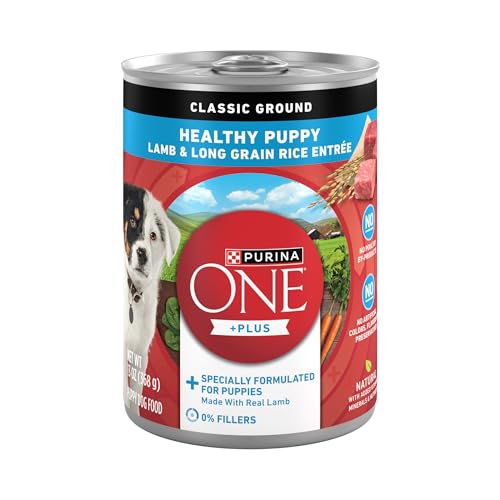
Purina ONE Plus Wet Puppy Food
What We Like
- No poultry by-products or fillers
- High protein for muscle growth
- Antioxidants support immune system
Trade-offs
- Contains grains (long grain rice) for grain-free dieters
- Not suitable for grain-free puppy diets
A 13-ounce can of real lamb and long grain rice gives you a protein-forward wet food with no poultry by-products and no fillers. That means every ingredient in this Purina ONE recipe is there for a reason, not to bulk up the can. It’s a solid fit for puppy owners who want a straightforward lamb-based diet with added vitamins and antioxidants to support growing muscles and immune health, all from a veterinarian-recommended brand. The classic ground texture is easy to scoop and mix, making mealtime simple without the fuss of pates or chunks.
This is a grain-inclusive formula, so if you’re looking for a grain-free option like the Purina Pro Plan Development Grain-Free Variety Pack, you’ll want to look there instead. But for a lamb recipe that skips the poultry by-products and keeps the ingredient list purposeful, this one delivers. It’s a no-nonsense choice for owners who read labels and want real meat as the foundation without paying extra for marketing fluff.
Product photos
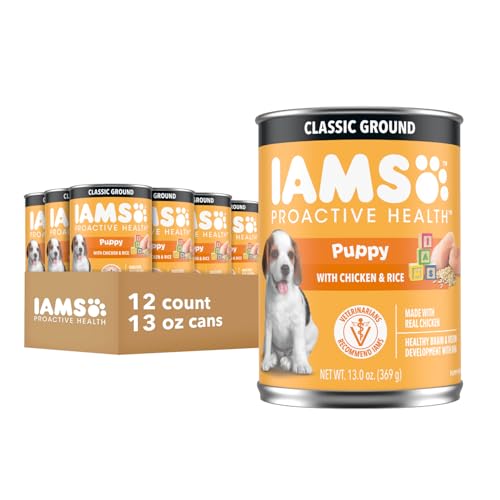
IAMS Proactive Health Puppy Wet Dog Food
What We Like
- Omega-3 DHA for brain development
- Omega-6 for skin and coat
- No fillers or artificial flavors
Trade-offs
- Contains whole grain rice, not grain-free
- Single protein source limits variety
Each 13-ounce can provides a complete and balanced meal for puppies 1-12 months, with real chicken as the protein source and whole grain rice for energy. The formula includes Omega-3 DHA to support healthy brain and vision development, plus Omega-6 fatty acids for skin and coat health. It’s made without fillers or artificial flavors, so you’re getting a straightforward recipe that focuses on essential nutrients for growing pups.
This contains whole grain rice, which rules it out for anyone seeking a grain-free diet. If your puppy tolerates grains and you want a wet food with targeted brain-health ingredients, this is a sensible pick. Not ideal for grain-free households or those wanting protein rotation.
Product photos
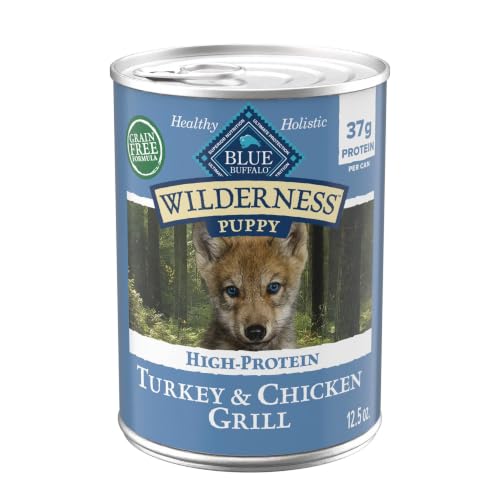
Blue Buffalo Wilderness Turkey & Chicken Puppy Wet Dog Food
What We Like
- 37g protein per 12.5 oz can
- Real turkey is first ingredient
- Grain-free with no corn, wheat, soy
- Contains DHA for puppy brain development
Trade-offs
- 12.5 oz cans are large for small breed puppies
- 12.5 oz cans require refrigeration after opening
At 37 grams of protein per 12.5-ounce can, this is one of the densest protein punches you’ll find in a puppy wet food. That matters because growing puppies need ample amino acids for muscle and tissue development, and this recipe puts real turkey as the first ingredient without relying on grain fillers. The grain-free carbohydrate sources provide steady energy, and the added DHA supports cognitive development during those critical early months. It’s a straightforward, high-protein option for owners who want to skip the corn, wheat, and soy and focus on meat-based nutrition.
The 12.5-ounce can size means you’ll likely have leftovers if you have a small breed puppy, but the product can be stored in the refrigerator after opening. For comparison, Royal Canin X-Small Puppy comes in 3-ounce cans, which may be more convenient for single servings. However, if you’re feeding a medium or large breed pup that can finish a can in a day or two, the higher protein density and clean ingredient list make this a practical, no-nonsense choice. It also works as a topper if you want to mix things up with dry food.
Product photos
How We Evaluated Canned Dog Foods For Puppies
Our evaluation started with the ingredient list. We looked for a named protein source (chicken, turkey, lamb) as the first ingredient, then checked for DHA, a fatty acid linked to brain and vision development in young dogs. We also verified that each formula carried an AAFCO statement confirming it was complete and balanced for growth.
Next we weighed breed-specific fit. A 12.5-ounce can works for a Great Dane puppy but creates waste for a Chihuahua. We looked at can sizes, calorie density, and texture to match each product to the right size of puppy. The best canned food for puppies needs to be practical for your feeding routine, not just nutrient-dense on paper.
Finally, we considered the trade-offs that matter to real owners. Grain-free diets are popular, but not every puppy needs one. Some formulas include rice or other grains that support digestible energy. We flagged those choices honestly so you can decide based on your puppy’s needs, not marketing claims. This is a research-led guide, not a test kitchen report.
What To Look For In Canned Dog Foods For Puppies
Choosing a canned puppy food comes down to matching the label’s details to your puppy’s specific growth stage, breed size, and digestive comfort. Here are the criteria that matter most.
Look for a named meat as the first ingredient, DHA for brain development, and an AAFCO growth statement. Match can size and texture to your puppy’s mouth and portion needs.
Protein Source and DHA Content
The first ingredient should be a named animal protein like chicken, turkey, or lamb. That tells you the bulk of the protein comes from meat, not from a vague “meat meal” or plant concentrate. DHA is the other non-negotiable: it’s an omega-3 fatty acid that supports cognitive and visual development during the rapid growth phase. Every pick on this list includes DHA, but the amount varies by formula.
Breed Size and Can Size Fit
A 3-ounce can makes sense for a Yorkie puppy eating small meals throughout the day. A 12.5-ounce can suits a Labrador puppy with a bigger appetite. The wet food for puppies you choose should match your puppy’s expected adult weight. Breed-specific formulas like Royal Canin’s X-Small and Small lines adjust calorie density and kibble texture to match jaw size and growth rate.
Texture and Digestibility
Puppies transition from milk to solids gradually. Pate, minced, and thin-slice-in-gravy textures all work, but some puppies reject one texture and accept another. If your puppy is a reluctant eater, a soft, gravy-rich texture can help. Digestibility matters too: formulas with prebiotics and limited ingredients reduce the chance of loose stools. For puppies with touchy stomachs, a digestible canned food with a single protein and no artificial additives is a safer starting point.
- Confirm the label says “complete and balanced for growth” or “all life stages” with an AAFCO statement.
- Match can size to your puppy’s daily portion to avoid refrigerating half-used cans for days.
- Start with one protein source and stick with it for a week before switching to assess tolerance.
- Check for artificial colors, flavors, or preservatives, they add nothing a puppy needs.
A puppy’s first food sets the pattern for their adult eating habits, so the extra minute spent reading the ingredient panel pays off for years.
Canned Dog Foods For Puppies Compared
The table below compares all nine canned puppy foods side by side, covering protein source, DHA content, grain status, and best-use scenario so you can spot the right formula at a glance.
| Product | Protein Source | Can Size | Life Stage |
|---|---|---|---|
| Purina Pro Plan Puppy Pate Chicken & Rice | Chicken (first ingredient) | 13 oz | Up to 1 year (2 for large breeds) |
| Royal Canin X-Small Puppy Wet Food | N/A | 3 oz | 2 to 10 months |
| Hill's Science Diet Puppy Chicken & Rice | Chicken & Rice | 12.5 oz | N/A |
| Purina Pro Plan Development Grain-Free Variety Pack | Turkey or chicken | 13 oz | Up to one year |
| Royal Canin Small Puppy Thin Slices in Gravy | N/A | 5.1 oz | 2 to 10 months |
| Blue Buffalo Baby Blue Turkey & Vegetable Puppy | Real Turkey #1 | 12.5 oz | N/A |
| Purina ONE Plus Wet Puppy Food | Real Lamb | 13 oz | N/A |
| IAMS Proactive Health Puppy Wet Dog Food | Real chicken | 13 oz | 1-12 months |
| Blue Buffalo Wilderness Turkey & Chicken Puppy Wet Dog Food | Real Turkey | 12.5 oz | N/A |
Frequently Asked Questions
How much canned puppy food should I feed my puppy?
Feeding amounts vary by your puppy’s weight, age, and activity level. Check the feeding guide on the can, which is based on the formula’s calorie density. Most puppies eat three to four meals a day until about six months old, then drop to two meals. Your veterinarian can fine-tune portions for your puppy’s specific growth curve.
Is wet food better than dry food for puppies?
Both have advantages. Wet food provides extra moisture, which supports hydration and makes meals more palatable for picky eaters. Dry food helps with dental health through chewing. Many owners combine both. The kibble vs canned decision comes down to your puppy’s preferences and your feeding routine.
Can I mix wet and dry puppy food together?
Yes, mixing is common and safe as long as both foods are complete and balanced for growth. Combining them adds texture variety and moisture. Adjust the portions of each so the total calories match your puppy’s daily needs, and introduce the mix gradually over a few days to avoid digestive upset.
What should I look for in a canned puppy food for sensitive stomachs?
Look for a limited ingredient list with a single protein source and no artificial additives. Formulas with prebiotics and easily digestible carbohydrates like rice or oatmeal tend to be gentler. If your puppy has persistent loose stools or vomiting, consult your vet before switching foods. A gentle puppy food with a simple recipe is often the best starting point.
When should I switch my puppy from wet food to adult dog food?
Most puppies can transition to adult food when they reach about 90 percent of their expected adult weight. For small breeds, that is often around 9 to 12 months. For large breeds, it can be 18 to 24 months. The best canned puppy food for growth includes the right calcium-to-phosphorus ratio, which adult formulas may not provide.
The Bottom Line
The Purina Pro Plan Puppy Pate Chicken & Rice earns the best overall spot because it delivers real chicken first, includes DHA for brain development, and avoids artificial additives, all at a practical price point. It works for most puppies that do not need a grain-free diet and accept a pate texture.
If you own a breed that stays under 8 pounds as an adult, the Royal Canin X-Small Puppy Wet Food is the better fit. Its 3-ounce cans and soft texture match the tiny portions and delicate mouths of extra-small puppies. For owners who prefer a grain-free diet, the Purina Pro Plan Development Grain-Free Variety Pack offers two protein options with DHA and no artificial ingredients.
The single most important factor in choosing a canned puppy food is reading the ingredient list and the AAFCO statement on the label. Everything else, texture, can size, grain content, is secondary to making sure the food is complete and balanced for your puppy’s growth stage.
