
4 Best Food For Pregnant Dog in 2026
This post contains affiliate links. As an Amazon Associate, we earn from qualifying purchases.
The VICTOR Hi-Pro Plus Dry Dog Food takes our Best Overall spot because its multi-meat formula with 30% protein and 20% fat supports pregnancy and lactation without requiring a separate puppy food. For owners who prefer a family-owned brand, the Fromm Puppy Gold is a strong option, while the Purina Pro Plan Puppy Starter Mousse covers nursing mothers who need a wet food they can actually stomach.
A pregnant dog’s nutritional needs shift dramatically as her body works to support developing puppies and prepare for milk production. Owners face the challenge of finding a food that provides enough protein and calories without upsetting her digestive system during a sensitive time.
This guide is built from manufacturer specifications, AAFCO formulation data, and patterns in owner feedback. We focus on the four picks that best match different pregnancy stages, breed sizes, and owner priorities so you can match a food to your dog’s specific situation.
Top 4 Foods For Pregnant Dogs in the Market
Certain content that appears on this site comes from Amazon. This content is provided "as is" and is subject to change or removal at any time.
The Best Foods For Pregnant Dogs, Reviewed
VICTOR Hi-Pro Plus Dry Dog Food

What We Like
- Suitable for all life stages including lactation
- 30% protein and 20% fat for active dogs
- Multi-meat formula with beef, chicken, pork, fish
Trade-offs
- 40 lb bag is heavy for some owners to handle
- Not suitable for large breed puppies over 70 lbs
With 30% protein and 20% fat, this formula provides young dogs and mothers with key nutrients for healthy growth and vitality, according to the manufacturer. The protein comes from beef, chicken, pork, and fish meals, so the dog gets a variety of animal sources in every bowl. It is formulated to meet AAFCO nutrient profiles for all life stages, which means it works for pregnant dogs, lactating females, and puppies alike. For a busy household with dogs at different life stages, that versatility saves you from juggling multiple bags.
The 40-pound bag is a practical size for multi-dog households but awkward for smaller kitchens or owners with limited mobility. Compared to the Fromm Puppy Gold, which targets small and medium breed puppies specifically, this VICTOR formula covers a wider reproductive window but requires you to switch later if you’re raising large-breed pups.
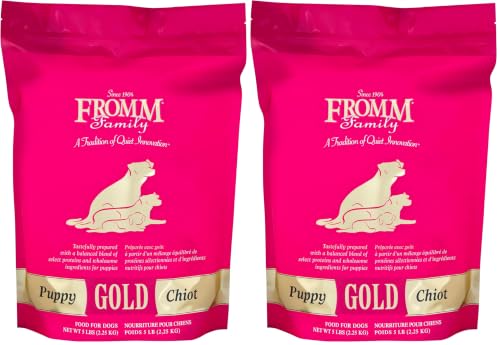
Fromm Puppy Gold Premium Dry Dog Food
What We Like
- Formulated for gestation and lactation
- Three animal protein sources
- Whole grains for fiber and energy
- Family-owned company since 1904
Trade-offs
- Contains grains, not grain-free
- Recommended for medium and small breeds only
Fromm Puppy Gold is explicitly formulated to meet AAFCO nutrient profiles for gestation and lactation, which means the calcium, phosphorus, and energy levels are calibrated for a pregnant dog’s changing needs. That’s the kind of specific claim you want to see when choosing food for a mother who is building puppies and then nursing them. The recipe uses chicken, duck, and lamb as protein sources, giving a broader amino acid profile than a single-meat formula. Whole grains add digestible carbohydrates and fiber, which can help maintain steady energy and digestion during a stressful period.
The trade-off is bag size and breed targeting. Compare that to VICTOR Purpose Nutra Pro, which also targets pregnant dogs but comes in a 5 lb bag as well and is labeled for all ages.
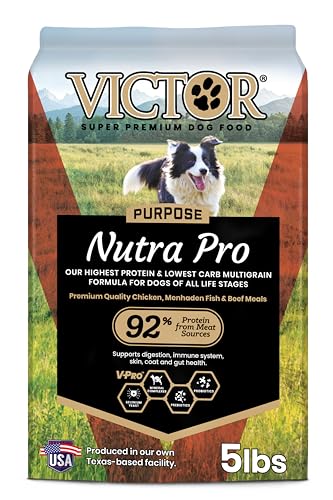
VICTOR Purpose Nutra Pro Dry Dog Food
What We Like
- 38% protein supports fetal development
- Multi-meat formula for sustained energy
- Suitable for pregnancy through weaning
- VPRO blend of vitamins and minerals
Trade-offs
- Not formulated for dogs with grain allergies to gluten-free grains
- Not suitable for dogs sensitive to high protein levels.
A 38% protein level from chicken, fish and beef meals means this kibble delivers the dense amino acid profile a pregnant or nursing dog needs to maintain her own muscle while supporting growing puppies. That protein comes from multiple animal sources rather than a single ingredient, which helps spread the nutrient load across different digestibility profiles. The formula is low carb and uses gluten-free grains, which some owners prefer for dogs with grain sensitivities.
Product photos
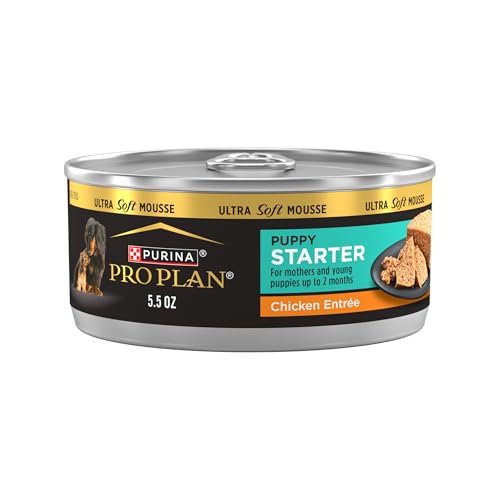
Purina Pro Plan Puppy Starter Mousse Wet Dog Food
What We Like
- Ultra soft mousse texture for easy eating
- Formulated for nursing mothers' high energy needs
- Supports puppies' brain development and immunity
- Highly palatable to encourage eating
Trade-offs
- Wet food format requires refrigeration after opening
- Only suitable for nursing mothers and very young puppies
The mousse texture is the single most decisive feature here. It is an ultra soft, spoonable wet food that requires no chewing, which matters when a nursing mother is exhausted or a puppy’s teeth haven’t fully come in. Purina Pro Plan formulated this specifically for the high energy demands of lactation and the first two months of growth, with support for healthy brain development and immune systems. The highly palatable formula encourages eating, which can help nursing mothers and young puppies get the nutrition they need.
The trade-off is that it’s a wet food, so once you open a can, it needs to be refrigerated and used within a few days. That makes it a different option from dry kibble, which can be left out longer. For a nursing mother or young puppy, the mousse texture and palatability make it a practical choice when you’re able to manage feeding times.
Product photos
How We Evaluated Foods For Pregnant Dogs
Our evaluation started with the AAFCO statements on each bag. A food labeled for “all life stages” or specifically for “gestation and lactation” meets the higher nutritional bar a pregnant dog needs, while a standard adult maintenance food does not. We also checked protein and fat percentages because those two numbers drive fetal development and milk production.
We looked at ingredient quality through the lens of a skeptical label-reader. A food that lists multiple named animal proteins (beef, chicken, pork, fish) provides amino acid variety that a single-source protein cannot. We also considered practical factors like kibble size for small breeds, bag weight for owners who lift heavy bags, and whether the texture works for a dog whose appetite may drop late in pregnancy.
An evaluation has limits. No ingredient list can predict how any individual dog will tolerate a food, and some dogs have sensitivities that are not obvious from the label. Our picks represent a starting point based on what the label and formulation data tell us, not a guarantee for every pregnant dog.
What To Look For In Foods For Pregnant Dogs
Choosing the right food for a pregnant dog comes down to reading the label for the right AAFCO statement. You also need to check protein and fat levels. Then match the texture and kibble size to your dog’s breed and appetite.
AAFCO Life Stage Statement
The most important line on any dog food bag is the nutritional adequacy statement. For a pregnant dog, this should say “all life stages” or specifically “gestation and lactation.” A food labeled only for “adult maintenance” does not provide enough density for fetal development or milk production. The puppy food for pregnant dogs category often overlaps here, since many pregnancy-appropriate foods are also formulated for puppy growth.
Protein and Fat Content
Pregnancy and nursing push a dog’s energy needs far above normal maintenance. Look for a food with high protein and fat content. Higher protein supports the growth of fetal tissues, while fat provides the concentrated calories needed for milk production. The feeding guide for pregnant dogs recommends gradual portion increases rather than sudden jumps, which can upset digestion.
Kibble Size and Texture
Small and medium breeds need a kibble they can chew comfortably, especially as the pregnancy progresses and her belly crowds her stomach. A wet food or mousse texture can help maintain calorie intake if her appetite drops. For nursing mothers who need a soft, easy-to-eat option, a food like the Purina Pro Plan mousse works well because it delivers high calories without requiring much chewing effort.
- Check the AAFCO statement first, it must say “all life stages” or “gestation and lactation.”
- Look for high protein and high fat on the guaranteed analysis.
- Choose a kibble size that matches your dog’s breed, small kibble for small breeds.
- Consider a wet or mousse texture if your dog’s appetite drops late in pregnancy.
A pregnant dog’s food should provide more nutrition per bite than her normal maintenance kibble, not just more bites of the same food.
Foods For Pregnant Dogs Compared
The table below compares the four picks across the key factors that matter most for a pregnant dog: life stage formulation, protein and fat levels, ingredient sources, and best-use stage.
| Product | Life Stages | Meat Sources | Form |
|---|---|---|---|
| VICTOR Hi-Pro Plus Dry Dog Food | All (except large breed growth) | Beef, chicken, pork, fish meals | Dry kibble |
| Fromm Puppy Gold Premium Dry Dog Food | Puppies, pregnant/nursing mothers | Chicken, duck, lamb | Dry kibble |
| VICTOR Purpose Nutra Pro Dry Dog Food | All (puppy to adult) | Chicken, fish, beef meals | Dry kibble |
| Purina Pro Plan Puppy Starter Mousse Wet Dog Food | Nursing mothers & puppies up to 2 months | Chicken | Wet food |
Frequently Asked Questions
What is the best food to feed a pregnant dog?
The best food is one labeled for “all life stages” or specifically for “gestation and lactation” with high protein and high fat. The VICTOR Hi-Pro Plus meets these requirements with a multi-meat formula that supports pregnancy through weaning without switching foods.
When should I switch a pregnant dog to puppy food?
Many owners switch to puppy food around week four or five of gestation when the puppies begin developing rapidly. The puppy food for pregnant dogs category includes foods like the Fromm Puppy Gold that are formulated for both gestation and lactation, making the transition straightforward.
How much should I feed a pregnant dog?
Portion sizes increase gradually through pregnancy, typically reaching more than her normal maintenance amount by the final weeks. The feeding schedule should split daily portions into smaller, more frequent meals to accommodate her shrinking stomach space.
What should I feed a nursing mother dog?
A nursing mother needs the same high-protein, high-fat food she ate during pregnancy, but in larger quantities. The Purina Pro Plan Puppy Starter Mousse works well immediately after birth because its soft texture encourages eating when she may be exhausted. For ongoing support, a postpartum nutrition plan should keep protein and fat levels high through the weaning period.
Can I feed my pregnant dog regular adult dog food?
Regular adult maintenance food does not provide enough protein, fat, or calcium for a pregnant dog. Feeding it risks undernourishing both the mother and her developing puppies. A food labeled for “all life stages” or “gestation and lactation” is the minimum requirement for a safe pregnancy diet.
The Bottom Line
The VICTOR Hi-Pro Plus Dry Dog Food is the best overall choice for most pregnant dogs. Its all-life-stages formulation and 30 percent protein content support the entire journey from conception through weaning without needing a food switch. Owners of small to medium breeds who want a family-owned brand should consider the Fromm Puppy Gold. It carries a gestation-specific AAFCO statement from a company that has been making dog food since 1904.
If your nursing mother struggles to eat enough dry kibble after delivery, the Purina Pro Plan Puppy Starter Mousse provides a soft, high-calorie wet option that encourages eating when she needs calories most. The VICTOR Purpose Nutra Pro offers the highest protein density at 38 percent for owners who want maximum nutritional support during fetal development.
The single most important factor in choosing a food for a pregnant dog is the AAFCO life stage statement. Ignore the marketing claims on the front of the bag and read the back, if it does not say “all life stages” or “gestation and lactation,” keep looking.
