
10 Best Food For Koi Fish in 2026
This post contains affiliate links. As an Amazon Associate, we earn from qualifying purchases.
For koi keepers who want steady growth and vibrant color, the Blue Ridge Koi Platinum Pro Food is the best overall pick, thanks to its high 41% protein level and probiotic support. Those focused on color should consider the HALF OFF PONDS Show & Grow Koi Food, while the KOIGENIX Growth & Color Formula is ideal for maximum growth rates.
Feeding koi is about more than just tossing pellets in the pond. Water temperature, fish size, and the season all affect what your fish need, and the wrong food can lead to poor growth, dull colors, or even water quality issues.
This guide is based on a careful review of manufacturer specifications, ingredient lists, and patterns in owner feedback for the top foods on the market. We break down what matters most so you can choose with confidence.
Top 10 Foods For Koi Fish in the Market
Certain content that appears on this site comes from Amazon. This content is provided "as is" and is subject to change or removal at any time.
The Best Foods For Koi Fish, Reviewed
Blue Ridge Koi Platinum Pro Food

What We Like
- High 41% protein for steady growth
- Floating pellets soften in seconds
- Built-in color support from spirulina
Trade-offs
- 4.5 lb bag is small for large ponds
- No all-season feeding flexibility
A 41% protein level puts this firmly in professional-grade territory, meaning it supports steady growth during the warm months when koi are most active and feeding heavily. The floating 3/16″ pellets soften within seconds, which helps you control portions and keep the pond clear when you feed only what fish finish in about five minutes. Spirulina and canthaxanthin are built into the formula, so you do not need a separate color-enhancing food, and the food includes Primilac probiotic. This is the kind of straightforward, nutritionally complete diet that suits a keeper who wants one bag to cover growth and color without chasing marketing claims.
The trade-off is that this is a warm-season food only. As water temperatures drop and koi slow down, you will need to switch to a cool-water formula like Blue Ridge Cool Water Wheat, which means stocking two products if you feed year-round. The 4.5 lb bag also goes fast in a pond with several fish, so factor in the need for more frequent reordering during peak feeding season.
Product photos
HALF OFF PONDS Show & Grow Koi Food

What We Like
- Beta carotene enhances color vibrancy
- Low phosphorus helps maintain pond ecosystem
- 5mm pellets fit young koi to mature goldfish
Trade-offs
- Protein lower than some growth-focused formulas
The Blue Ridge Platinum Pro runs 41% protein and includes probiotics, which might appeal if you’re pushing for maximum size and digestive support. But if your priority is getting those scale patterns to glow and you don’t mind a slightly lower protein number, the HALF OFF PONDS Show & Grow gives you a straightforward, purpose-built tool for the job.
Product photos
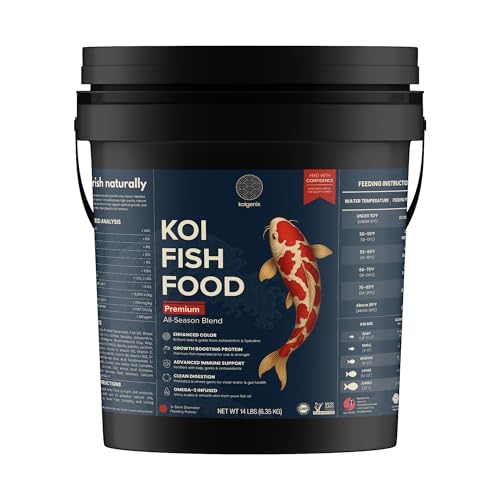
KOIGENIX Growth & Color Formula Koi Food
What We Like
- 42% protein supports steady growth
- Probiotics and garlic aid immune health
- Spirulina, krill & marigold enhance color
Trade-offs
- No pellet size listed for smaller fish
- 42% protein too rich for low-activity ponds
Probiotics and garlic round out the formula to support digestion and stress resistance, which is a practical bonus for pond fish facing seasonal temperature swings.
Weight is the main consideration: at 16 pounds total, the bag is noticeably heavier than the 4.4-pound Hikari Saki-Hikari Growth option, so if you have a small pond or limited storage, it may feel like overkill. For serious growth with color support in a larger pond, this is a straightforward pick.
Product photos
Hikari Saki-Hikari Growth Premium Koi Diet

What We Like
- Supports immune system health
- Growth-enhancing nutrient blend
- Contains live Hikari-Germ probiotic
Trade-offs
- Requires exclusive daily feeding for benefits
- Ineffective below 68°F water temperature
- Intermittent use loses probiotic advantage
Owners who can commit to feeding this diet exclusively during warm weather will see the best results. The formula contains Hikari-Germ, a live probiotic microorganism that supports efficient nutrient utilization and immune system health. Growth-enhancing ingredients are precisely balanced to encourage rapid development while maintaining traditional koi form. For optimal benefits, water temperatures should remain consistently above 68°F, as the more active koi become, the greater their nutritional needs. Intermittent feeding or mixing with other foods stops the probiotic from working effectively, so a dedicated approach during the active season is essential.
This food demands a strict feeding regime: you cannot mix in other foods or take breaks without losing the probiotic’s effect. That makes it less flexible than a general-purpose option that works with varied feeding schedules. This food also becomes useless below 68°F, so it is a warm-season specialist, not a year-round staple. For koi keepers who maintain consistent warm water and want maximum biological efficiency from their feed, the commitment pays off.
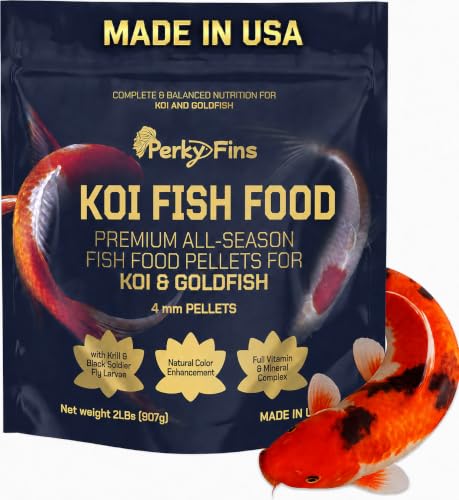
Perky Fins Premium Koi Fish Food
What We Like
- Zero porcine, no meat-and-bone meal
- Natural color from spirulina, paprika, marigold
- Garlic and brewer's yeast for gut health
- All-season formula for koi and goldfish
Trade-offs
- No probiotic or enzyme addition for digestion support
- Not suitable for koi under 6 inches.
A 4mm floating pellet built on wild krill, Pacific whiting meal, and black soldier fly larvae means this is a protein lineup you can actually name, no porcine, no meat-and-bone meal, no filler shorthand. For anyone who reads ingredient panels the way I do, that transparency is the whole point. The color support comes from real sources: spirulina for blues, paprika and astaxanthin for reds, marigold for yellows. No synthetic dyes, no guesswork. Add garlic and brewer’s yeast for palatability and digestion, and you have a formula that works across seasons without swapping bags.
This 2lb bag is compact, so if you have a large pond or multiple koi, you will reorder more often than you would with a bulk option like HALF OFF PONDS Show & Grow. That said, the ingredient story here is cleaner than most, no mystery proteins, no artificial color tricks. For the keeper who values knowing exactly what goes into the water, Perky Fins delivers that clarity in a small, honest package.
Product photos
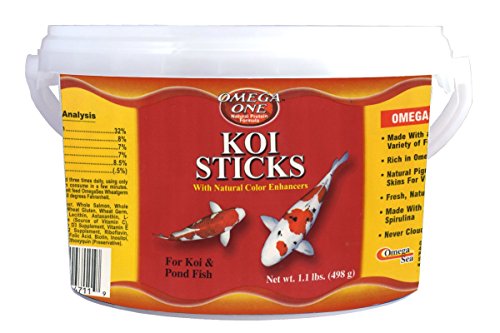
Omega One Koi Sticks
What We Like
- Fresh kelp and spirulina aid digestion
- Minimally processed proteins keep water cleaner
- Salmon provides natural color-enhancing pigments
Trade-offs
A 32% protein level puts this food at the lower end of the protein spectrum among koi diets, but that’s by design. The formula uses minimally processed proteins that are insoluble in water, which keeps your pond cleaner by reducing pollution. Fresh kelp and spirulina aid digestion, so your fish get more out of each feeding. If your koi have had trouble with water quality or messy feedings, this stick is a practical choice.
The protein level won’t support the fastest growth rates compared to higher-protein formulas like the 42% protein in KOIGENIX Growth & Color Formula. If you’re aiming for rapid size gains, this stick may not be the best choice. But for a pond where water quality is a priority, the insoluble protein and digestive aids make it a practical everyday option.
Kaytee Koi's Choice Floating Fish Food

What We Like
- Fish meal is first ingredient
- 35% protein supports tissue growth
- Floating pellets for all seasons
Trade-offs
- Only 35% protein vs 41-42% competitors
- No probiotic or color-enhancing additives listed
Fish meal as the first ingredient and a 35% protein level mean this food puts digestible animal protein front and center. That is exactly what you want for steady growth without overloading the water with waste. The floating pellet works in all seasons, so you can feed the same bag from spring through fall without switching formulas. It’s built for koi keepers who prioritize straightforward nutrition over fancy extras.
Its 35% protein sits below the 41-42% you’ll see in foods like Blue Ridge Koi Platinum Pro or KOIGENIX Growth & Color Formula, so if you’re pushing for maximum growth rates or competitive show size, you might want a higher-protein option. Kaytee also keeps the ingredient list clean, which means you’ll need to supplement if you want brighter reds or better gut health. For a no-fuss, digestible daily feed, this does the job without the label clutter.
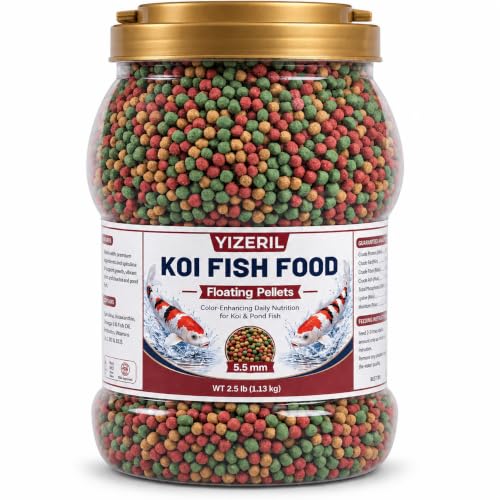
yizeril Koi Fish Food Medium Pellets
What We Like
- 5.5 mm size for medium koi
- 38% protein from fish and krill
- Floating pellets let you monitor feeding
Trade-offs
- Requires removing uneaten pellets after 5 minutes
- Only for medium or larger koi, not small fish.
A 5.5 mm pellet sits right in the sweet spot for medium koi that are past the fry stage but not yet ready for jumbo chunks. For pond keepers who want a straightforward daily feed with visible results, this is a practical middle-ground option.
This pellet size excludes smaller fish entirely, so if you have mixed ages or goldfish under about 4 inches, you will need a separate finer food. Compared to the KOIGENIX Growth & Color Formula at 42% protein with probiotics, the yizeril offers a slightly lower protein level but keeps the ingredient list simpler and avoids added probiotics, which some fish do not need. It is a no-frills formulation that relies on whole-food protein sources rather than a long additive list, making it a clean choice for the medium-size crowd.
Product photos
TetraPond Koi Growth Soft Sticks

What We Like
- Higher-protein formula supports growth
- Small soft sticks easy to digest
- Highly digestible for clearer water
- Contains essential amino acids
Trade-offs
- Only for water temps above 50°F
- Targeted at younger fish, not adults
A higher-protein formula packed into small, soft floating sticks means this food is built around one job: pushing growth in younger koi and ornamental goldfish. The formulation supports the fish’s immune system, and the smaller, softer texture makes it easier for juvenile fish to break down and digest. That digestibility also cuts down on waste, so you get clearer water. If you are raising young stock and want a diet that supports growth, this is a logical pick.
This formula is dialed in for younger fish and warmer conditions. Feed only when water temperatures stay above 50°F, which limits its use to the active growing season in most climates. For a year-round option that also supports color, something like Hikari Saki-Hikari Growth Premium Koi Diet offers a different pellet size that smaller fish might struggle with. TetraPond sticks are purpose-built for the early stages.
Product photos
Mazuri Koi Premium Food Small

What We Like
- Probiotics support digestion and health
- High Vitamin C boosts immune function
- Floating pellets keep water clear
- Sustainable fishmeal from certified suppliers
Trade-offs
- 2mm pellets too small for large koi
- 3.5 lb bag is small for multiple fish
The 2mm pellet size suits koi and goldfish up to six inches, so smaller fish can eat it without struggling. Probiotics support digestion and overall health, while high vitamin C boosts immune function and helps koi handle stress. That combination of digestive aids and immune reinforcement makes this a practical choice for young or small fish in a modest setup.
The small pellet size and modest 3.5-pound bag limit its usefulness for larger koi or ponds with multiple fish. If you are feeding bigger fish, the Blue Ridge Koi Platinum Pro Food offers larger 3/16-inch pellets that float and are probiotic-enriched, making it a better fit for a mixed-size pond. For a small setup or young fish, this Mazuri formula delivers targeted gut and immune support without extra bulk.
How We Evaluated Foods For Koi Fish
We started by reading the ingredient panel and guaranteed analysis on every bag, comparing protein levels, fat content, and the source of those nutrients. Manufacturer documentation told us about pellet size, floatability, and whether a food was designed for warm or cool water. We also looked for additives like probiotics, spirulina, and beta carotene that support digestion and color.
The three criteria that mattered most were protein content for growth, ingredient quality for digestibility and water clarity, and the presence of color-enhancing ingredients like spirulina and marigold. For koi, a food that digests poorly fouls the water fast, so we favored formulas with fish meal as the first ingredient and minimal fillers.
A research-led evaluation has limits: we did not feed these foods to fish in a controlled study. Our rankings reflect what the specs and experienced keepers report, not lab results. For a deeper look at how feeding schedules and water temperature affect your choices, our koi feeding guide walks through the seasonal details.
What To Look For In Foods For Koi Fish
The right food keeps your fish healthy, your water clear, and your pond running smoothly. Here are the key factors to check before you buy.
Look for a food with fish meal as the first ingredient, a protein level between 35% and 42%, and added probiotics or color enhancers if those are priorities for your pond.
Protein Content and Source
Protein is the main driver of growth for koi. Most growth-focused foods run between 38% and 42% protein, while maintenance formulas sit around 35%. The source matters too: fish meal is more digestible than plant proteins and produces less waste. If you feed a high-protein food in cold water when fish metabolism slows, the undigested protein can foul the water.
Pellet Size and Floatability
Koi eat at the surface, so floating pellets let you watch them feed and remove uneaten food after a few minutes. Pellet size should match your fish’s mouth: 2 mm pellets suit fish under six inches, 5.5 mm pellets fit medium koi, and larger fish can handle bigger sticks. A food that lists no pellet size may be a gamble for smaller fish.
Additives for Color and Digestion
- Spirulina, krill, and marigold provide natural pigments that enhance red, orange, and yellow patterns.
- Probiotics support gut health and help fish absorb nutrients more efficiently.
- Garlic and brewer’s yeast can aid digestion and may help repel parasites.
- Beta carotene is a direct precursor to color pigments in the skin.
A food that lists “color-enhancing” ingredients but no specific source is usually relying on synthetic dyes rather than natural pigments. The ingredient panel tells the real story.
Foods For Koi Fish Compared
The table below compares the top foods across protein, key ingredients, pellet size, and best use so you can see the differences at a glance.
| Product | Pellet Size | Key Ingredients/Additives | Weight |
|---|---|---|---|
| Blue Ridge Koi Platinum Pro Food | 3/16" | Spirulina & Canthaxanthin, Primilac probiotic | 4.5 lb |
| HALF OFF PONDS Show & Grow Koi Food | 5mm | Beta carotene | 20 lb |
| KOIGENIX Growth & Color Formula Koi Food | Floating pellets | Fish meal, spirulina, krill, probiotics | 14 lb |
| Hikari Saki-Hikari Growth Premium Koi Diet | Large floating pellets | Hikari-Germ (live probiotic) | 4.4 lb |
| Perky Fins Premium Koi Fish Food | 4mm floating | Wild krill, Pacific whiting, BSF larvae, spirulina, paprika, astaxanthin, marigold, garlic, brewer's yeast | 2lb |
| Omega One Koi Sticks | Floating sticks | Salmon, kelp, spirulina | 1.1 lb |
| Kaytee Koi's Choice Floating Fish Food | Floating pellets | Fish meal | 3.0 lb |
| yizeril Koi Fish Food Medium Pellets | 5.5 mm | Fish, Antarctic krill, spirulina, carrots | 1134 g |
| TetraPond Koi Growth Soft Sticks | Small, soft floating sticks | Higher-protein formula | 4.85 lb |
| Mazuri Koi Premium Food Small | 2mm | Shrimp Meal, Black Soldier Fly Larvae, Probiotics, High Vitamin C | 3.5 lb |
Frequently Asked Questions
How often should I feed my koi fish?
Feed koi as much as they can eat in about five minutes, two to four times per day during warm months when water temperatures are above 68°F. In cooler water, cut back to once a day or switch to a cold-water formula. Below 50°F, stop feeding entirely because their digestion slows down.
What is the best protein level for koi food?
For steady growth during the active season, look for a protein level between 38% and 42%. Maintenance foods with around 35% protein work well for adult koi in cooler water or when you want to slow growth. Very high protein foods are best reserved for warm-water feeding when fish are most active.
Can I feed koi food to goldfish in my pond?
Yes, most floating koi foods work for goldfish as long as the pellet size is small enough for them to eat. Many formulas, like the Perky Fins Premium Koi Fish Food and the TetraPond Koi Growth Soft Sticks, are labeled for both koi and goldfish. Goldfish have similar nutritional needs but smaller mouths.
Do koi need color-enhancing food?
Koi do not need color-enhancing food to survive, but it can make their patterns brighter. Ingredients like spirulina, marigold, and beta carotene deposit natural pigments in the skin. If you show koi or just enjoy vivid colors, a food with those ingredients is worth the extra cost.
How do I choose between floating and sinking pellets?
Floating pellets let you watch your fish eat and check for health issues like lethargy or missing fish. Sinking pellets work for ponds with bottom feeders or shy fish, but any food that sinks uneaten can decay and pollute the water. For most pond keepers, floating pellets are the safer choice.
The Bottom Line
The Blue Ridge Koi Platinum Pro Food is our top pick for koi keepers who want a high-protein, probiotic-enriched warm-season food with built-in color support. It delivers 41% protein for growth, floating pellets that soften quickly, and spirulina for color, all in a formula that supports steady development during the active months.
If color is your priority, the HALF OFF PONDS Show & Grow Koi Food uses beta carotene to enhance vibrancy while keeping phosphorus low for better water quality. For maximum growth rates in a large pond, the KOIGENIX Growth & Color Formula offers 42% protein with probiotics and garlic for immune health. Those looking for a natural-ingredient option should consider the Perky Fins Premium Koi Food, which skips porcine fillers and synthetic dyes.
The single most important buying factor is matching the food to your fish’s size and your pond’s water temperature. A food for pond fish that works in July may be useless in December, so check the label’s temperature range before you buy. Read the ingredient panel, not the front of the bag.
