
6 Best Dog Food For Intestinal Issues in 2026
This post contains affiliate links. As an Amazon Associate, we earn from qualifying purchases.
For dogs with intestinal issues, the right food can make the difference between chronic discomfort and steady digestion. Hill’s Prescription Diet GI Biome Digestive Dry Dog Food takes the best overall spot because its ActivBiome+ formula is clinically shown to firm loose stool within 24 hours. That makes it the fastest-acting option reviewers found. For dogs that need a low-fat wet food, the Hill’s Prescription Diet i/d Low Fat Wet Dog Food offers similar microbiome support in a gentle canned form. The Royal Canin Veterinary Diet Gastrointestinal LF Low Fat Dry Dog Food provides a dry alternative for fat digestion difficulties.
The challenge with intestinal issues is that every dog’s gut is different. Some need a prescription-strength intervention for chronic conditions like IBD or colitis, while others just need a more digestible protein source and prebiotic fiber to firm up occasional loose stools. Owners also face the practical decision of wet versus dry food and whether a veterinary prescription is something they want to deal with.
This guide is research-based, drawing on manufacturer specifications, veterinary nutritional guidelines, and patterns in owner feedback to compare six foods that target digestive health. We focus on what each formula actually does for the gut, how it’s delivered, and who it’s best suited for. If your dog’s issues are severe or persistent, a veterinarian should always guide the choice.
Top 6 Dog Foods For Intestinal Issues in the Market


Certain content that appears on this site comes from Amazon. This content is provided "as is" and is subject to change or removal at any time.
The Best Dog Foods For Intestinal Issues, Reviewed
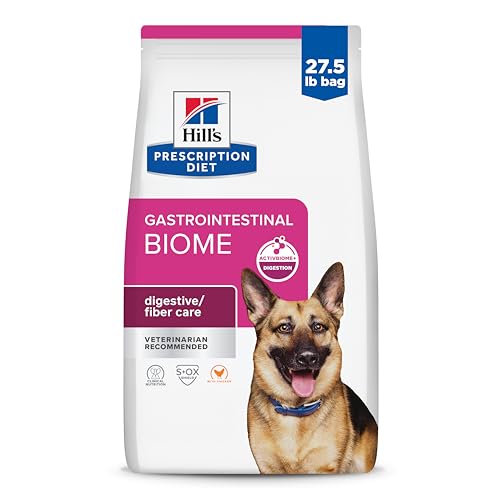
Hill's Prescription Diet GI Biome Digestive Dry Dog Food
What We Like
- Clinically firms loose stool in 24 hours
- ActivBiome+ supports healthy GI microbiome
- Prebiotic fibers promote regular bowel movements
Trade-offs
- Requires veterinary consultation before use
- Only available as a prescription diet
The trade-off is that this is a prescription-only product, so you’ll need a veterinarian’s approval before buying, not something you can grab on a whim. Compared to the Hill’s Science Diet Perfect Digestion, which is designed for general digestive health, this GI Biome formula is formulated for more specific digestive needs. If your dog’s digestive problems require a vet-recommended therapeutic diet, the extra step of a vet visit is worth it for the clinically shown results. But if you’re looking for a maintenance diet without the prescription requirement, the Science Diet line might be a better fit.
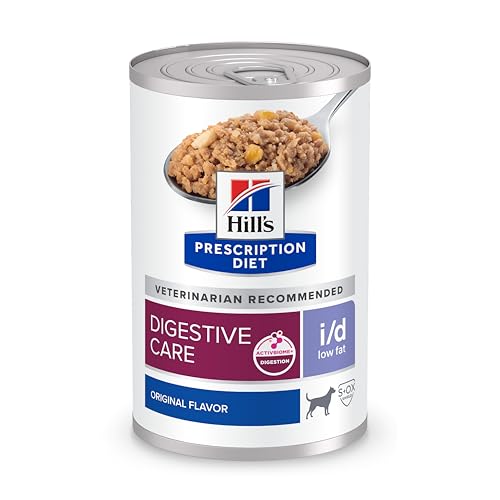
Hill's Prescription Diet i/d Low Fat Wet Dog Food
What We Like
- ActivBiome+ technology supports gut microbiome
- Low fat formula for digestive upsets
- Prebiotic fibers promote regular bowel movements
- Enriched with omega-3 fatty acids
Trade-offs
- Prescription required, not available over the counter
- Wet food has shorter shelf life after opening
- Only available in 13 oz cans
A low fat formula with ActivBiome+ ingredient technology means this wet food is built to rapidly activate beneficial gut bacteria and support a healthy GI microbiome balance. For dogs that need a low fat diet to settle digestive upsets, this prescription option from Hill’s delivers highly digestible protein, prebiotic fibers for regular bowel movements, and omega-3 fatty acids. It’s a targeted solution for dogs with fat digestion issues or elevated blood fat levels, backed by the brand’s veterinarian-formulated pedigree.
This is a prescription diet, so you’ll need a vet’s okay before buying. For owners whose dogs need a low fat wet option with proven digestive support, this is the one to grab.
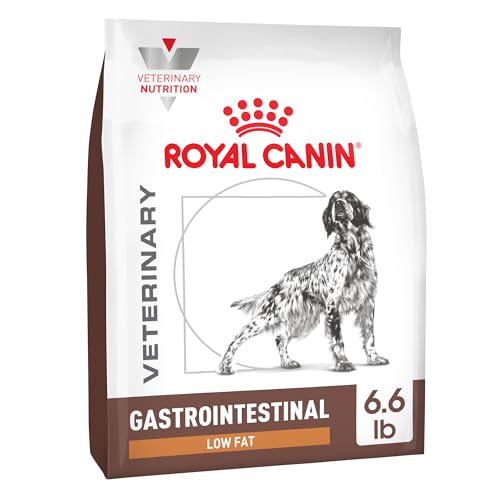
Royal Canin Veterinary Diet Gastrointestinal LF Low Fat Dry Dog Food
What We Like
- Low fat for fat digestion difficulty
- Prebiotics support gut bacteria
- Dietary fiber blend for stool quality
- Veterinary-exclusive digestive formula
Trade-offs
- Veterinary prescription required for purchase
- Only available in 6.6 lb bag size
A low-fat formula with 6.6 lb per bag means this is a targeted tool for dogs who struggle with fat digestion, not a bulk pantry staple. The prebiotics and fiber blend work together to support gut bacteria and stool quality, which is exactly what you want when your dog’s digestive system is on edge. Developed by veterinarians, it’s a precision product for a specific problem, not a general-purpose kibble. This suits owners whose vet has already flagged fat intolerance and who need a dry food that won’t provoke further issues.
This food requires a prescription, so you’ll need a vet’s approval before ordering. That’s a deliberate gate, not a convenience feature. Compared to Hill’s Prescription Diet GI Biome Digestive Dry Dog Food, which also targets digestive health but with a different fiber approach, Royal Canin’s low-fat angle is narrower and more specific. If your dog’s issue is strictly fat-related, this is the sharper pick; if the problem is broader, the Hill’s option might cover more ground.
Product photos
Purina Pro Plan Vet Diets EN Gastroenteric Wet Dog Food
What We Like
- High total digestibility for nutrient absorption
- Contains prebiotic fiber for GI health
- Includes MCTs from vegetable oil
- Antioxidants support overall health
Trade-offs
- Only available in wet food form
- Requires veterinary diet authorization
High total digestibility helps promote nutrient absorption, which matters when a dog’s digestive system is under stress. The formula includes a prebiotic fiber to nourish a healthy GI tract and MCT vegetable oil as a source of medium-chain triglycerides. This wet food is designed for dogs who need a highly digestible option, especially when dry food is not tolerated or when additional moisture is beneficial.
The Purina Pro Plan Vet Diets EN Gastroenteric Wet Dog Food is a highly digestible canned food with prebiotic fiber and antioxidants to support GI microbiome balance and digestive health. Because it’s a wet product, it’s less convenient for free-feeding than dry foods like Hill’s Prescription Diet GI Biome, but the moisture content can be beneficial for dogs who have trouble with kibble. For digestive support in a highly digestible form, this wet food is a practical option.
Royal Canin Veterinary Gastrointestinal Adult Dry Dog Food
What We Like
- Highly digestible proteins for sensitive stomachs
- Prebiotics support healthy gut microbiome
- Omega-3 fatty acids EPA+DHA aid digestion
- High energy content for underweight dogs
Trade-offs
- Veterinary-exclusive: requires vet approval to buy
- Not formulated for low-fat dietary needs
With 14% more energy content than the Gastrointestinal Moderate Calorie version, this food helps underweight dogs or those with a reduced appetite get the calories they need. The highly digestible proteins and selected prebiotics support digestive health and a healthy gastrointestinal microbiome. This makes it a practical choice for dogs with long- or short-term digestive sensitivities who need extra energy.
A prescription is needed for this veterinary-exclusive product, so you’ll need a vet’s okay before ordering. If your dog specifically requires a low-fat formula, the Royal Canin Gastrointestinal LF Low Fat would be a better fit, though that bag is much smaller. For most dogs with digestive sensitivity who aren’t on a fat restriction, this provides targeted support without the caloric compromise.
Product photos
Hill's Science Diet Perfect Digestion Dry Dog Food
What We Like
- ActivBiome+ prebiotic blend supports gut microbiome
- Balanced nutrition for adult dogs
- #1 veterinarian-recommended brand
Trade-offs
- Not a prescription diet for severe GI issues
- Contains grains, not suitable for grain-free diets
A 7-day stool improvement guarantee is the headline here, and it’s backed by a specialized prebiotic blend called ActivBiome+ that actively balances the gut microbiome. That means you’re not just feeding a generic kibble, you’re giving your dog a targeted digestive aid without needing a vet prescription. This is the best over-the-counter option for owners who want to address loose stools or irregularity with a mainstream, widely available food that also provides complete adult nutrition. The fact that Hill’s is the #1 vet-recommended brand adds a layer of trust for label skeptics like me.
Unlike prescription-strength options, this food doesn’t require a vet’s approval. If your dog has chronic, severe intestinal issues, you’d be better off with something like Hill’s Prescription Diet GI Biome, which is formulated for more intensive digestive care. This food is designed for adult dogs with mild to moderate intestinal issues, providing balanced nutrition without requiring a vet prescription. It supports digestive regularity and firm stools through its ActivBiome+ prebiotic blend, making it a practical choice for everyday feeding.
Product photos
How We Evaluated Dog Foods For Intestinal Issues
We started by reading the ingredient lists and guaranteed analysis of each food, paying close attention to the type and source of fiber, fat content, protein digestibility, and any added prebiotics or probiotics. Manufacturer documentation provided the clinical claims and formulation rationale. We then cross-referenced those claims against patterns in owner feedback to see which foods consistently delivered on stool quality and digestive comfort.
The four criteria that mattered most were digestibility, fat content, prebiotic and probiotic support, and accessibility. Digestibility determines how much nutrition the dog actually absorbs versus what passes through. Fat content is critical because many intestinal conditions make fat digestion painful or ineffective. Prebiotics and probiotics feed or introduce beneficial gut bacteria. Accessibility matters because prescription diets require a vet visit, which is a real barrier for some owners.
A research-led evaluation like this can tell you what a food is designed to do and what owners commonly report, but it cannot replace a veterinarian’s assessment of your dog’s specific condition. Every intestinal issue has a root cause, and the right food depends on that diagnosis.
What To Look For In Dog Foods For Intestinal Issues
The right food for your dog depends on the specific intestinal issue, but most effective options share a few core features. Here is what to check on the label and in the formulation.
Look for highly digestible protein sources, a moderate to low fat content, and added prebiotic fibers or probiotics. Avoid foods with vague “animal digest” or high fat levels that can trigger loose stools.
Digestibility and Protein Source
The protein in a digestive health food should be highly digestible, meaning the dog’s body can break it down and absorb it efficiently rather than passing undigested material into the colon. Many veterinary gastrointestinal diets use chicken, egg, or fish as the primary protein because these are generally well-tolerated.
If your dog has a known food intolerance, a novel or hydrolyzed protein may be necessary. Look for terms like “highly digestible” in the product description or check the ingredient list for whole meat or meat meal rather than by-products and unnamed protein sources.
Fat Content
Fat is a common trigger for dogs with intestinal issues because the pancreas and small intestine must work harder to emulsify and absorb it. Dogs with pancreatitis, exocrine pancreatic insufficiency, or fat malabsorption need a low-fat diet, typically under 10% on a dry matter basis. The low residue diet approach also limits fat to reduce the volume of stool produced. For dogs without fat sensitivity, moderate fat levels around 12-15% provide energy without overtaxing the digestive system. Always check the guaranteed analysis for crude fat percentage.
Prebiotics and Probiotics
The gut microbiome plays a central role in digestive health, and many veterinary diets now include prebiotic fibers like beet pulp, inulin, or fructooligosaccharides to feed beneficial bacteria. Some foods also add probiotics to introduce live cultures directly. The Hill’s ActivBiome+ technology is one example of a proprietary prebiotic blend designed to support the gut microbiome.
For dogs with chronic conditions like IBD, consistent prebiotic support can help maintain remission. Probiotics are more fragile and may be less effective in dry kibble than in wet food or as a separate supplement.
- Check the guaranteed analysis for crude fiber: 3-5% is typical for digestive health diets.
- Look for added prebiotics by name (beet pulp, inulin, FOS, MOS) rather than just “natural fiber.”
- If the food is dry kibble and claims probiotics, confirm the strain is heat-stable or added after cooking.
- Verify the fat percentage is appropriate for your dog’s specific condition, not just “low fat” in marketing terms.
A food that lists a specific prebiotic fiber source by name is usually more carefully formulated than one that simply says “fiber.”
Dog Foods For Intestinal Issues Compared
The table below compares the six foods side by side on the features that matter most for intestinal health, including fat content, fiber sources, and whether a prescription is required.
| Product | Key Ingredient / Tech | Omega-3 | Prebiotics |
|---|---|---|---|
| Hill's Prescription Diet GI Biome Digestive Dry Dog Food | ActivBiome+ technology | DHA & EPA | N/A |
| Hill's Prescription Diet i/d Low Fat Wet Dog Food | ActivBiome+ | N/A | N/A |
| Royal Canin Veterinary Diet Gastrointestinal LF Low Fat Dry Dog Food | N/A | N/A | Yes |
| Purina Pro Plan Vet Diets EN Gastroenteric Wet Dog Food | MCT oil, prebiotic fiber, antioxidants | N/A | N/A |
| Royal Canin Veterinary Gastrointestinal Adult Dry Dog Food | N/A | EPA+DHA | Selected prebiotics |
| Hill's Science Diet Perfect Digestion Dry Dog Food | ActivBiome+ Digestion | N/A | N/A |
Frequently Asked Questions
What is the best dog food for a dog with a sensitive stomach?
The best option depends on severity. For mild to moderate issues, the Hill’s Science Diet Perfect Digestion Dry Dog Food is an effective over-the-counter choice with its ActivBiome+ prebiotic blend. For chronic or severe sensitive stomach issues that cause vomiting, diarrhea, or poor appetite, a veterinary prescription diet like the Hill’s Prescription Diet GI Biome is typically more appropriate.
Can I buy prescription dog food without a vet visit?
No. Veterinary-exclusive diets like the Hill’s Prescription and Royal Canin Veterinary lines require authorization from a veterinarian. This is because these foods are formulated to manage specific medical conditions, and using them without a diagnosis can mask underlying problems or provide the wrong nutritional profile. The Hill’s Science Diet Perfect Digestion is the only food on this list available without a prescription.
How long does it take for a digestive health dog food to work?
Many veterinary diets are formulated to show improvement in stool quality within a day or two. The Hill’s Prescription Diet GI Biome is clinically shown to firm loose stool within 24 hours. For chronic conditions like colitis or IBD, full improvement may take one to two weeks as the gut lining heals and the microbiome rebalances. If there is no improvement within a week, consult your veterinarian.
What is the difference between prebiotics and probiotics in dog food?
Prebiotics are non-digestible fibers that feed the beneficial bacteria already living in the dog’s gut. They are stable in dry kibble and support long-term gut health. Probiotics are live beneficial bacteria added to the food. They can help repopulate the gut after antibiotic use or digestive upset, but they are more fragile and may not survive the heat of kibble production. Many veterinary diets rely primarily on prebiotics for this reason.
Should I choose wet or dry food for a dog with intestinal issues?
Wet food has higher moisture content, which can help with hydration in dogs that have diarrhea or vomiting. It is also often easier to digest because the ingredients are already cooked and softened. Dry food is more convenient, has a longer shelf life, and the kibble texture can help with dental health. The Hill’s Prescription Diet i/d Low Fat Wet Dog Food is a good choice for dogs that need extra moisture. The Royal Canin Veterinary Diet Gastrointestinal LF Low Fat Dry Dog Food offers a low-fat dry option.
The Bottom Line
The Hill’s Prescription Diet GI Biome Digestive Dry Dog Food is the best overall choice for dogs with intestinal issues. It combines clinically proven stool-firming speed with a prebiotic blend designed to support the gut microbiome long-term. It requires a veterinary prescription, but for dogs with chronic or recurring digestive problems, that consultation is the right first step anyway.
If you need a lower-fat option, the Royal Canin Veterinary Diet Gastrointestinal LF Low Fat Dry Dog Food is the best dry pick for fat-sensitive dogs. The Hill’s Prescription Diet i/d Low Fat Wet Dog Food covers the same need in a canned format. For owners who want to avoid the prescription process, the Hill’s Science Diet Perfect Digestion Dry Dog Food offers solid digestive health support for mild issues.
The single most important factor is matching the food to the diagnosis. A dog with colitis needs different nutritional support than a dog with simple food intolerance. Work with your veterinarian to identify the root cause, then choose the food that addresses it directly.
