
9 Best Cat Food For Kidney Disease in 2026
This post contains affiliate links. As an Amazon Associate, we earn from qualifying purchases.
For cats with kidney disease, the right diet is the single most important part of their care. We recommend Hill’s Prescription Diet k/d Kidney Care Starter Kit as the best overall because it combines reduced phosphorus with an appetite trigger that helps picky eaters, plus a variety pack to find your cat’s preferred texture. For cats who need extra encouragement to eat, the Royal Canin Veterinary Renal Support E Wet Cat Food is our pick for best appetite stimulation. The Weruva Wx Phos Focused Chicken Formula in Gravy earns the spot for best low phosphorus wet food.
Kidney disease in cats is a progressive condition, and dietary management focuses on reducing the workload on the kidneys by controlling phosphorus, protein, and sodium levels. The challenge is that many cats with kidney disease also lose their appetite, so palatability and texture become just as important as the nutritional profile. A food that sits in the bowl uneaten helps no one.
This guide is based on research into manufacturer specifications, expert veterinary nutrition guidelines, and patterns in owner feedback across dozens of renal diets. We break down what makes each of the nine picks worth considering, what to look for on the label, and how to match a diet to your cat’s specific stage of kidney disease.
Top 9 Cat Foods For Kidney Disease in the Market
Certain content that appears on this site comes from Amazon. This content is provided "as is" and is subject to change or removal at any time.
The Best Cat Foods For Kidney Disease, Reviewed
Hill's Prescription Diet k/d Kidney Care Starter Kit

What We Like
- Reduced phosphorus and sodium for kidney protection
- ActivBiome+ Kidney Defense supports gut-kidney axis
- Enhanced Appetite Trigger (E.A.T.) stimulates eating
- Variety pack helps find cat's preferred texture
Trade-offs
- Requires veterinarian authorization to purchase
- Smaller dry food bag (5.25 oz) limits long-term use
Reduced phosphorus and sodium are two numbers that matter when a cat’s kidneys are struggling. This starter kit pairs them with a clinically tested appetite trigger (E.A.T.) designed to get a picky, nauseated cat to eat, often the bigger battle. The variety pack includes two 5.25 oz dry food pouches, two 5.5 oz cans, and four 2.9 oz cans in different textures, so you can figure out whether your cat prefers pâté or chunks before committing to a full bag. For owners facing a new kidney disease diagnosis, this kit removes the guesswork from the first few weeks.
The trade-off is that this is a prescription diet, so you’ll need a vet’s okay to buy it, no grabbing it off the shelf on a whim. And the dry food portion (5.25 oz) is small enough that it’s clearly a trial size, not a month’s supply. For anyone starting kidney care, this starter kit’s built-in variety and appetite support make it a practical first step.
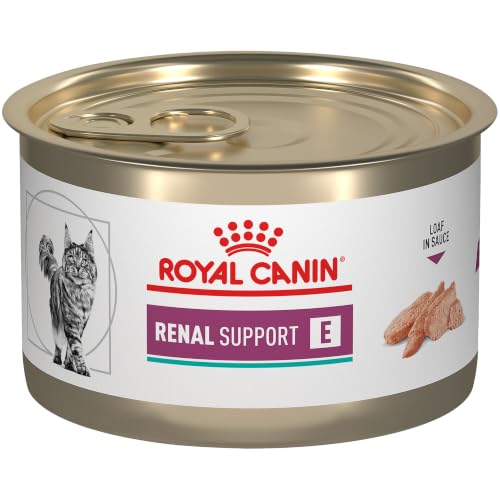
Royal Canin Veterinary Renal Support E Wet Cat Food
What We Like
- Enticing texture stimulates appetite
- Energy-dense formula reduces meal volume
- Low phosphorus supports kidney function
- Fish oil provides fatty acids
Trade-offs
- Veterinary-exclusive, requires prescription
- Only wet food, no dry variety in pack
The loaf-in-sauce texture is designed to be highly palatable, helping stimulate appetite in cats and encouraging eating. The energy-dense formula reduces meal volume, which can be beneficial for cats with decreased appetite. This makes it a useful option for cats needing renal support who may be reluctant to eat.
Because this is a veterinary-exclusive diet, you’ll need a prescription from your vet, which means it’s designed for cats with specific kidney health needs. The loaf-in-sauce texture is meant to entice picky eaters, and while some cats may turn up their noses, the formula is energy-dense to help reduce meal volume for those with decreased appetite. Royal Canin also offers dry food varieties in the Renal Support line, so if your cat prefers wet food, this is a targeted option. But the Hill’s Prescription Diet k/d Starter Kit includes both wet and dry textures for more flexibility.
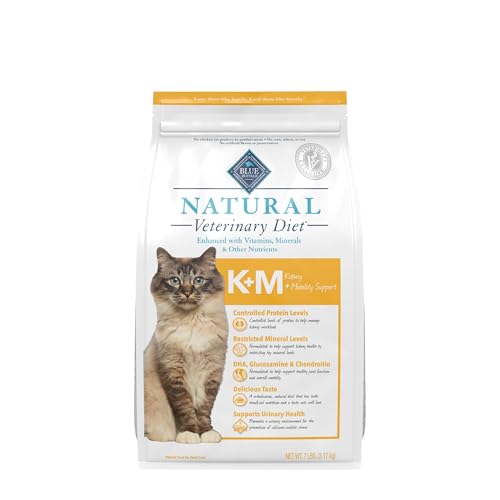
Blue Buffalo Natural Veterinary Diet K+M Dry Cat Food
What We Like
- Real chicken is first ingredient
- Combines kidney and joint support
- No chicken by-product meals
- No corn, wheat, or soy
Trade-offs
- Requires veterinarian authorization to purchase
- No wet food option in this formula
Controlled protein levels help manage kidney workload while real chicken stays the first ingredient, so your cat gets a familiar protein source without overloading compromised kidneys. This dry food also packs glucosamine and chondroitin for joint care, making it a rare two-in-one option for older cats dealing with both renal issues and mobility stiffness. If your cat needs kidney support but also struggles to jump onto the couch, this formula spares you from juggling two separate prescription diets.
You cannot buy it off the shelf; your vet must authorize the purchase, which adds a step compared to non-prescription renal foods like Dave’s Pet Food Renal Cat Food. That extra hurdle is standard for therapeutic diets, but it means you will need a current prescription and a vet visit before the bag arrives. For owners who want a single kibble that addresses both kidney function and joint health, this is the only option in this guide that pairs those two targets in one bag.
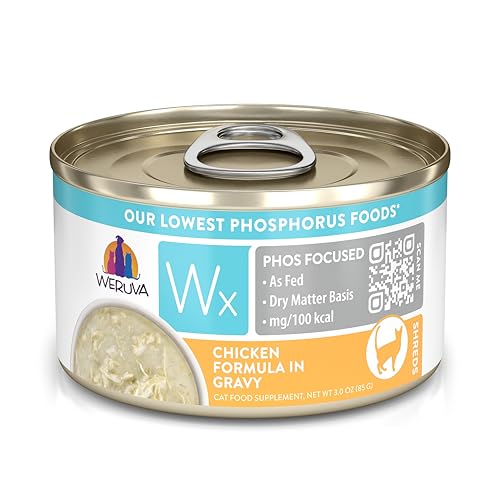
Weruva Wx Phos Focused Chicken Formula in Gravy
What We Like
- Low phosphorus supports kidney health
- High-quality chicken protein for muscle maintenance
- No fillers or powdered cellulose
- Gravy texture aids hydration
Trade-offs
- Wet food has shorter shelf life after opening
- Not suitable for cats without kidney issues
With up to 50% less phosphorus than AAFCO’s minimum levels, this formula reduces phosphorus intake without sacrificing protein or quality. The chicken-based gravy provides highly bioavailable proteins for optimal digestion and amino acid absorption to help maintain muscle mass. It also contains no powdered cellulose, fillers, or carbohydrates that superficially lower phosphorus percentages, making it a clean ingredient-focused wet food.
The most decisive fact here is that this food delivers up to 50% less phosphorus than AAFCO’s minimum levels, which means it’s designed specifically for cats needing strict phosphorus control without cutting protein quality. Each 3 oz can is a single-serve portion, so for a larger cat you might need two cans per meal, but that also means less leftover waste compared to opening a bigger can. The formula uses highly bioavailable proteins for better digestion and muscle maintenance, and it skips fillers like powdered cellulose that some brands use to artificially lower phosphorus numbers.
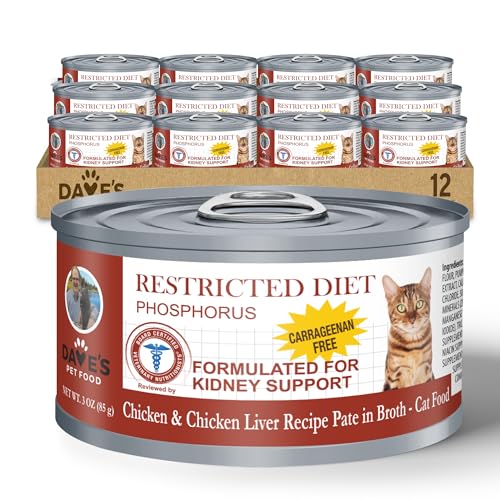
Dave's Pet Food Non-Prescription Renal Cat Food
What We Like
- Low phosphorus (max 0.3%)
- Low protein (min 5%) for kidney support
- Moisture-rich stew promotes hydration
- No carrageenan, artificial colors or flavors
Trade-offs
- Contains brown rice, a carbohydrate source
- Not suitable for cats needing a grain-free diet
With a guaranteed maximum phosphorus of 0.3% and minimum protein of 5%, this stew is formulated to reduce the workload on compromised kidneys while still providing essential nutrition. The moisture-rich broth helps increase fluid intake, a critical factor for cats with renal issues who often struggle with dehydration. Fortified with B-complex vitamins to replenish those lost through increased urination, it also includes dietary fats for caloric density and a soft texture to tempt picky eaters. This makes it a practical option for owners seeking a non-prescription diet that addresses the core dietary concerns of kidney disease without requiring a vet’s authorization.
The low protein level is appropriate for many renal cats, but owners should consult their veterinarian to ensure it meets their cat’s individual needs. Compared to other renal diets on the market, Dave’s offers a similar nutritional approach over the counter with a stew-like texture that can be more palatable for cats with reduced appetite. The inclusion of brown rice and pumpkin aids digestibility, but cats with grain sensitivities might prefer a grain-free alternative. If you want a clinically reviewed, low-phosphorus diet without the prescription hurdle, this is a straightforward, ingredient-conscious choice.
Product photos
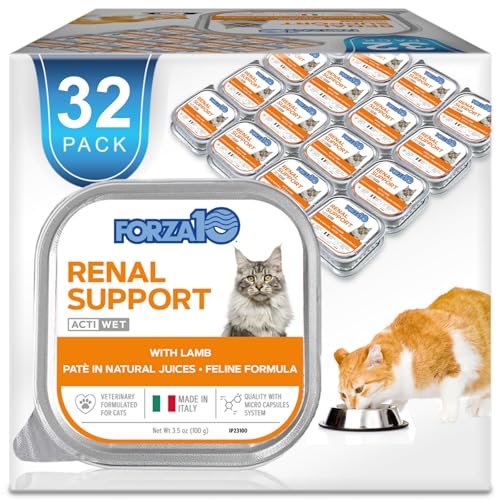
Forza10 Renal Wet Cat Food Lamb Flavor
What We Like
- Non-GMO, no by-products or soy
- Hydrolyzed protein for kidney support
- Includes cranberries and dandelion extract
- Convenient 3.5 oz single-serve cans
Trade-offs
- Only one protein option in wet line
- Wet food requires refrigeration after opening
A 32-can pack of 3.5 oz portions means single-serve meals without measuring or waste, which is handy for consistent feeding. Forza10 is formulated with hydrolyzed protein and potato protein for controlled phosphorus and adapted protein content, and it’s free from GMOs, by-products, wheat, soy, artificial colors, and preservatives. The recipe includes cranberries, dried dandelion, and dried clover extract to support kidney health. Made in Italy, this wet food offers a straightforward ingredient list for those focused on renal support.
You only get lamb flavor in the wet line, while Hill’s Prescription Diet k/d offers a variety pack with multiple textures and flavors. Forza10 sticks to one protein source, so if your cat doesn’t like lamb, you have 32 cans of a single flavor. But if your cat accepts lamb, the clean formulation and single-serve convenience make this a practical daily option for kidney support.
Product photos
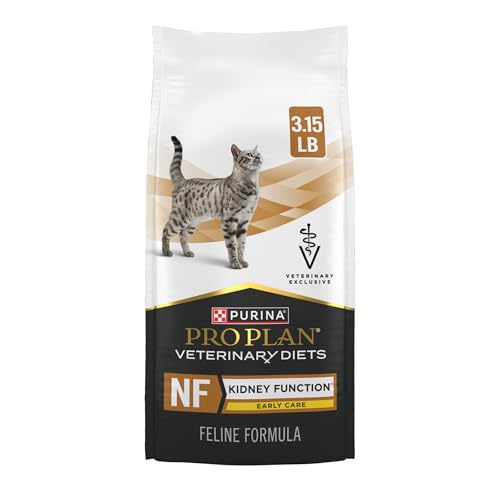
Purina Pro Plan Vet Diets NF Kidney Early Care Dry Cat Food
What We Like
- Controlled phosphorus for kidney support
- Moderate protein with antioxidants
- Omega-3 fatty acids for overall health
- Backed by scientific research
Trade-offs
- Dry kibble only, no wet food option included
- Not suitable for cats with advanced kidney disease
Controlled phosphorus is the single most important feature here: it directly supports kidney function in early-stage renal disease without overloading the system. Purina Pro Plan Vet Diets NF Kidney Early Care uses a moderate protein level paired with antioxidants to help maintain immune health, and adds omega-3 fatty acids (EPA and DHA) for overall well-being. This makes it a practical choice for cats that still have good appetite and need a maintenance diet that doesn’t push their kidneys harder than necessary. The dry kibble format also means you can leave food out without spoilage, which helps if your cat prefers grazing throughout the day.
Controlled phosphorus is the key feature here, so this kibble is designed to support kidney function in early-stage cats without overloading their system. It delivers a moderate amount of premium protein along with antioxidants for immune health, plus omega-3 fatty acids like EPA and DHA. Compared to the Hill’s Prescription Diet k/d Kidney Care Starter Kit, which includes both dry and wet options, this bag sticks to kibble only. If your cat is already a poor drinker, you might need to supplement with wet food or encourage water consumption separately.
Product photos
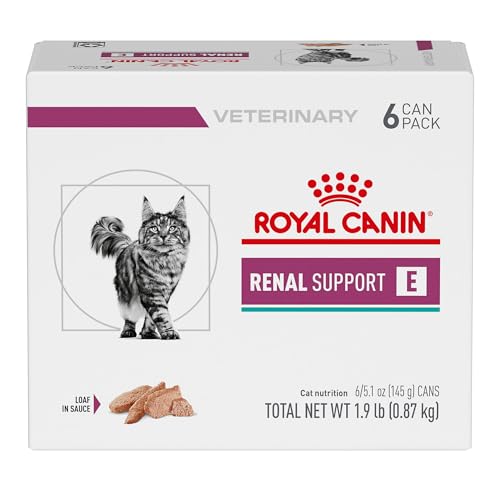
Royal Canin Renal Support E Wet Cat Food
What We Like
- Enticing loaf-in-sauce texture
- Energy-dense formula for decreased appetite
- Precise antioxidant complex for kidney function
- Low phosphorus and targeted protein
Trade-offs
- Veterinary-exclusive: requires vet authorization
- Requires veterinary authorization for purchase
The loaf-in-sauce texture is the single most decisive feature here, it’s designed specifically to tempt cats who’ve lost interest in eating, a common issue with kidney disease. That energy-dense formula means each bite packs more calories, so even small meals keep your cat from losing too much weight. This is a food built for the finicky, sick cat who turns up their nose at standard renal diets, and the precise antioxidant complex plus low phosphorus work together to support what kidney function remains.
You’ll need a vet’s okay to buy it, this is a prescription-only food, not something you grab off the shelf. Compared to the non-prescription Dave’s Pet Food Renal option, Royal Canin’s formula is more tightly controlled for phosphorus and protein, but that also means a trip to the clinic first. If your cat is already under veterinary care for kidney disease and eating is the struggle, this texture-focused wet food directly addresses that hurdle.
Product photos
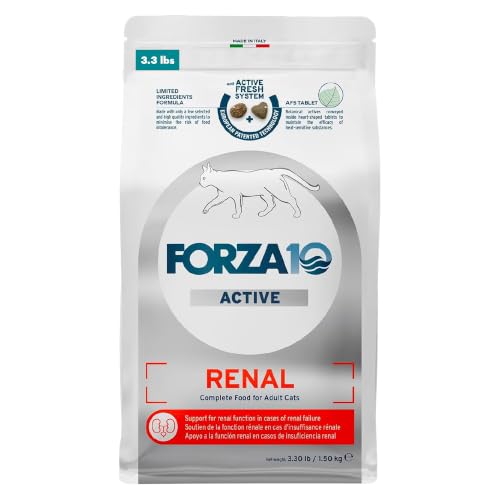
Forza10 Renal Dry Cat Food
What We Like
- Hydrolyzed protein for controlled phosphorus
- Cranberries, dandelion, clover support kidneys
- Non-GMO, no by-products or artificial additives
- Made in Italy with veterinary expertise
Trade-offs
- Only 3.3 lb bag, smaller than some options
- Dry food only, no moisture for kidney support
A phosphorus-controlled formula built around hydrolyzed protein and potato protein gives this Italian dry food a focused approach to renal support without relying on prescription-only ingredients. The inclusion of cranberries, dried dandelion, and dried clover extract targets kidney health directly. The absence of GMOs, by-products, wheat, soy, and artificial additives means the ingredient list is clean enough for a label reader to trust. Forza10 Renal suits cat owners who want a non-prescription dry food that still prioritizes kidney function and transparent sourcing, backed by veterinary formulation from Italy.
The 3.3-pound bag is a dry-only formula, so cats that need extra moisture from wet food won’t get it here. Other renal diets, like Hill’s Prescription Diet k/d, come in both dry and wet formats, but this Forza10 bag sticks to one texture. It works well if you want a non-prescription dry food with kidney-supporting ingredients like cranberries and dandelion extract, but it’s not ideal if your cat relies on wet food for hydration.
Product photos
How We Evaluated Cat Foods For Kidney Disease
We started by reviewing the nutritional specifications of each food, focusing on phosphorus content, protein levels, and sodium concentration, the three numbers that matter most for kidney support. Manufacturer documentation and published veterinary nutrition guidelines provided the baseline for what constitutes a therapeutic renal diet.
The four criteria that carried the most weight were phosphorus restriction (ideally below 1.0% on a dry matter basis for early-stage disease), protein quality and quantity (adequate to maintain muscle without overloading the kidneys), and moisture content (wet foods help hydration). Palatability features like texture, gravy, or appetite stimulants also matter, since they address the common problem of reduced appetite in cats with CKD.
This evaluation is based on published nutritional data, veterinary consensus on renal diet principles, and patterns reported by owners managing their cats’ kidney disease at home. We encourage readers to discuss any diet change with their veterinarian, especially since many of these foods require a prescription.
What To Look For In Cat Foods For Kidney Disease
Choosing a renal diet means reading past the marketing claims and focusing on the numbers and ingredients that actually support kidney function. Here is what matters.
Look for a phosphorus content below 1.0% on a dry matter basis, moderate but high-quality protein, and added moisture from wet food. Prescription diets are formulated to strict standards, but some non-prescription options can work for early-stage disease when monitored closely.
Phosphorus Restriction
Phosphorus is the primary mineral that damaged kidneys struggle to filter. Most veterinary guidelines recommend a dry matter phosphorus level that is low for cats with established kidney disease. The Hill’s Prescription Diet k/d line targets this range, as do the Royal Canin Renal formulas.
For early-stage disease, the Purina Pro Plan Vet Diets NF Kidney Early Care Dry Food keeps phosphorus controlled at a moderate level. The Weruva Wx Phos Focused formula and Dave’s Pet Food Non-Prescription Renal Cat Food both advertise specific low-phosphorus targets, making them strong options for owners who want to track this number closely.
Protein Quality and Quantity
Reducing protein is a balancing act: too little leads to muscle wasting, too much stresses the kidneys. The best renal diets use high-quality, highly digestible protein so the body absorbs what it needs with less waste for the kidneys to process. The Blue Buffalo Natural Veterinary Diet K+M combines kidney support with joint care while keeping real chicken as the first ingredient.
The Forza10 Renal formulas use hydrolyzed protein, which is broken down into smaller pieces for easier digestion. Non-prescription options like Dave’s Pet Food use a lower protein minimum (5%) that may suit cats whose bloodwork shows elevated BUN or creatinine.
Moisture Content and Hydration
Cats with kidney disease are prone to dehydration because their kidneys lose the ability to concentrate urine. Wet food provides a natural hydration source that dry kibble cannot match. The Weruva Wx Phos Focused Chicken Formula in Gravy and the Dave’s Pet Food Renal Stew both deliver high moisture content in a palatable format.
The Royal Canin Renal Support E Wet Food uses a loaf-in-sauce texture that many cats find irresistible, which helps ensure they consume enough fluid. For owners who prefer dry food, adding water or offering a separate wet meal is worth considering.
- Check the guaranteed analysis for phosphorus and protein on a dry matter basis (you can calculate it yourself with a simple formula).
- Look for the AAFCO statement of nutritional adequacy, renal diets should state they are formulated for “intervention” or “therapeutic” use.
- Confirm the food matches your cat’s disease stage: early, moderate, or advanced kidney disease.
- Read the ingredient list for added phosphorus sources like bone meal or fish meal that can push the total higher than the guaranteed analysis suggests.
A good rule of thumb: if the label does not list a phosphorus percentage, assume it is not formulated for kidney disease.
Cat Foods For Kidney Disease Compared
The table below compares the nine renal diets across the key criteria that matter for managing kidney disease: phosphorus control, protein level, moisture content, and whether a prescription is required.
| Product | Form | Phosphorus | Protein Source |
|---|---|---|---|
| Hill's Prescription Diet k/d Kidney Care Starter Kit | Dry food (5.25 oz) + Wet food (5.5 oz & 2.9 oz) | Reduced phosphorus & sodium | N/A |
| Royal Canin Veterinary Renal Support E Wet Cat Food | Loaf in sauce | Low | Targeted levels |
| Blue Buffalo Natural Veterinary Diet K+M Dry Cat Food | Dry | N/A | Real Chicken |
| Weruva Wx Phos Focused Chicken Formula in Gravy | Wet food in gravy | Up to 50% less than AAFCO minimum | Chicken |
| Dave's Pet Food Non-Prescription Renal Cat Food | Stew in Broth | max 0.3% | Chicken, Pumpkin, Brown Rice |
| Forza10 Renal Wet Cat Food Lamb Flavor | Wet | Controlled | Hydrolyzed & potato protein |
| Purina Pro Plan Vet Diets NF Kidney Early Care Dry Cat Food | Dry kibble | Controlled | Moderate |
| Royal Canin Renal Support E Wet Cat Food | Loaf in sauce | Low | Targeted levels |
| Forza10 Renal Dry Cat Food | Dry | N/A | Hydrolyzed & potato protein |
Frequently Asked Questions
What is the best cat food for kidney disease?
The Hill’s Prescription Diet k/d Kidney Care Starter Kit is our top recommendation for most cats. It combines reduced phosphorus and sodium with an appetite-stimulating formula and a variety pack that helps owners find their cat’s preferred texture. It requires a veterinarian’s authorization to purchase.
Can I feed my cat non-prescription food for kidney disease?
Yes, some non-prescription options can support kidney health, especially in early-stage disease. The Dave’s Pet Food Non-Prescription Renal Cat Food and the Forza10 Renal formulas are formulated with controlled phosphorus and quality protein without requiring a prescription. Always discuss any diet change with your veterinarian first.
Is wet or dry food better for cats with kidney disease?
Wet food is generally preferred because the high moisture content helps combat dehydration, a common issue in cats with kidney disease. Wet foods like the Weruva Wx Phos Focused and Royal Canin Renal Support E also tend to be more palatable for cats with reduced appetite. Dry food can work if the cat drinks enough water, but that is less common in CKD cats.
How much phosphorus should be in cat food for kidney disease?
For cats with established kidney disease, the phosphorus content on a dry matter basis should ideally be low. The Weruva Wx Phos Focused and Dave’s Pet Food Renal formulas both target this range. Early-stage diets like the Purina Pro Plan NF use moderately controlled phosphorus levels.
What ingredients should I avoid in cat food for kidney disease?
Avoid foods with added phosphorus sources like bone meal, fish meal, or meat and bone meal, as these can increase the total phosphorus load. Also watch for high sodium levels and excessive protein that can stress the kidneys. Stick to foods specifically labeled for renal support or kidney health.
The Bottom Line
For most cat owners starting kidney care, the Hill’s Prescription Diet k/d Kidney Care Starter Kit is the best overall choice. It addresses the two biggest challenges at once: kidney protection through reduced phosphorus and sodium, and appetite support through its Enhanced Appetite Trigger formula. The variety pack also removes the guesswork of figuring out whether your cat prefers pate, chunks, or gravy.
If your cat needs a non-prescription option, the Dave’s Pet Food Non-Prescription Renal Cat Food offers a low-phosphorus stew with good hydration at a budget-friendly price point. For cats with both kidney and joint issues, the Blue Buffalo Natural Veterinary Diet K+M combines both types of support in a single dry food.
The single most important factor in choosing a kidney diet is actually getting your cat to eat it. A perfectly formulated renal food is useless if your cat refuses it, so prioritize palatability and texture alongside the nutritional numbers. Work with your veterinarian to monitor bloodwork and adjust the diet as the disease progresses.
