
7 Best Dry Cat Food Vet Recommended in 2026
This post contains affiliate links. As an Amazon Associate, we earn from qualifying purchases.
The best overall vet recommended dry cat food is Hill’s Science Diet Adult Dry Cat Food, the #1 Veterinarian Recommended brand with high-quality protein and omega fatty acids for skin and coat. For hairball-prone indoor cats, the IAMS Proactive Health Indoor Dry Cat Food earns our Best Hairball Control award, while the Hill’s Science Diet Sensitive Stomach Dry Cat Food takes Best For Sensitive Stomachs.
A “vet recommended” label means the formula meets nutritional standards backed by veterinary nutrition research, but not every cat needs the same thing. Some need digestive support, others need weight management, and seniors have their own requirements. The right choice depends on your cat’s age, lifestyle, and any recurring issues like hairballs or loose stool.
We evaluated these seven dry foods by examining ingredient lists, manufacturer nutritional adequacy statements, expert veterinary nutrition guidelines, and patterns in long-term owner feedback. This guide walks you through the key differences so you can match a formula to your cat’s actual needs, not just the front-of-bag marketing.
Top 7 Dry Cat Foods Vet Recommended in the Market
Certain content that appears on this site comes from Amazon. This content is provided "as is" and is subject to change or removal at any time.
The Best Dry Cat Foods Vet Recommended, Reviewed
Hill's Science Diet Adult Dry Cat Food
What We Like
- #1 Veterinarian Recommended brand
- High-quality protein for lean muscles
- Omega-6 & Vitamin E for skin and fur
- Made with natural ingredients
Trade-offs
- Smaller bag size means more frequent reorders for multi-cat homes
- Not formulated for kittens or senior cats
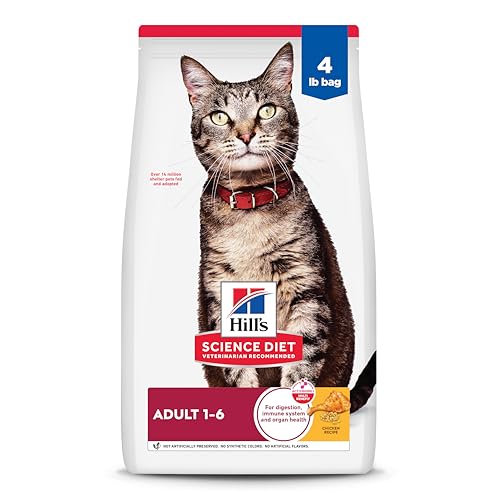
The #1 Veterinarian Recommended claim on the label means this formula is backed by the brand that vets recommend most often. High-quality chicken protein supports lean muscle maintenance, while Omega-6 and Vitamin E target healthy skin and a glossy coat. If you want a straightforward, vet-backed diet without chasing trendy ingredients, this is the bag to grab.
The trade-off is portion size: at 4 pounds, this bag is noticeably smaller than the 7-pound IAMS Proactive Health Indoor option. So you’ll be reordering more often if you have multiple cats or a hearty eater. But for a single adult cat, the compact size keeps the food fresher before it runs out. No gimmicks, just solid nutrition that your vet will recognize.
IAMS Proactive Health Indoor Dry Cat Food

What We Like
- Real poultry is the #1 ingredient
- Proprietary fiber blend for hairball control
- L-carnitine supports healthy weight
- Vet-recommended brand
Trade-offs
- Includes grains, not grain-free
- Targets indoor cats, not all life stages
Real chicken and turkey as the first ingredient means your cat gets a protein-rich meal that supports a healthy, active body, not a filler-heavy diet. IAMS adds a proprietary fiber blend with beet pulp that helps reduce hairballs before they start, which is a practical solution for indoor cats that tend to develop fur clumps. The formulation directly tackles that common issue with a clear, ingredient-based approach.
This is a grain-inclusive recipe, so if you’re set on a grain-free diet for your cat, you’ll want to look at a different product. But for a straightforward, vet-recommended option that tackles hairball issues and includes L-carnitine to help manage weight, this bag covers the basics without extra fluff.
Hill's Science Diet Sensitive Stomach Dry Cat Food
What We Like
- Triple support for stomach, skin, immune system
- Prebiotic fiber for gentle digestion
- Vitamin E and Omega-3 & 6 for coat health
- Clinically proven antioxidants for immunity
Trade-offs
- Not suitable for cats with poultry intolerance
- Not for cats with chicken allergies
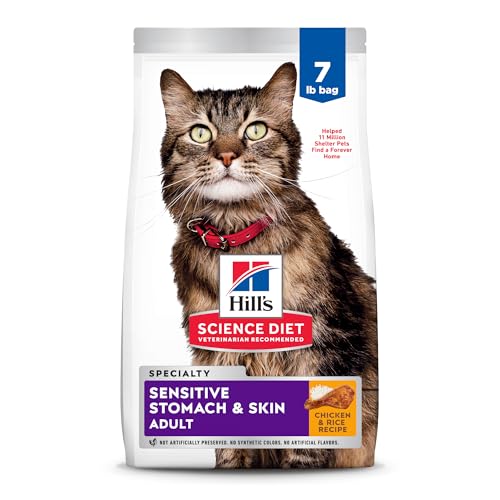
The prebiotic fiber in this formula is specifically designed to be gentle on the stomach while still allowing for optimal nutrient absorption. So your cat gets the full benefit of every bite without the digestive upset that often comes with switching foods. Backed by a full suite of vitamins and fatty acids, it targets stomach, skin, and immune health in one bag, making it a practical choice for adult cats with known sensitivities. The formula uses high quality chicken as the #1 ingredient, which is a familiar protein source for many cats.
This recipe is centered on chicken, so if your cat has a poultry intolerance, you’ll need to look elsewhere. The 7-pound bag is a standard size for single-cat households, but for multiple cats you may need to buy more frequently. For a single sensitive-stomach cat, the targeted formulation here is hard to beat.
Blue Buffalo True Solutions Digestive Care Dry Cat Food

What We Like
- Real chicken is first ingredient
- Clinically proven prebiotic fiber
- No corn, wheat, or soy
- Veterinarian-formulated recipe
Trade-offs
- Only 3.5 lb bag limits value for multi-cat households
- Bag size is 3.5 lb, smaller than some competitors
A clinically proven prebiotic fiber is the standout here, it’s not just a marketing claim but a specific ingredient tied to stool quality and digestive health. That makes this Blue Buffalo formula a straightforward choice for cats whose litter box habits signal trouble. The recipe leads with real chicken, skips corn, wheat, and soy, and was put together by veterinarians and animal nutritionists, so the ingredient list matches the digestive-care promise without unnecessary fillers.
The main trade-off is bag size: at 3.5 pounds, this is a smaller bag than Hill’s Science Diet Sensitive Stomach (7 lb) or Royal Canin Digestive Care (6 lb). So if you have multiple cats or a heavy eater, you’ll be reordering more often. The packaging also changed from the old Blissful Belly name, which might cause a double-take at the shelf. For a single cat with a sensitive stomach, though, the targeted fiber and clean ingredient list make it worth the extra trip to the store.
Product photos
Royal Canin Indoor Adult Dry Cat Food

What We Like
- Formulated for indoor cats 1-7 years
- Fiber blend helps manage hairballs
- Controlled calories support healthy weight
- Reduces stool quantity and odor
Trade-offs
- Only for adult indoor cats, not kittens or seniors
- No grain-free or limited-ingredient option listed
The calorie control and fiber blend are the two numbers that matter most here. Royal Canin Indoor Adult is built around a controlled calorie content that matches the lower activity of a strictly indoor cat, so you don’t have to guess portions to avoid weight creep. The fiber mix is designed to push ingested hair through the digestive tract, which directly cuts down on hairball frequency. For a cat that lives entirely inside and tends to snack out of boredom, this is a practical formulation that addresses the two biggest health headaches: obesity and hairballs.
Royal Canin Indoor Adult Dry Cat Food is formulated for indoor cats 1-7 years old, so it won’t work for kittens or seniors without checking with your vet. Compared to Hill’s Science Diet Adult, which covers a wider age bracket, Royal Canin is the more specialized choice for the indoor-only cat. If your cat is a confirmed indoor dweller and you want a food that tackles hairballs and weight in one bag, this is a clean, no-surprises option.
Product photos
Royal Canin Digestive Care Adult Dry Cat Food
What We Like
- Ring-shaped kibble slows eating
- Prebiotics and fiber support digestion
- 95%+ healthy stool in 10 days
- Veterinarian-developed formula
Trade-offs
- Only for adult cats, not kittens or seniors
- Requires 10 days for stool improvement
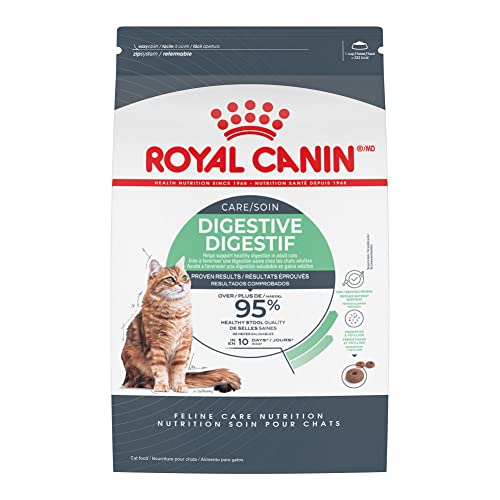
The ring-shaped kibble is the standout feature here, it forces slower eating, which directly helps cats with sensitive stomachs avoid gulping and regurgitating. Combined with a precise blend of prebiotics and dietary fiber, this formula targets digestive health from two angles: mechanical and nutritional. An internal study shows over 95% healthy stool quality after just 10 days, which is a concrete benchmark for a cat food aimed at digestive issues. If your cat tends to wolf down food and then vomit or have loose stools, this design addresses that specific pattern.
This is a targeted product for adult cats only, so it won’t work for kittens or seniors with different nutritional needs. If your cat already eats slowly, the ring-shaped kibble’s mechanical benefit may not be relevant. For a fast eater with a touchy gut, the combination of prebiotics, fiber, and slower-eating kibble is designed to address that specific pattern.
Product photos
Purina Pro Plan Senior Dry Cat Food
What We Like
- Real chicken as first ingredient
- Probiotics for digestive health
- Omega 6 and vitamin A for skin and coat
- Antioxidants for immune support
Trade-offs
- Only available in 3.5 lb bag
- Limited to senior 7+ cats
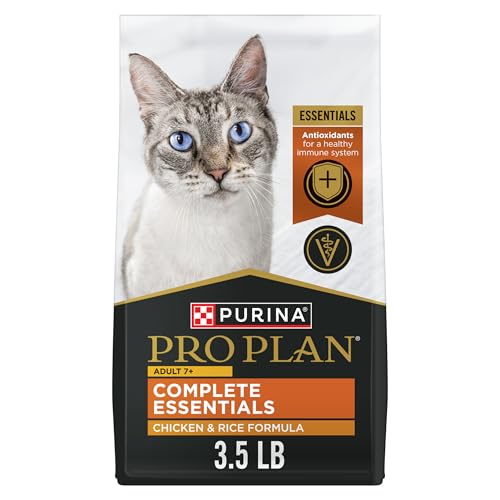
Real chicken is the first ingredient here, which means your senior cat gets a high-protein start that supports muscle maintenance as they age. The formula adds probiotics and natural prebiotic fiber to promote digestive health, plus omega 6 and vitamin A to keep skin and coat in good shape. Antioxidants back up immune support, and the lack of artificial colors or flavors matches what a label skeptic like me looks for. This is a straightforward, vet-recommended option for older cats whose digestive systems need a little extra help without gimmicks.
The 3.5-pound bag of this Purina Pro Plan Senior Dry Cat Food is a compact size, which makes it easy to store in small kitchens or carry from the store. Real chicken is the first ingredient, providing high-quality protein for older cats. It contains natural prebiotic fiber to support digestive health, plus omega-6 and vitamin A for skin and coat, and antioxidants for immune support. This formula is recommended by veterinarians and contains no artificial colors or flavors.
Product photos
How We Evaluated Dry Cat Foods Vet Recommended
Our evaluation started with manufacturer-published nutritional adequacy statements and guaranteed analysis data for each formula. We cross-referenced these against the WSAVA (World Small Animal Veterinary Association) nutritional guidelines that veterinary professionals commonly reference when recommending pet foods. Owner feedback patterns across multiple retail platforms helped us identify real-world outcomes like stool quality changes, coat condition improvements, and whether cats actually ate the food consistently.
The four criteria that mattered most were ingredient quality, nutritional balance for the target life stage, specific functional benefits, and the manufacturer’s track record for formulations. Ingredient quality means named protein sources first and minimal fillers. We prioritized brands that employ veterinary nutritionists and conduct feeding trials rather than relying solely on ingredient sourcing claims.
A research-led evaluation has honest limits. We did not feed these foods to a panel of cats, nor did we run laboratory analyses. The best way to confirm a food works for your cat is to transition slowly and watch their response.
What To Look For In Dry Cat Foods Vet Recommended
When a bag says “vet recommended,” the real question is what specific nutritional philosophy that recommendation is based on. Look past the logo and check the ingredient list, guaranteed analysis, and nutritional adequacy statement for your cat’s life stage.
Choose a dry cat food that lists a named animal protein as the first ingredient. It should also meet AAFCO nutrient profiles for your cat’s life stage and include targeted functional ingredients like prebiotic fiber or omega fatty acids for your cat’s specific needs.
Named Protein Source and Placement
The first ingredient tells you where the protein comes from. Chicken, chicken meal, salmon, or turkey should appear before any grain or plant protein. “Poultry meal” without naming the species is less transparent. Cats are obligate carnivores, so animal protein should dominate the formula. Check that the protein source matches your cat’s tolerance — chicken is common but some cats develop sensitivities.
Life Stage Appropriateness
Kitten, adult, and senior formulas differ in calorie density, protein-to-fat ratio, and calcium levels. Feeding an adult maintenance food to a kitten risks nutritional deficiency. A senior formula for a young adult cat may not provide enough protein to maintain lean muscle. The bag must state which life stage the food is formulated for, and it should match your cat’s actual age.
Targeted Functional Benefits
Many vet-recommended dry foods include specific additives for common cat problems. Prebiotic fiber (like beet pulp or inulin) supports digestive health and stool quality. Omega-3 and omega-6 fatty acids improve skin and coat condition. L-carnitine helps with weight management by supporting fat metabolism. Hairball control formulas use a fiber blend to help hair pass through the digestive tract rather than accumulating.
- Check the guaranteed analysis for crude protein (a high percentage is typical for adult maintenance)
- Look for a calcium-to-phosphorus ratio appropriate for your cat’s life stage
- Verify the food meets AAFCO nutrient profiles through feeding trials or formulation
- Confirm the calorie content (kcal/cup) matches your cat’s activity level and weight goals
- Read the ingredient list for named animal fats rather than generic “animal fat”
A vet-recommended dry cat food should have a nutritional adequacy statement on the bag, not just a logo on the front.
Dry Cat Foods Vet Recommended Compared
The table below compares the seven vet-recommended dry cat foods across their key features, target life stages, and best-use scenarios so you can quickly narrow your options.
| Product | Key Nutrients/Additives | Weight | Vet Recommendation |
|---|---|---|---|
| Hill's Science Diet Adult Dry Cat Food | Omega-6 & Vitamin E | 4.0 pounds | #1 Veterinarian Recommended |
| IAMS Proactive Health Indoor Dry Cat Food | Beet pulp, L-carnitine | 7.0 pounds | Veterinarians Recommend IAMS |
| Hill's Science Diet Sensitive Stomach Dry Cat Food | Prebiotic fiber, Omega-3 & 6, Vitamin E, C+E | 7.0 pounds | #1 Veterinarian Recommended |
| Blue Buffalo True Solutions Digestive Care Dry Cat Food | Clinically Proven Prebiotic Fiber | 3.5 pounds | Vet-Recommended |
| Royal Canin Indoor Adult Dry Cat Food | Hairball & weight control | 15.0 pounds | Developed by Veterinarians |
| Royal Canin Digestive Care Adult Dry Cat Food | Prebiotics and dietary fiber | 6.0 pounds | Developed by Veterinarians |
| Purina Pro Plan Senior Dry Cat Food | Probiotics, Prebiotic Fiber | 3.5 pounds | Recommended by veterinarians |
Frequently Asked Questions
What makes a dry cat food “vet recommended”?
A vet-recommended dry cat food is one that veterinarians commonly suggest based on its nutritional balance, ingredient quality, and the manufacturer’s commitment to research. Brands like Hill’s, Royal Canin, Purina Pro Plan, and IAMS employ veterinary nutritionists and conduct feeding trials. The term itself is not regulated, so look for a nutritional adequacy statement from AAFCO and a brand with a track record of veterinary partnerships.
Is vet recommended dry cat food better than wet food?
Neither is inherently better — they serve different roles. Dry food is convenient, shelf-stable, and supports dental health through kibble texture. Wet food provides higher moisture content, which helps with hydration and urinary tract health. Many veterinarians recommend feeding both: dry for daily nutrition and wet for moisture. The best choice depends on your cat’s health needs, preferences, and your budget.
Which vet recommended dry cat food is best for sensitive stomachs?
The Hill’s Science Diet dry cat food for sensitive stomachs is specifically formulated for cats with digestive sensitivities. It includes prebiotic fiber for gentle digestion, along with vitamin E and omega-3 and omega-6 fatty acids for skin and coat health. The formula uses chicken as its protein source, so it is not suitable for cats with poultry allergies. For cats that eat too fast, the Royal Canin Digestive Care ring-shaped kibble slows them down.
Can I feed my senior cat a vet recommended adult formula?
Senior cats age 7 and older have different nutritional needs than younger adults, including higher protein requirements to maintain muscle mass and adjusted phosphorus levels for kidney health. The Purina Pro Plan Senior Dry Cat Food is formulated specifically for cats 7+ with probiotics for digestion and antioxidants for immune support. Feeding a standard adult formula to a senior cat may not provide the targeted nutrients they need.
How do I switch my cat to a new vet recommended dry food?
Transition gradually over 7 to 10 days by mixing increasing amounts of the new food with the old. Start with a small amount of new food and mostly old for the first few days, then half and half, then mostly new, and finally all new food. Sudden changes can cause digestive upset, vomiting, or refusal to eat. If your cat has a sensitive stomach, extend the transition to 14 days and monitor stool quality throughout.
The Bottom Line
For most cat owners, the Hill’s Science Diet Adult Dry Cat Food is the safest starting point. It comes from the #1 Veterinarian Recommended brand, uses natural ingredients with omega-6 and vitamin E for skin and coat, and provides high-quality protein for lean muscle maintenance. If you have a single healthy adult cat with no special dietary needs, this is the formula to try first.
If your cat has specific issues, one of the award picks likely fits better. The IAMS Proactive Health Indoor Dry Cat Food targets hairball-prone indoor cats with a proprietary fiber blend and real poultry first. The Hill’s Science Diet Sensitive Stomach formula supports digestion, skin, and immunity in one bag. For seniors, the Purina Pro Plan Senior Dry Cat Food adds probiotics and immune-supporting antioxidants.
The single most important factor in choosing a vet recommended dry cat food is matching the formula to your cat’s life stage and specific health needs, not picking the most expensive or most advertised bag. Read the ingredient list, check the nutritional adequacy statement, and give your cat two weeks to show you whether it works.
