
10 Best Cat Food For Stinky Poop in 2026
This post contains affiliate links. As an Amazon Associate, we earn from qualifying purchases.
The best overall choice for reducing litter box odor is Royal Canin Indoor Adult Dry Cat Food, thanks to its highly digestible proteins and fiber blend that minimize stool quantity and smell. For cats with sensitive stomachs, the Purina Pro Plan Sensitive Skin & Stomach formula offers gentle digestion with live probiotics. Owners seeking a clinically proven option should consider Blue Buffalo True Solutions Digestive Care.
Stinky cat poop is usually a sign that something in the digestive process is off, often a food that isn’t being fully broken down or absorbed. The real fix isn’t masking the smell with scented litter; it’s choosing a formula with highly digestible ingredients and targeted fibers that reduce waste output and odor at the source.
We evaluated these ten foods by comparing their ingredient lists, digestibility claims, fiber sources, and probiotic content against manufacturer specifications and patterns in owner feedback. This guide focuses on what actually changes stool quality and smell, not marketing promises.
Top 10 Cat Foods For Stinky Poop in the Market
Certain content that appears on this site comes from Amazon. This content is provided "as is" and is subject to change or removal at any time.
The Best Cat Foods For Stinky Poop, Reviewed
Royal Canin Indoor Adult Dry Cat Food

What We Like
- Reduces stool quantity and odor
- Highly digestible proteins for digestive support
- Fiber blend helps manage hairballs
- Controlled calories for weight management
Trade-offs
- Formulated only for indoor adult cats
- Requires mixing with wet food for variety
A specific blend of highly digestible proteins and fiber helps reduce stool odor and manage hairballs. Royal Canin Indoor Adult Dry Cat Food is formulated for indoor cats aged 1-7, with controlled calories to match their lower activity levels. An optimal fiber blend helps pass ingested hair through the digestive system. The result is less odorous stools and fewer hairball issues, making it a straightforward choice for owners who want a predictable, vet-developed formula that addresses these concerns.
If your indoor cat’s stool odor is a concern, this formula addresses it directly with highly digestible proteins and specific nutrients to reduce both quantity and smell of stools. The trade-off is that this is a targeted product built for the indoor adult cat. So if you have a kitten, a senior, or an outdoor cat, the calorie and fiber balance won’t be right. Compared to Purina Pro Plan Sensitive Skin & Stomach, which uses lamb and rice with probiotics for digestive support, Royal Canin focuses on stool odor and hairball management through protein digestibility and fiber type.
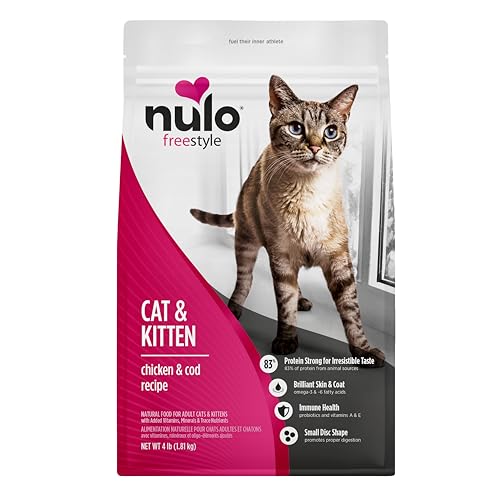
Nulo FreeStyle Grain-Free Dry Cat Food
What We Like
- 83% animal-based protein for lean muscle
- BC30 probiotics for digestive health
- Prebiotic fibers plus antioxidants support gut balance
- Omega fatty acids for skin and coat
Trade-offs
- Grain-free formula not for cats needing grain-based diets
- Small 4-pound bag requires frequent reordering for multi-cat homes
The BC30 probiotic in this Nulo formula is paired with prebiotic fibers and antioxidants like vitamins C and E to support digestive health and immune strength. For a cat whose litter box odor signals poor digestion, this recipe puts the emphasis on gut balance rather than just masking smell with fillers. It’s a straightforward, ingredient-first approach that suits owners who want to address the root cause rather than slap a bandage on the problem.
If you have one cat and want to test a digestive-focused formula without buying a month’s supply, the smaller bag is actually an advantage. But for multi-cat homes or those who prefer bulk buying, you’ll be reordering more often. The grain-free recipe also means it won’t work for cats that tolerate grains better, but for stinky poop linked to poor digestion, the probiotic and prebiotic combo here offers a targeted approach.
Product photos
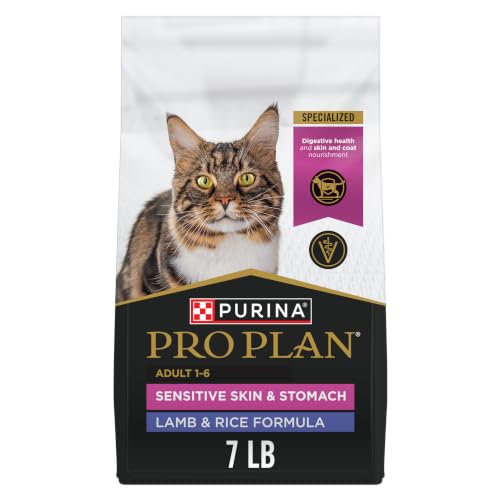
Purina Pro Plan Sensitive Skin & Stomach Dry Cat Food
What We Like
- Real lamb as first ingredient
- Rice and oat meal for easy digestion
- Live probiotics for digestive and immune health
- Omega-6 and vitamin A for skin and coat
Trade-offs
- Grain-inclusive formula not for grain-free seekers
Real lamb is the first ingredient, paired with easily digestible rice and oat meal. That combination is exactly what a sensitive stomach needs to process food without turning the litter box into a biohazard. The live probiotics add another layer of digestive support, while the omega-6 fatty acids and vitamin A keep skin and coat healthy. This is the bag to grab if your cat’s digestive system is the main source of the stink.
The bag size is a factor: at 7 pounds, it won’t last long in a home with multiple cats, so you’ll need to buy again sooner. For a single cat with a touchy stomach, though, the ingredient list here is straightforward and targeted.
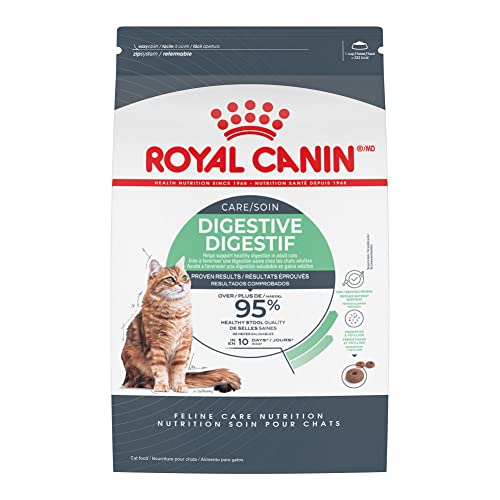
Royal Canin Digestive Care Dry Cat Food
What We Like
- Over 95% healthy stool quality
- Ring-shaped kibble slows eating
- Prebiotics and fiber for digestion
Trade-offs
- Only 6 lb bag for adult cats
- Dry food only, needs wet food pairing
A 95% healthy stool quality rate after just 10 days is the kind of number that makes a label-reader stop and take notice. That internal study result means this formula is engineered to turn messy, smelly litter box situations into something far more manageable. The ring-shaped kibble encourages slower eating, which helps support healthy digestion. For a cat with a truly sensitive stomach, this formula is specifically designed to address digestive issues with a precise blend of prebiotics and dietary fiber.
You get a relatively small 6 lb bag with this formula. So if you have multiple cats or a big eater, you’ll need to order again sooner than with a larger bag like Royal Canin Indoor Adult’s 15 lb option. That indoor formula is formulated for indoor cats and supports optimal stool, but it does not have the same digestive-targeted prebiotic and fiber blend or the proven stool quality data. If your main priority is fixing stinky poop and you don’t mind the smaller size, this is the one.
Stella & Chewy's Raw Coated Cat Food

What We Like
- High animal protein for ancestral nutrition
- Small kibble for picky eaters and seniors
- Probiotics and fiber for gentle digestion
- Omega fatty acids for coat health
Trade-offs
- Raw-coated kibble requires careful storage
- Not suitable for cats needing grain-free wet food
A 65-70% animal protein content with cage-free chicken as the first ingredient gives this kibble a clear nutritional edge for cats that turn their nose up at standard dry food. The small kibble size and freeze-dried raw coating are designed to tempt even the most selective eaters, while probiotics and natural fiber support the kind of steady digestion that helps keep stool odor in check. This is a smart pick for owners whose cat’s finicky appetite has been a barrier to switching to a higher-protein diet.
Raw-coated kibble delivers the high-protein, ancestral nutrition cats crave, with 65-70% animal protein and cage-free chicken as the first ingredient. The small kibble size works well for kittens, seniors, and cats with dental issues, while probiotics and natural fiber support gentle digestion. Omega fatty acids from salmon oil and fenugreek seeds promote a glossy coat and reduce shedding, so this food targets overall wellness in a grain-free recipe made in the USA.
Product photos
Blue Buffalo True Solutions Digestive Care Dry Cat Food

What We Like
- Clinically proven prebiotic fiber for stool quality
- Real chicken is the #1 ingredient
- No corn, wheat, or soy
- Vet-recommended high-protein formula
Trade-offs
- 3.5 lb bag is smaller than many competitors
- 3.5 lb bag requires more frequent reordering
A clinically proven prebiotic fiber means this formula is designed to directly address stool quality and digestive health. Real chicken as the first ingredient gives it a solid protein base, and the absence of corn, wheat, and soy removes common fillers that can upset sensitive stomachs. For cat owners who want a formula that targets digestive health with a vet-recommended, high-protein approach, this is a direct option.
The 3.5 lb bag is noticeably smaller than the Purina Pro Plan Sensitive Skin & Stomach 7 lb bag, so you’ll need to restock more often. It’s a chicken-only formula, which limits rotation if your cat needs variety or has a poultry sensitivity. That said, the formula is backed by clinical research and uses transparent ingredients, making it a focused choice for digestive health. The smaller size is a practical inconvenience, not a flaw in the formula itself.
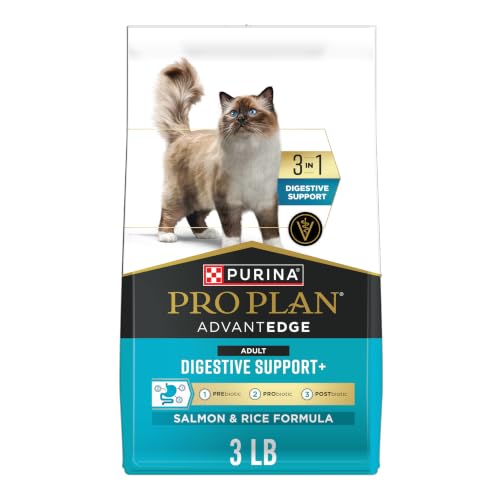
Purina Pro Plan AdvantEDGE Digestive Support Dry Cat Food
What We Like
- Three digestive support ingredients (prebiotics, probiotics, postbiotics)
- Real salmon as first ingredient
- Complete and balanced for adult cats
- No artificial colors or flavors
Trade-offs
- Not suitable for kittens
- Contains rice, which some cats avoid
A formula that packs prebiotics, probiotics, and postbiotics into one bag means you’re covering three stages of digestive support without juggling multiple products. That makes this a strong pick for owners trying to dial in stool quality through gut health, especially if your cat tolerates fish-based protein. The real salmon first ingredient and the absence of artificial colors or flavors keep the ingredient list straightforward, which is exactly what I look for when reading a label.
The bag size is 3 pounds, which means you’ll be ordering more often than with larger bags from other brands. For someone who wants to test a targeted digestive approach without committing to a massive bag, this lets you see if the three-pronged gut support actually firms things up before scaling up.
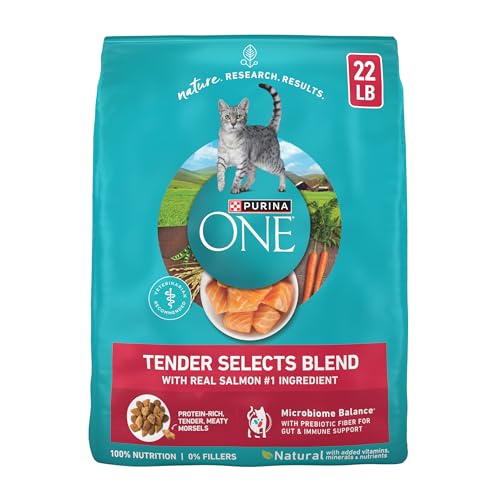
Purina ONE Digestive Tender Selects Dry Cat Food
What We Like
- Natural prebiotic fiber supports digestion
- No artificial flavors or preservatives
- 22-pound bag for fewer refills
Trade-offs
- Contains grains, not grain-free
- Not suitable for cats needing grain-free diet
A 22-pound bag means you’re buying in bulk, which is convenient if you have multiple cats or want to reduce shopping frequency. The formula starts with real salmon and adds natural prebiotic fiber to support a healthy microbiome balance, which can aid digestion. Purina ONE is a veterinarian-recommended brand, and this food is made in Purina’s own U.S. facilities, so you’re getting a straightforward digestive care recipe from a trusted source.
This is a grain-inclusive kibble, which some cats with very sensitive stomachs might not tolerate as well as a grain-free option like Stella & Chewy’s Raw Coated. But you’re getting a prebiotic fiber source and four antioxidant sources for immune support. If your cat doesn’t need a grain-free diet and you want a large bag that lasts, this is a practical choice.
Product photos
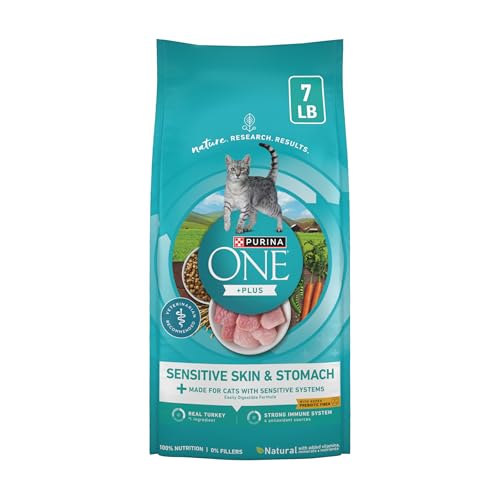
Purina ONE +Plus Sensitive Stomach Dry Cat Food
What We Like
- Real turkey is first ingredient
- Easily digestible with prebiotic fiber
- Supports strong teeth and gums
- No artificial flavors or preservatives
Trade-offs
- Dry kibble only, no moisture content
- Not suitable for cats needing grain-free diet
Real turkey sits at the top of the ingredient list, which means this formula puts protein first rather than relying on fillers. For a cat with a sensitive system, that protein base is paired with prebiotic fiber to help digestion run more smoothly, and four antioxidant sources back up the immune system. The crunchy kibble also includes calcium for dental health, so you’re covering gut comfort and teeth in one bowl. This is a straightforward, no-nonsense option for owners who want to address digestive sensitivity without chasing trendy ingredients.
This is a dry-only food, so you’ll need to ensure your cat gets enough moisture elsewhere, especially if they’re prone to urinary issues. If your cat’s stomach issues are mild and you prefer a turkey-based recipe, this is a sensible pick.
Product photos
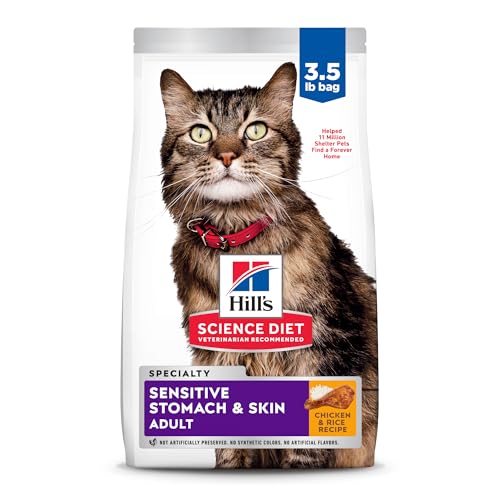
Hill's Science Diet Sensitive Stomach Dry Cat Food
What We Like
- Prebiotic fiber for gentle digestion
- Omega-3 & 6 for skin and coat
- Chicken is #1 ingredient
- Clinically proven antioxidants for immunity
Trade-offs
- Grain-in formula, not grain-free
- Single-bag size limits bulk buying
Prebiotic fiber and a highly digestible formula mean this food is designed to be gentle on the stomach, which directly addresses the root cause of stinky poop, poor digestion. The triple support approach (stomach, skin, immune system) goes beyond just odor control, making it a well-rounded option for cats with sensitive systems. With chicken as the #1 ingredient and added omega-3 and 6 fatty acids, you’re getting a protein-rich base that also supports skin and coat health, a bonus for cats that scratch or shed excessively.
This is a grain-inclusive formula, so if your cat does better on a grain-free diet, you’d want to look at something like Nulo FreeStyle. That said, the prebiotic fiber here is a targeted solution for digestive upset, and the clinical antioxidant support adds immune coverage that a basic grain-free kibble might not offer. For a cat whose stinky poop is tied to a sensitive stomach, this is a practical, veterinarian-formulated choice that prioritizes digestive health without skimping on overall nutrition.
Product photos
How We Evaluated Cat Foods For Stinky Poop
Our evaluation began with the ingredient list, the only reliable source of truth on a bag. We looked for named protein sources, specific fiber blends (not just “natural fiber”), and added probiotics or prebiotics that support digestion. Manufacturer data on digestibility and stool quality informed our rankings, alongside expert round-ups on feline nutrition.
Three criteria mattered most for this category. Digestibility came first: a food with highly digestible proteins produces less waste and fewer odorous compounds. Fiber content and type ranked second, since the right blend (soluble and insoluble) firms stools and slows digestion. Probiotic and prebiotic inclusion was third, because gut bacteria balance directly affects stool smell and consistency.
A research-based evaluation has limits. Recommendations are based on published research on ingredient function and consistent patterns in owner reports. The best food for your cat depends on their individual tolerance, which only a careful trial will reveal.
What To Look For In Cat Foods For Stinky Poop
The right food for reducing stool odor comes down to three measurable factors: digestibility, fiber profile, and gut health support.
Choose a food with a named animal protein as the first ingredient, a specific fiber source (not just “fiber”), and either added probiotics or prebiotics. Avoid vague “meat meal” and filler-heavy formulas.
Digestible Protein Sources
Cats are obligate carnivores, and their digestive systems handle animal proteins far more efficiently than plant proteins. A food with a single, named animal protein (chicken, lamb, salmon, turkey) as the first ingredient typically produces less waste because more of it gets absorbed. Look for terms like “real chicken” or “deboned salmon” rather than generic “poultry meal” or “meat by-products.”
Fiber Profile and Stool Firmness
Fiber serves two roles in stool odor control. Soluble fiber (like psyllium or beet pulp) absorbs excess water and firms loose stools. Insoluble fiber (like cellulose) adds bulk and speeds transit time. The best formulas for odor control balance both types. Royal Canin’s Digestive Care line, for example, uses a specific blend that achieves over 95% healthy stool quality in controlled feeding trials.
Probiotics and Prebiotics for Gut Balance
A healthy gut microbiome breaks down food completely and produces less gas and fewer odorous compounds. Probiotics introduce beneficial bacteria directly, while prebiotics feed the bacteria already present. Look for named strains (like BC30 in Nulo’s formula) rather than vague “live cultures.” The best cat food for poop odor typically includes both.
- Check that the first ingredient is a named animal protein, not a by-product or grain.
- Confirm the fiber source is listed specifically (chicory root, beet pulp, psyllium) rather than “fiber.”
- Look for a guaranteed probiotic count on the label if digestive support is a priority.
- Avoid formulas with corn, wheat, or soy as primary ingredients, they are harder for cats to digest.
A seven-day gradual transition is essential when switching to a new food; sudden changes cause loose stools regardless of the formula’s quality.
Cat Foods For Stinky Poop Compared
The table below compares the key features of each food, including protein source, fiber type, and probiotic content, so you can match a formula to your cat’s specific needs.
| Product | Protein Source | Fiber/Probiotic Type | Weight |
|---|---|---|---|
| Royal Canin Indoor Adult Dry Cat Food | Highly digestible proteins | Optimal blend of fiber | 15 lb |
| Nulo FreeStyle Grain-Free Dry Cat Food | Deboned Chicken (1st ingredient) | BC30 (advanced) probiotics | 4 lb |
| Purina Pro Plan Sensitive Skin & Stomach Dry Cat Food | Real lamb first | Rice, oat meal, probiotics | 3.5 lb |
| Royal Canin Digestive Care Dry Cat Food | N/A | Prebiotics and dietary fiber | 6 lb |
| Stella & Chewy's Raw Coated Cat Food | Cage-free chicken | Probiotics and natural fiber | 2.5 lb |
| Blue Buffalo True Solutions Digestive Care Dry Cat Food | Chicken (1st ingredient) | Clinically proven prebiotic fiber | 3.5 lb |
| Purina Pro Plan AdvantEDGE Digestive Support Dry Cat Food | Real salmon as first ingredient | Prebiotics, probiotics, and postbiotics | 3 lb |
| Purina ONE Digestive Tender Selects Dry Cat Food | Real Salmon | Natural prebiotic fiber | 22 lb |
| Purina ONE +Plus Sensitive Stomach Dry Cat Food | Real turkey | Prebiotic fiber | 7 lb |
| Hill's Science Diet Sensitive Stomach Dry Cat Food | Chicken | Prebiotic fiber | 3.5 lb |
Frequently Asked Questions
What causes a cat’s poop to smell so bad?
Stinky stool usually results from undigested protein reaching the colon, where bacteria ferment it and produce sulfur compounds. Low-digestibility ingredients, food intolerances, or an unbalanced gut microbiome are common causes. Switching to a highly digestible formula with probiotics often resolves the issue.
How quickly will a new food change stool odor?
Most cats show improvement in stool smell within one to two weeks of a full transition to a new food. The digestive tract needs time to adjust, and the gut microbiome takes several days to repopulate with beneficial bacteria. A gradual seven-day transition prevents digestive upset during this period.
Is grain-free cat food better for reducing poop smell?
Not necessarily. Grain-free formulas can help if a cat has a specific grain intolerance, but many grain-inclusive foods use easily digestible grains like rice and oat meal. The digestibility of the protein source matters more than the presence or absence of grains when it comes to stool odor.
Should I add probiotics to my cat’s food separately?
Many of the foods on this list already contain probiotics or prebiotics, making separate supplements unnecessary. If you choose a food without added probiotics, a vet-recommended probiotic supplement can help, but the most reliable approach is choosing a formula with probiotics already incorporated at effective levels.
Can changing my cat’s food too fast make the smell worse?
Yes. A sudden food change disrupts the gut microbiome and often causes loose stools, which smell stronger than firm stools. Always transition over seven days, mixing increasing amounts of the new food with decreasing amounts of the old food. The guide to transitioning cat food explains the process in detail.
The Bottom Line
For most cat owners dealing with stinky poop, Royal Canin Indoor Adult Dry Cat Food is the most reliable starting point. Its highly digestible proteins and targeted fiber blend reduce both stool quantity and odor, and the formula is designed specifically for the lower activity levels and digestive patterns of indoor adult cats.
If your cat has a sensitive stomach or needs a different protein source, the Purina Pro Plan Sensitive Skin & Stomach formula offers a lamb-based option with live probiotics. Nulo FreeStyle provides high animal protein with BC30 probiotics for deeper digestive support. Budget-conscious owners should look at the Purina ONE Digestive Tender Selects in the 22-pound bag for value without sacrificing prebiotic fiber.
The single most important factor in reducing stool odor is choosing a food your cat can digest completely. Read the ingredient list, not the front of the bag, and give any new formula a full two-week trial before judging the results.
