
4 Best Dog Food For Diabetic Dogs in 2026
This post contains affiliate links. As an Amazon Associate, we earn from qualifying purchases.
For diabetic dogs, the right food is as important as insulin. Dr. Harvey’s Paradigm Green Superfood Base Mix earns our Best Overall pick because it gives owners full control over protein and fat sources while providing a low-carb, ketogenic base that supports stable blood glucose. For budget-conscious households, Dave’s Pet Food Carbolight Canned Dog Food delivers a high-protein, reduced-carb option without requiring a prescription.
Managing canine diabetes means balancing carbohydrates, protein, and fiber to avoid blood sugar spikes. The challenge is that most commercial dog foods are built around starches and grains, exactly what diabetic dogs need less of. Owners must look past marketing claims and read ingredient lists for actual carb content and protein quality.
This guide is based on manufacturer specifications, veterinary nutrition guidelines, and patterns in owner feedback across four distinct product types. We break down what matters for diabetic dogs, compare the top options, and help you match a food to your dog’s size, budget, and dietary needs.
Top 4 Dog Foods For Diabetic Dogs in the Market

Certain content that appears on this site comes from Amazon. This content is provided "as is" and is subject to change or removal at any time.
The Best Dog Foods For Diabetic Dogs, Reviewed
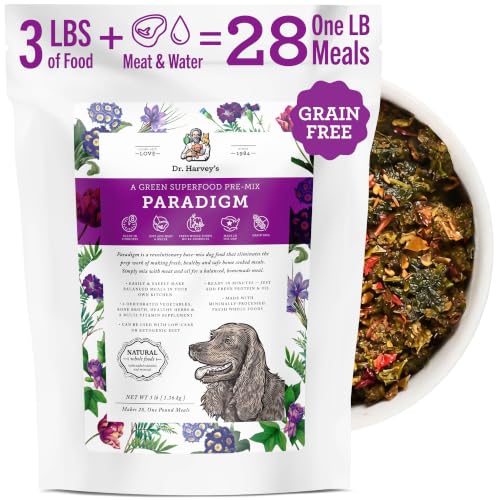
Dr. Harvey's Paradigm Green Superfood Base Mix
What We Like
- Human-grade, grain-free ingredients
- Low-carb, ketogenic base mix
- Ready in 8 minutes with hot water
- Control over protein type and quality
Trade-offs
- Requires adding protein and oil separately
- Only 1% fat requires extra fat source
A 54 kcal per scoop base mix means you control the protein and fat that go into your diabetic dog’s bowl, which is the whole point of a ketogenic approach. Dr. Harvey’s Paradigm is a dehydrated blend of six vegetables, bone broth, and herbs, no fillers, no grains, and nothing artificial. You rehydrate it with hot water in eight minutes, then add your own meat and a healthy oil. That lets you pick exactly the protein source and fat level your dog needs, something no single kibble can offer. The flexibility to tailor every meal while keeping carbs low and ingredients transparent makes this a strong option for owners who want that control.
The trade-off is that you’re not getting a complete meal out of the bag, you have to supply the protein and fat yourself. That means more hands-on effort than a canned option that is ready to serve. But if you want to know exactly what meat is going into your dog and avoid the starch binders common in many diabetic diets, the extra step is worth it. At 12% max fiber, this mix is higher in fiber, so you’ll want to monitor your dog’s digestion when switching.
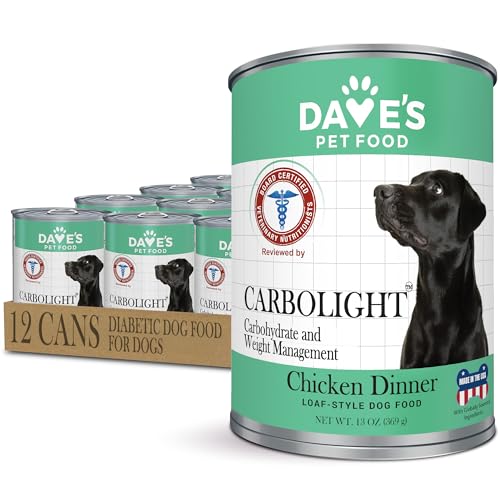
Dave's Pet Food Carbolight Canned Dog Food
What We Like
- Reduced carbs for glucose management
- High protein supports lean muscle
- L-Carnitine aids fat metabolism
Trade-offs
- Canned format creates more packaging waste than dry food
- Canned format less convenient for portioning than dry kibble
A reduced-carbohydrate canned pate means this food targets the two things that matter most for a diabetic dog: steady glucose levels and weight control. With high protein to help maintain lean muscle and added L-Carnitine to support fat metabolism, the formulation is built around metabolic efficiency rather than just filling a bowl. For owners watching both the budget and the ingredient list, this is a straightforward option that skips the marketing fluff and focuses on what goes inside the can.
The biggest advantage here is convenience: you open the can and serve, no mixing or measuring required. That makes it a practical choice for busy pet owners who want a straightforward feeding routine. But if you prefer to control every ingredient from scratch, a base mix that lets you add your own protein offers more flexibility.
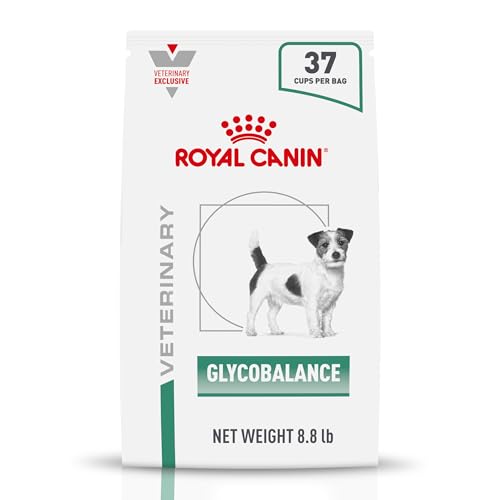
Royal Canin Glycobalance Small Adult Dry Dog Food
What We Like
- Reduced starch supports blood glucose
- Small kibbles for small jaws
- Poultry-based recipe for appetite
- Supports digestive, dental, urinary health
Trade-offs
- Only for small dogs up to 22 lbs
- Dry kibble only, no moisture option
A reduced starch level is the single most relevant detail here, diabetic dogs need meals that don’t spike blood glucose, and this formula directly addresses that by cutting back on starch. Royal Canin Glycobalance Small Adult Dry Dog Food is built for small breeds up to 22 lbs, with kibbles sized for their smaller jaws and a poultry base designed to keep mealtime interesting. It also supports digestive, dental, and urinary sensitivities, which are common in small dogs, so you’re not just managing diabetes but covering the other bases that tend to come with a small frame.
The trade-off is that this is a dry kibble formula, so if your dog prefers wet food, you would need to look at the canned Glycobalance from the same line. Compared to that canned option, this bag offers the convenience of dry storage and portion control, but it does not provide the moisture that some dogs get from wet food. It’s a focused product for a specific size range, so if your dog is over 22 lbs, you’ll need to look at the standard Glycobalance or another brand entirely.
Product photos
Hill's Prescription Diet w/d Multi-Benefit Dry Dog Food
What We Like
- Blend of soluble and insoluble fiber
- Helps manage glucose and weight
- Therapeutic L-carnitine helps metabolize fat and maintain lean muscle
Trade-offs
- Requires veterinary prescription to purchase
- Requires veterinary consultation before purchase
This is a food designed for dogs whose needs go beyond blood sugar alone, and the fiber blend (both soluble and insoluble) works to keep weight in check without sacrificing satiety.
Product photos
How We Evaluated Dog Foods For Diabetic Dogs
Our evaluation started with the basics: carbohydrate content, protein-to-fat ratio, and fiber profile. For diabetic dogs, the ideal food keeps carbs low and protein moderate while providing enough fat for energy. We examined each product’s guaranteed analysis, ingredient list, and any third-party certifications like human-grade or AAFCO nutritional adequacy statements.
We prioritized three criteria above all else. First, carbohydrate control, whether the food uses grains, starches, or low-glycemic ingredients. Second, protein quality and source transparency, since diabetic dogs need lean muscle support without excess calories. Third, practical usability: how easy the food is to portion, prepare, and feed consistently day after day.
A research-led evaluation has limits. We haven’t measured blood glucose responses in individual dogs, and every diabetic dog responds differently to the same food. What works for one may not work for another, which is why we emphasize owner flexibility and veterinary consultation alongside any diet change.
What To Look For In Dog Foods For Diabetic Dogs
Choosing a food for a diabetic dog means reading past the front of the bag and focusing on the numbers and ingredients that actually affect blood sugar.
Prioritize low-carbohydrate, high-protein recipes with moderate fat and a clear fiber source. Avoid foods where grains, starches, or sugars appear in the first five ingredients. Check the guaranteed analysis for crude fiber and ask your vet about target ranges.
Carbohydrate Content and Glycemic Load
Diabetic dogs need foods with reduced starch and sugar to minimize blood glucose spikes. Dry kibble typically contains a significant amount of carbohydrates from grains, potatoes, or legumes, while wet and fresh foods can be much lower. Look for foods that list their carbohydrate content explicitly, or estimate it by subtracting protein, fat, fiber, moisture, and ash from 100%. The best dry dog food for diabetic dogs will still be lower in carbs than standard kibble, but wet food often has an advantage because the moisture content naturally displaces carbs.
Protein Quality and Fat Balance
High-quality protein helps maintain lean muscle mass, which is critical for diabetic dogs who may lose weight during illness. Look for named animal proteins (chicken, beef, fish, lamb) rather than generic “meat meal.” Fat provides concentrated energy, but too much can contribute to weight gain and pancreatitis risk. A high-protein, low-carb food is ideal, but the fat level should match your dog’s activity level and body condition. Some diabetic dogs do well on moderate fat, while others need higher fat for calorie density.
Fiber Content and Type
Fiber slows glucose absorption and helps dogs feel full between meals. Soluble fiber (from oats, barley, psyllium, or beet pulp) is especially helpful for blood sugar management. Insoluble fiber (from cellulose or wheat bran) adds bulk and aids regularity. The best high-fiber food for a diabetic dog will contain a blend of both types. Look for a crude fiber content of up to 10% on a dry matter basis, but check with your vet, as some dogs need more or less depending on their specific condition.
A good rule of thumb: if the first three ingredients include a named protein, a low-glycemic vegetable, and a fiber source, the food is likely better for a diabetic dog. That beats one starting with corn, wheat, or rice.
- Check the guaranteed analysis for crude fiber percentage and compare it to your vet’s recommendation.
- Look for named protein sources (chicken meal, salmon, lamb) rather than generic “meat meal” or “poultry by-product.”
- Avoid foods with sugar, molasses, or corn syrup in the ingredient list, even small amounts add up. Consider whether your dog needs a non-prescription food or a veterinary therapeutic diet, depending on the severity of their condition. Ask your vet about low-carb dog food targets and whether a ketogenic-style diet is appropriate for your dog.
Dog Foods For Diabetic Dogs Compared
The table below compares the four top-rated dog foods for diabetic dogs across key criteria including carbohydrate profile, protein source, and preparation requirements.
| Product | Form | Protein | Fiber |
|---|---|---|---|
| Dr. Harvey's Paradigm Green Superfood Base Mix | Dehydrated base mix | 13% min | 12% max |
| Dave's Pet Food Carbolight Canned Dog Food | Canned pate | High | N/A |
| Royal Canin Glycobalance Small Adult Dry Dog Food | Dry kibble | Poultry-based | N/A |
| Hill's Prescription Diet w/d Multi-Benefit Dry Dog Food | Dry | N/A | Optimal soluble and insoluble fiber |
Frequently Asked Questions
What should I look for in a diabetic dog food?
Look for low carbohydrate content, high-quality named protein, and a moderate fiber level. Avoid foods with grains, starches, or sugars in the first five ingredients. A complete guide to diabetic dog food can help you compare options and understand what each ingredient means for blood sugar management.
Can I feed my diabetic dog dry kibble?
Yes, but choose a reduced-starch formula designed for glucose management. Standard dry kibble is often too high in carbohydrates for diabetic dogs. The best dry dog food options for diabetes are specifically formulated with lower starch and higher fiber than regular adult maintenance foods.
Is wet food better than dry food for diabetic dogs?
Wet food typically has lower carbohydrate content because moisture displaces starches, and the higher water content helps with hydration. However, dry food can work well if it is specifically formulated for diabetic dogs. The choice depends on your dog’s preferences and your vet’s recommendations.
Do I need a prescription diet for my diabetic dog?
Not always. Several over-the-counter food options are formulated for diabetic dogs, including Dr. Harvey’s Paradigm and Dave’s Carbolight. Prescription diets like Hill’s w/d offer additional therapeutic benefits for dogs with multiple health issues, but they require veterinary approval.
Can diabetic dogs eat treats?
Yes, but choose low-glycemic treats specifically formulated for diabetic dogs, or use small pieces of their regular food as treats. Avoid treats with sugar, molasses, honey, or high-carb fillers. Always account for treat calories in your dog’s daily food intake.
The Bottom Line
The best food for a diabetic dog is the one that keeps their blood glucose stable, their weight healthy, and their appetite satisfied. Dr. Harvey’s Paradigm Green Superfood Base Mix is our top pick because it puts the owner in control of protein and fat sources while providing a low-carb, ketogenic base that supports metabolic health. It works especially well for owners who are willing to mix in fresh ingredients and monitor their dog’s response closely.
If you need a budget-friendly option that doesn’t require preparation, Dave’s Pet Food Carbolight Canned Dog Food delivers high protein and reduced carbs in a ready-to-feed format. For small-breed diabetic dogs, Royal Canin Glycobalance Small Adult Dry Dog Food offers small kibbles and reduced starch tailored to dogs under 22 pounds. And for dogs with multiple health concerns, Hill’s Prescription Diet w/d Multi-Benefit Dry Dog Food combines glucose, weight, and digestive support in one therapeutic formula.
The single most important factor is consistency. Whatever food you choose, feed the same amount at the same times every day, coordinate meals with insulin injections, and work with your veterinarian to adjust the plan as your dog’s needs change.
