
10 Best Cat Food For Poop Smell in 2026
This post contains affiliate links. As an Amazon Associate, we earn from qualifying purchases.
The best way to reduce litter box odor starts with what goes in the bowl. Royal Canin Indoor Adult Dry Cat Food takes the top spot. Its highly digestible proteins and specialized fiber blend target stool odor at the source. Purina ONE +Plus Sensitive Stomach offers a budget-friendly alternative for cats with touchy digestion.
A smelly litter box is often a sign that your cat’s food isn’t breaking down efficiently. When undigested protein reaches the colon, gut bacteria produce sulfur compounds that make waste smell worse. The right food can change that cycle by improving digestibility and supporting a balanced gut microbiome.
We evaluated 10 cat foods by comparing their ingredient lists, fiber sources, protein digestibility, and the patterns reported in owner feedback. This guide focuses on what the label actually says so you can make an informed choice without relying on marketing claims.
Top 10 Cat Foods For Poop Smell in the Market

Certain content that appears on this site comes from Amazon. This content is provided "as is" and is subject to change or removal at any time.
The Best Cat Foods For Poop Smell, Reviewed
Royal Canin Indoor Adult Dry Cat Food

What We Like
- Odor control for stool
- Hairball management fiber blend
- Controlled calories for weight
- Highly digestible proteins
Trade-offs
- Only for adult indoor cats 1-7 years
- Dry food only, no moisture boost
The formula includes specific nutrients to help reduce stool quantity and odor, making it a practical option for managing litter box smells. Highly digestible proteins support nutrient uptake, and controlled calorie content helps indoor cats maintain a healthy weight without portion guesswork. This kibble is built around the realities of a sedentary lifestyle: less movement, more hairballs, and a stronger need for digestive efficiency.
The odor-control formula in this 15-pound bag is designed to reduce the quantity and smell of your cat’s stool. That’s a direct benefit for owners tired of a stinky litter box. It’s a dry kibble, so it won’t add to your cat’s water intake the way wet food would, but if your main goal is cutting down on smell while supporting digestion, this product targets that need specifically.
Royal Canin Digestive Care Adult Dry Cat Food
What We Like
- Ring-shaped kibble slows eating
- Prebiotics and fiber for digestion
- Over 95% healthy stool quality
- Developed by veterinarians
Trade-offs
- Only available in 6 lb bag
- Requires 10 days for full effect
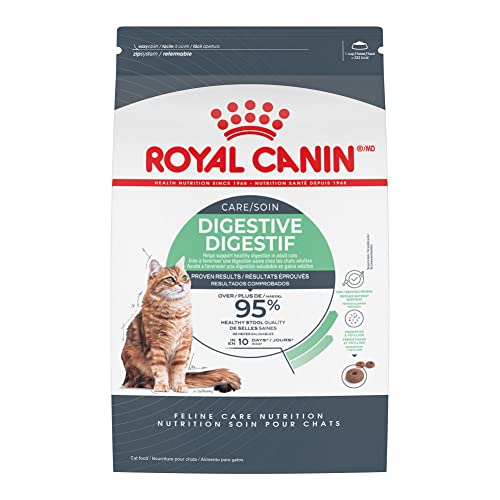
Over 95% healthy stool quality after 10 days is a concrete, measurable claim, most foods don’t put a number on it. That makes this a focused choice if you’re tired of guessing whether the kibble is actually helping. The ring-shaped kibble is a clever touch: it forces slower eating, which gives the digestive system more time to process, and that matters when you’re trying to minimize odor at the other end. It’s formulated for adult cats with sensitive stomachs, so if your cat has a touchy gut but no other health issues, this fits neatly.
Over 95% healthy stool quality after 10 days is the benchmark from an internal study, so you can actually track whether this food is working for your cat’s digestion. The 6-pound bag means you’ll be ordering more often, but that’s a small trade-off for a formula with a specific, proven digestive result.
Purina ONE +Plus Sensitive Stomach Dry Cat Food
What We Like
- Real turkey as first ingredient
- Prebiotic fiber for sensitive systems
- Four antioxidant sources for immunity
- No artificial flavors or preservatives
Trade-offs
- Not suitable for cats with chicken or grain allergies
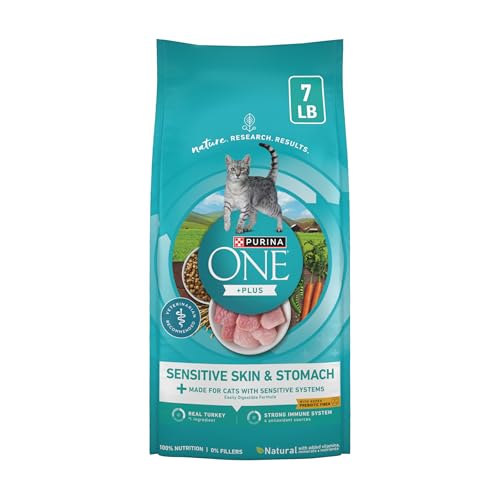
Real turkey leads the ingredient list, which means the protein base is straightforward and familiar for a cat with a touchy stomach. The easily digestible formula includes prebiotic fiber to help support healthy digestion. Calcium supports strong teeth and healthy gums, and four antioxidant sources help support a healthy immune system. This Purina ONE sensitive stomach cat food is made with no artificial flavors or preservatives, so you get a clean ingredient list that focuses on what matters for a sensitive system.
The 7-pound bag is a moderate size, so if you have multiple cats or a heavy eater, you may need to restock more often than with a larger bag like the 15-pound Royal Canin Indoor Adult. That Royal Canin is formulated for indoor cats and optimal stool, while the Purina ONE is designed for cats with sensitive systems more broadly. If your cat’s main issue is occasional digestive upset, this is a smart starting point. If you need a formula specifically targeting stool quality, you might consider the Royal Canin option.
Hill's Science Diet Sensitive Stomach Dry Cat Food
What We Like
- Prebiotic fiber for gentle digestion
- Omega-3 & 6 for skin and coat
- Vitamin E + C for immune support
- Chicken is the #1 ingredient
Trade-offs
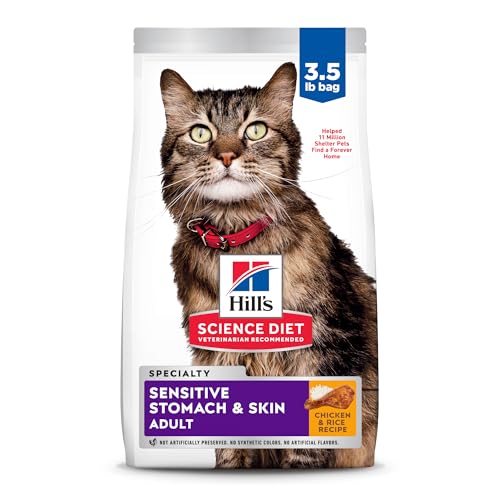
- No probiotic strains listed on the bag
- Only available in one 3.5 lb bag size
A highly digestible formula with prebiotic fiber is the key here. That fiber helps move food through the gut efficiently, which directly cuts down on the kind of fermentation that makes litter box odors so rank. Hill’s Science Diet Sensitive Stomach is built around that principle, pairing it with 29 key nutrients including omega-3 and 6 fatty acids for skin and coat health. It’s a practical choice for a cat with a touchy stomach that still needs complete nutrition, and the chicken-first ingredient list means you’re getting real protein as the main component. If your cat’s poop smell is tied to digestive upset, this formula’s targeted approach may help.
The #1 ingredient is chicken, so if your cat has poultry sensitivities, a lamb-based option like Purina Pro Plan Sensitive Skin & Stomach might be a better fit. For cats that tolerate chicken, the prebiotic fiber supports gentle digestion and nutrient absorption, while vitamin E and omega fatty acids help maintain healthy skin and a shiny coat. This is a straightforward, veterinarian-recommended formula that addresses digestive health with clinically proven antioxidants for immune support.
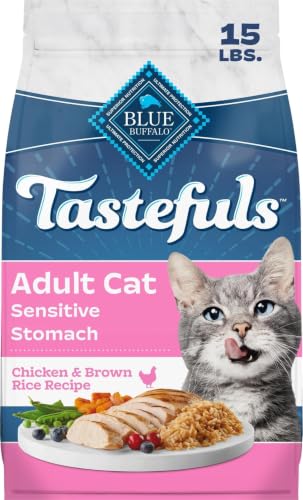
Blue Buffalo Tastefuls Sensitive Stomach Dry Cat Food
What We Like
- Real chicken is first ingredient
- Includes prebiotic FOS for digestion
- Contains LifeSource Bits for immune support
- No corn, wheat, soy or by-products
Trade-offs
- Contains grains, not grain-free
- Formulated only for adult cats, not kittens or seniors
Real chicken as the first ingredient provides digestible animal protein, a solid start for sensitive stomachs. The FOS prebiotic and brown rice are included to support healthy digestion, while LifeSource Bits add antioxidants, vitamins, and minerals for immune health. This recipe contains no poultry by-products, corn, wheat, or soy, making it a natural option for owners who want a straightforward sensitive stomach formula.
Blue Buffalo Tastefuls Sensitive Stomach Dry Cat Food starts with real chicken as the first ingredient, so your cat gets high-quality protein for strong muscles and energy. This grain-inclusive formula includes brown rice and FOS prebiotics to support healthy digestion in adult cats with sensitive stomachs. If your cat does better on a grain-free diet, you would need to look elsewhere.
Purina Cat Chow Gentle Sensitive Stomach Dry Cat Food
What We Like
- Natural prebiotic fiber for digestive health
- Real farm-raised turkey as first protein
- No artificial colors or flavors
- Omega-6 fatty acids for skin and coat
Trade-offs
- Only one protein source listed (turkey)
- Not suitable for cats with multiple protein allergies
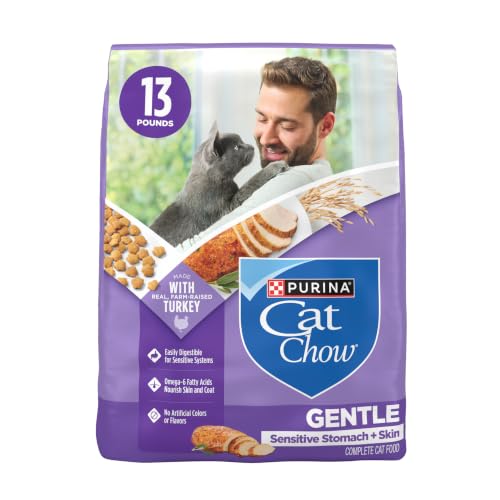
The natural prebiotic fiber in this formula directly supports digestive health, which is the root cause of many stomach issues in cats. By promoting easier digestion and more consistent stool formation, it helps cats with sensitive systems feel healthy and stay nourished. That makes it a strong candidate for cats whose sensitive stomachs need gentle support. The real farm-raised turkey provides high-quality protein without the fillers that can upset a delicate stomach, and the complete vitamin and mineral profile ensures your cat isn’t missing anything essential.
The trade-off is that this food focuses on a single protein source, turkey, which may not suit cats with poultry sensitivities or those who need variety to avoid developing new allergies. Compared to the Royal Canin Digestive Care formula, which is also developed by veterinarians for sensitive stomachs, Purina’s approach is simpler and more straightforward. If your cat’s sensitive system is the main driver of digestive discomfort, this is a logical starting point, but you’ll want to monitor for any signs of intolerance to turkey over time.
Product photos
IAMS Proactive Health Sensitive Digestion Dry Cat Food

What We Like
- Real turkey is first ingredient
- Specialized fiber blend for digestion
- Prebiotics support nutrient absorption
- Omega fatty acids for skin and coat
Trade-offs
- Only one protein source listed
- Not ideal for cats with poultry sensitivity
A specialized fiber blend and prebiotics help nourish intestinal cells and improve nutrient absorption, which supports healthy digestion. Real turkey is the first ingredient, providing a high-quality protein source that most cats do well on. The formula also includes a clinically proven ratio of omega-6 and omega-3 fatty acids to promote skin and coat health, including a soft and glossy coat.
Real turkey is the first ingredient, so your cat gets a high-quality protein source that supports muscle maintenance and energy. The specialized fiber blend and prebiotics help nourish intestinal cells and improve nutrient absorption, which can make a real difference for cats with mild digestive sensitivity. However, every cat’s gut is different, and some may need a more tailored fiber balance. If your cat has a known sensitivity to poultry, you might consider the Royal Canin Digestive Care Adult Dry Cat Food, which is also developed by veterinarians and designed for digestive support.
Product photos
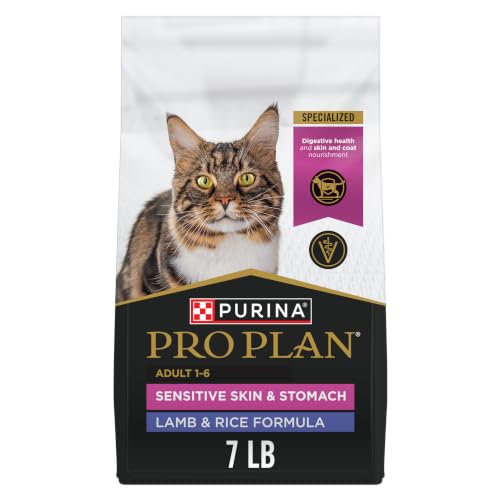
Purina Pro Plan Sensitive Skin & Stomach Dry Cat Food
What We Like
- Real lamb as first ingredient
- Guaranteed live probiotics for digestive health
- Rice and oat meal are easily digestible
- Omega-6 and vitamin A for skin and coat
Trade-offs
- Not formulated for cats with chicken or fish sensitivities
- Lacks specific ingredients for stool odor control
Real lamb is the first ingredient in this high-protein formula, and it’s fortified with guaranteed live probiotics, so it’s built for digestive health from the start. The easily digestible rice and oat meal base is designed to be gentle on sensitive stomachs. For cat owners managing a cat with known sensitivities, this provides a reliable everyday food that supports digestive and immune health without unnecessary extras.
This food does not include any specific ingredients aimed at reducing stool smell, unlike some competitors such as Royal Canin Digestive Care which targets digestive support more directly. The lamb protein source may also not agree with every cat, especially those accustomed to chicken or fish. That said, for a cat with a sensitive stomach, the probiotic support and gentle grains here are designed to support steady digestion, making it a practical option worth trying.
Product photos
Blue Buffalo True Solutions Digestive Care Dry Cat Food
What We Like
- Real chicken as #1 ingredient
- Clinically proven prebiotic fiber
- Veterinarian-recommended formula
- No corn, wheat, or soy
Trade-offs
- Only available in 3.5 lb bag
- Targets digestive care, not general nutrition
A clinically proven prebiotic fiber is the standout feature here, directly targeting stool quality and digestive health. For anyone trying to manage litter box odor, that means the formula is designed to firm up stools and reduce the kind of loose, smelly messes that come from poor digestion. Real chicken is the first ingredient, so you’re not trading protein quality for digestive support, and the absence of corn, wheat, and soy removes common filler triggers. This is a focused, vet-formulated option for cats whose poop smell is tied to gut sensitivity.
The bag size is a smaller commitment than the 15-pound bags of Royal Canin Indoor Adult or Blue Buffalo Tastefuls Sensitive Stomach. At 3.5 pounds, that works fine for a trial run or a single cat, but if you have multiple cats or a steady routine, you’ll be reordering more often. It also sticks to digestive care specifically, so if your cat needs a broader indoor formula or skin support, you’d look at those other options. For a targeted, clinically proven prebiotic approach to stool quality, this is the one to try first.
Product photos
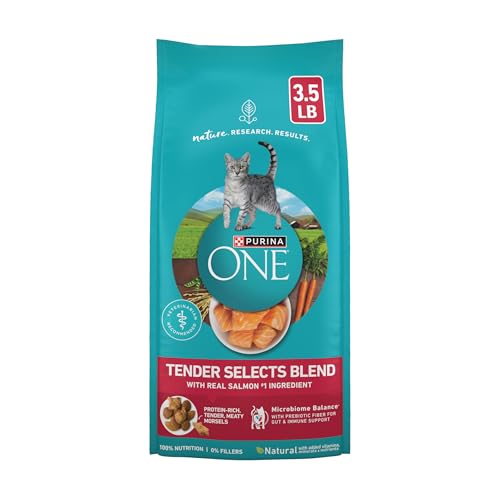
Purina ONE Tender Selects Blend Dry Cat Food
What We Like
- Real salmon as first ingredient
- Natural prebiotic fiber for microbiome balance
- Four antioxidant sources for immune support
- Omega-6 fatty acids for skin and coat
Trade-offs
- Not suitable for cats with salmon sensitivities
- Small 3.5 lb bag requires frequent repurchasing
Real salmon delivers high-quality protein to help maintain your cat’s strong muscles, including her healthy heart, throughout her active life. The natural prebiotic fiber supports a balanced microbiome and is easy to digest, while four antioxidant sources bolster her immune system and omega-6 fatty acids nourish healthy skin and a shiny coat. This natural dry food contains added vitamins, minerals, and nutrients with no artificial flavors or preservatives, providing complete and balanced nutrition for adult cats.
Compared to the Purina ONE +Plus Sensitive Stomach formula, which is designed for cats with sensitivities, this Tender Selects blend includes prebiotic fiber to support microbiome health. The 3.5 lb bag is smaller than the 7 lb bag of the sensitive stomach version, so multi-cat households may need to buy more frequently. If your cat tolerates salmon and you want digestive support through prebiotic fiber, this formulation delivers on its premise.
Product photos
How We Evaluated Cat Foods For Poop Smell
Our research method started with the ingredient panel. We looked at protein sources, fiber blends, and any added prebiotics or probiotics that influence digestion. Manufacturer nutritional data and feeding guidelines were compared against what experts in pet nutrition consider best practice for stool quality.
Three criteria mattered most: protein digestibility, fiber composition, and the presence of gut-supporting additives. Highly digestible proteins leave less waste for bacteria to ferment. The right fiber blend, not just any fiber, helps form firm, well-shaped stools that are less smelly. Prebiotics and probiotics shift the gut flora toward strains that produce less odor.
This is a research-led evaluation, not a feeding trial. We read labels, compared formulations, and looked for consistent patterns in owner experiences. If you want to confirm our conclusions, check the guaranteed analysis and ingredient list on the bag in your own hand.
What To Look For In Cat Foods For Poop Smell
Choosing a food to reduce stool odor means reading past the front-of-bag claims. Focus on three things: what protein is used, how the fiber is sourced, and whether the formula includes ingredients that support healthy digestion.
Look for a named animal protein as the first ingredient, a blend of soluble and insoluble fiber, and added prebiotics or probiotics. Avoid vague “meat meal” or “poultry by-product” if you want predictable digestibility.
Protein Quality and Digestibility
The protein source determines how much waste reaches the colon. Whole meats like chicken, turkey, lamb, or salmon are generally more digestible than generic meat meals. When protein is fully broken down in the small intestine, less material is available for odor-producing bacteria in the large intestine. Foods that list a single named protein also make it easier to rule out allergies that can cause loose, foul-smelling stools.
Fiber Blend and Stool Firming
Fiber affects stool form and odor in two ways. Soluble fiber (like beet pulp or inulin) feeds beneficial gut bacteria, while insouble fiber (like cellulose) adds bulk and helps form firm stools. A food that relies too heavily on one type may produce soft stools or fail to reduce odor. The best formulas use a balanced blend, look for ingredients like psyllium, pumpkin, or chicory root in addition to standard grain fibers.
Prebiotics and Probiotics
Prebiotics are food for good bacteria; probiotics are the bacteria themselves. Both shift the gut microbiome toward strains that produce less gas and fewer odorous compounds. Fructooligosaccharides (FOS) and inulin are common prebiotics. Guaranteed live probiotics (look for “live probiotics” on the label) add a direct source of beneficial bacteria that can improve stool quality over time.
- Look for a named animal protein as the first ingredient (chicken, turkey, lamb, or salmon)
- Check that the fiber blend includes both soluble and insouble sources
- Confirm the label mentions prebiotics (FOS, inulin, chicory root) or guaranteed live probiotics
- Avoid foods with generic “meat meal” or “animal digest” if your cat has a sensitive system
A food that produces firm, consistent stools within two weeks is doing its job. If the stool stays soft or smells worse after 10 days, try a different protein source.
Cat Foods For Poop Smell Compared
The table below compares all 10 picks side by side, with their key features and best-use scenarios at a glance.
| Product | Key Ingredient | Fiber Type | Digestive Support |
|---|---|---|---|
| Royal Canin Indoor Adult Dry Cat Food | N/A | Fiber blend | Highly digestible proteins |
| Royal Canin Digestive Care Adult Dry Cat Food | N/A | Prebiotics and dietary fiber | Optimal Stool Quality |
| Purina ONE +Plus Sensitive Stomach Dry Cat Food | Real turkey | Prebiotic fiber | Easily digestible |
| Hill's Science Diet Sensitive Stomach Dry Cat Food | Chicken & Rice | Prebiotic fiber | Highly digestible formula |
| Blue Buffalo Tastefuls Sensitive Stomach Dry Cat Food | Real Chicken | FOS (plant-based prebiotic) | Supports healthy digestion |
| Purina Cat Chow Gentle Sensitive Stomach Dry Cat Food | Real farm-raised turkey | Natural prebiotic fiber | Easily digestible kibble |
| IAMS Proactive Health Sensitive Digestion Dry Cat Food | Real Turkey | Prebiotics & Fiber Blend | Supports Healthy Digestion |
| Purina Pro Plan Sensitive Skin & Stomach Dry Cat Food | Real Lamb | N/A | Easily digestible |
| Blue Buffalo True Solutions Digestive Care Dry Cat Food | Chicken first | Clinically proven prebiotic | Supports stool quality |
| Purina ONE Tender Selects Blend Dry Cat Food | Real Salmon | Natural prebiotic cat fiber | Easy to digest |
Frequently Asked Questions
What ingredient in cat food reduces poop smell?
Highly digestible proteins and prebiotic fibers are the two main ingredients that reduce stool odor. Digestible proteins leave less waste for bacteria to ferment, while prebiotics like FOS or inulin feed beneficial gut bacteria that produce fewer odorous compounds.
How long does it take for a new cat food to improve stool smell?
Most cats need about 10 days to adjust to a new food before you see a change in stool odor. The digestive system needs time to adapt to new protein sources and fiber blends. If you don’t see improvement after two weeks, the protein source may not be right for your cat.
Can wet food reduce poop smell better than dry food?
Wet food often has higher moisture content and can be easier to digest, but dry food with the right fiber and protein blend can be just as effective at reducing stool odor. The key is ingredient quality and digestibility rather than moisture content alone. Some cats actually do better on dry food because the kibble texture slows eating and improves digestion.
Is grain-free cat food better for reducing stool odor?
Not necessarily. Some cats digest grains like rice and oatmeal very well, and those grains provide soluble fiber that supports stool quality. Grain-free foods often replace grains with legumes or potatoes, which can cause loose stools in some cats. Focus on digestibility and fiber type rather than whether the food contains grains.
What should I do if my cat’s poop still smells bad after changing food?
If stool odor doesn’t improve after two weeks on a new food, consider a different protein source. Some cats don’t digest chicken or fish well and do better with lamb or turkey. If the stool remains soft or foul-smelling despite trying multiple foods, consult a veterinarian to rule out digestive issues or parasites.
The Bottom Line
The Royal Canin Indoor Adult Dry Cat Food is the best overall choice for cat owners who want to reduce litter box odor through better digestion. Its highly digestible proteins and specialized fiber blend target stool odor at the source, and the added hairball management makes it a practical pick for indoor cats. This is the food to try first if your cat is between 1 and 7 years old and lives primarily indoors.
If your cat has a sensitive stomach and you need a more affordable option, the Purina ONE +Plus Sensitive Stomach Dry Cat Food offers real turkey as the first ingredient with prebiotic fiber. It comes at a budget-friendly price point. For cats with ongoing digestive issues, the Hill’s Science Diet Sensitive Stomach Dry Cat Food brings veterinarian-developed formulation with prebiotic fiber and omega fatty acids for skin and coat support.
The single most important factor in reducing poop smell is choosing a food with a named, digestible protein source and a balanced fiber blend. Read the ingredient list, not the front of the bag, and give your cat at least 10 days to adjust before judging the results.
