
9 Best Bird Seed For Colorado in 2026
This post contains affiliate links. As an Amazon Associate, we earn from qualifying purchases.
The Kaytee Western Regional Wild Bird Seed is the best overall for Colorado because it was field tested by university researchers and preferred 3-to-1 over sunflower seed by local birds. The Wagner’s Western Regional Blend offers another strong regional option, while the Morning Song Clean & Free No Mess Wild Bird Seed suits patio feeders.
Colorado’s altitude, dry climate, and distinct Western bird populations mean a generic mix often leaves seed uneaten on the ground. Local species like mountain chickadees, pygmy nuthatches, and Cassin’s finches have preferences that a regionally designed blend can meet.
This guide is based on manufacturer specifications, expert round-ups from ornithology sources, and patterns in owner feedback from birders across the state. We focused on regional formulation, seed quality, feeder compatibility, and mess level to narrow the list to nine picks.
Top 9 Bird Seeds For Colorado in the Market
Certain content that appears on this site comes from Amazon. This content is provided "as is" and is subject to change or removal at any time.
The Best Bird Seeds For Colorado, Reviewed
Kaytee Western Regional Wild Bird Seed

What We Like
- Preferred 3-to-1 over sunflower seed
- Field tested by university researchers
- Designed for regional bird species
Trade-offs
- Regional formula limits bird variety
- Not suitable for non-Western bird species
A 3-to-1 preference over black oil sunflower seed is the kind of number that makes a label-reader pause. That ratio comes from independent university field tests, so you can trust it actually draws more birds to your feeder. This Kaytee blend is formulated specifically for Western birds, which matters if you’re in Colorado and want to see local species rather than a generic mix that attracts whatever wanders by. It’s a focused, field-tested choice for someone who wants to see results without guessing which seed works best in their area.
The trade-off is the bag size: at 7 pounds, you’ll be refilling more often than with Wagner’s 20-pound Western Regional Blend. That’s fine if you have a small feeder or want to try the formula before committing to a larger bag. But if you’re feeding a busy station, the smaller package means more trips to the store. The university-tested preference data is the real draw here, and for a Colorado backyard birder who values efficiency over volume, this blend delivers exactly what it promises.
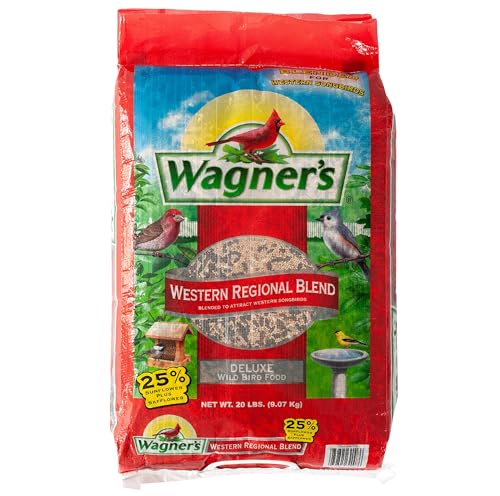
Wagner's Western Regional Blend Wild Bird Food
What We Like
- Attracts Western songbirds
- Contains sunflower and safflower seeds
- Works in tube, hopper, or platform feeders
- Made in the USA
Trade-offs
- 20-pound bag is heavy for some feeders
A 20-pound bag of regional blend designed specifically for Western songbirds means you’re not wasting seed on species that won’t show up in your area. The blend contains sunflower and safflower seeds that attract many perching and ground feeding Western songbirds, and it works in tube, hopper, or platform feeders so you can match your existing setup. This is a formulation built for the Western region, so it targets the birds that actually visit your yard.
The 20-pound weight means this bag is a solid sack that can be awkward to pour into a small tube feeder. If you’re fine with a bit of cleanup and don’t mind the heft, the regional targeting makes it a practical choice for Western yards.
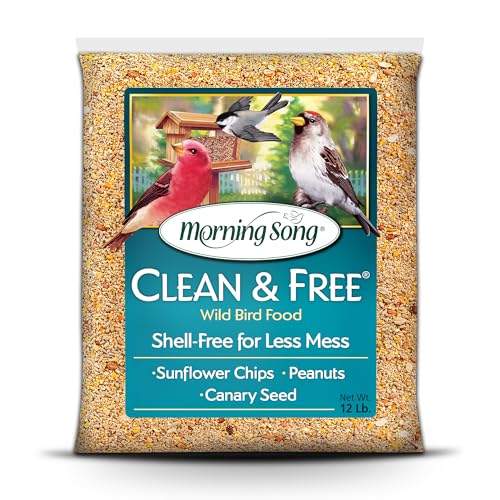
Morning Song Clean & Free No Mess Wild Bird Seed
What We Like
- 100% shell-free, no-mess blend
- High-energy sunflower chips and peanuts
- Attracts finches, chickadees, cardinals, nuthatches
- Works in tube, tray, hopper, platform feeders
Trade-offs
- No millet or safflower for ground-feeding birds
- Shell-free seeds spoil faster in humid weather
A 100% shell-free blend means every kernel in this bag is edible, no hulls, no husks, no mess piling up under your feeder. That’s the whole point of the Clean & Free line, and it delivers exactly what it promises: you fill the feeder, the birds eat everything, and you don’t have to rake up a crust of discarded shells. The mix leans on sunflower chips and peanuts, both high in fat and protein. So chickadees, nuthatches, and cardinals get a dense energy source that keeps them coming back. If your patio or window feeder sits where you don’t want seed hulls scattered around, this is the straightforward fix.
The 12-pound bag of shell-free seed is a tidy choice for anyone who hates cleaning up hulls. Though the exposed surface area of the ingredients means it can go stale or moldy faster than whole-seed blends in damp conditions or if left in a large hopper for weeks.
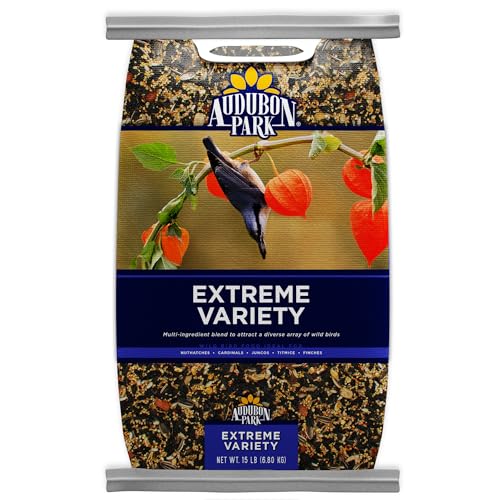
Audubon Park Extreme Variety Wild Bird Seed
What We Like
- Attracts nuthatches, cardinals, juncos, titmice, finches
- Premium blend with sunflower, peanuts, raisins, nuts
- Works in tube, hopper, or platform feeders
- Formulated for year-round feeding
Trade-offs
- Raisins and nuts can spoil in hot, wet feeders
- Heavier than some competitors at 15 pounds
A 15-pound bag of mixed sunflower seeds, peanuts, raisins, and tree nuts means you’re offering a buffet that appeals to nuthatches, cardinals, juncos, titmice, finches, and more. That’s the whole point of a variety blend: you don’t have to guess which single seed will bring in the birds you want. This mix is compatible with tube, hopper, or platform feeders, so it fits whatever setup you already have. It’s meant for year-round use, which saves you from swapping blends every season. If your goal is to see as many different species as possible without maintaining separate feeders for each, this is the straightforward way to do it.
A 15-pound bag goes fast if you have a busy feeding station. Compared to the Kaytee Western Regional blend, which is 7 pounds, this gives you more seed per bag, but you’ll want to consider how quickly the birds clean it out. It’s a solid middle ground between a small bag you replace weekly and a larger bag that might last longer.
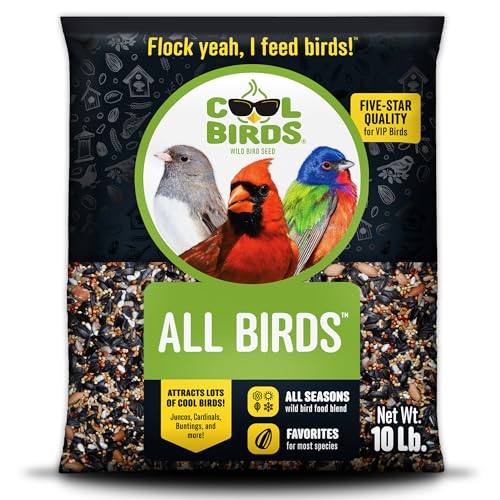
Cool Birds All Birds Wild Bird Seed
What We Like
- Attracts songbirds year-round
- Works in multiple feeder styles
- Includes protein-rich peanuts and sunflower hearts
- Feeds ground and perching birds
Trade-offs
- Contains peanuts, which can attract squirrels and larger birds
A 10-pound bag that fills a standard feeder up to ten times means you’re not hauling a new sack every weekend. This blend pulls in everything from chickadees to jays, thanks to black oil sunflower, safflower, millet, peanuts, and sunflower hearts, a lineup that covers both feeder visitors and ground-foraging doves and sparrows. It works with tray, tube, hopper, platform, and smart camera feeders, so you don’t have to buy a special rig just to use it. For someone wanting a single bag that draws a wide variety of birds without fussing over regional tweaks, this is the straightforward option.
The 10-pound bag fills a standard feeder up to ten times, so you won’t be hauling a new sack every weekend. This blend pulls in everything from chickadees to jays, thanks to black oil sunflower, safflower, millet, peanuts, and sunflower hearts, a lineup that covers both feeder visitors and ground-foraging doves and sparrows. It works with tray, tube, hopper, platform, and smart camera feeders, so you don’t have to buy a special rig just to use it. For someone wanting a single bag that draws a wide variety of birds without fussing over regional tweaks, this is the straightforward option.
Product photos
Wagner's Wild Bird Food 30-Pound Bag

What We Like
- 30-pound bag for fewer refills
- All-purpose blend attracts many songbirds
- Contains sunflower and nutritious grains
- Works in tube, hopper, or platform feeders
Trade-offs
- 30 pounds is heavy to carry and store
- Not a regional blend for western birds
A 30-pound bag means you’re not hauling seed every week, this is the largest capacity in the guide by a wide margin. Wagner’s all-purpose blend uses sunflower and other nutritious grains to attract a variety of backyard songbirds, so you get broad appeal from a single purchase. If you have multiple feeders or a busy flock, this bag keeps you stocked without constant trips to the store.
At 30 pounds, this bag is heavy to lift and needs a sturdy storage bin. But for sheer volume and versatility across tube, hopper, and platform feeders, it’s the most economical way to keep your feeders full.
Product photos
Kaytee Essentials Blend Wild Bird Seed Mix
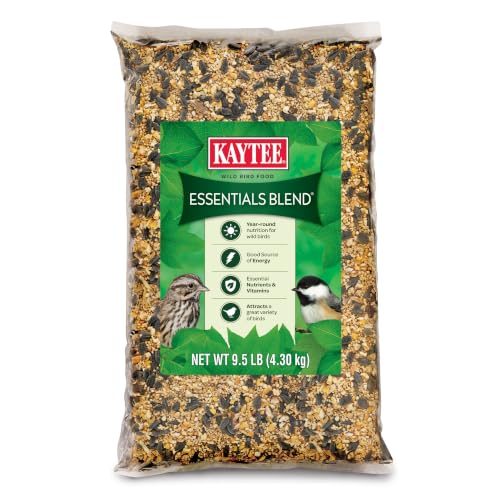
What We Like
- No milo reduces uneaten seed mess
- Black oil sunflower attracts cardinals, chickadees, sparrows
- Attracts a variety of backyard birds year-round
- Made with ingredients birds naturally enjoy
Trade-offs
- Not suitable for those seeking a completely shell-free bird food
The absence of milo in this mix is the single most decisive feature for anyone tired of sweeping up uneaten seed hulls under the feeder. Black oil sunflower seeds are the main event here, and they’re a favorite for cardinals, chickadees, sparrows, and juncos, birds that don’t mind a little cleanup work. This blend is designed for the feeder watcher who values a tidy feeding station over a massive species list, and it delivers exactly that without resorting to filler ingredients.
If you’re feeding a large flock daily, a 9.5-pound bag means you’ll be restocking sooner than with a bigger option like Wagner’s 20-pound bag. But if your main goal is cutting down on mess from uneaten seed, this milo-free formula delivers that benefit without the higher cost typical of shell-free blends. It’s a practical middle ground for birders who want less cleanup without going fully shell-free.
Product photos
Cool Birds Hearts on Fire Hot Bird Seed
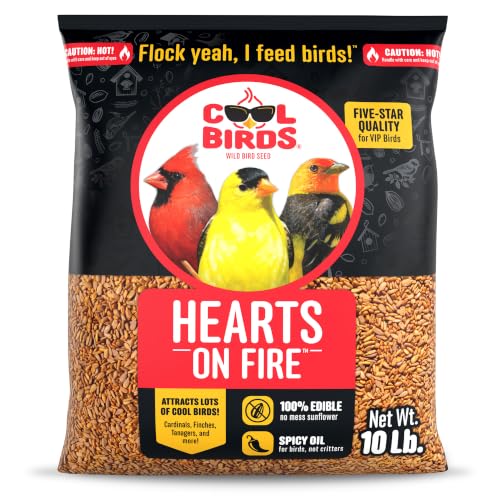
What We Like
- No shells or fillers means zero mess
- Spicy chili oil deters squirrels, not birds
- High-protein sunflower hearts attract songbirds
- Works with all common feeder types
Trade-offs
- Only sunflower hearts, no millet, safflower, or peanuts
- Not suitable for ground-feeding birds like doves
The chili pepper oil coating is the one feature that sets this seed apart: it’s undetectable to birds but actively repels critters. That means you can keep your feeder stocked without watching it get raided by furry neighbors. The 100% hulled sunflower hearts also eliminate the mess of shells and filler seeds, so nothing goes to waste and your patio stays clean. For anyone dealing with persistent critter problems, this is a targeted solution that doesn’t compromise on what birds actually want to eat.
If you’re tired of squirrels and raccoons raiding your feeder, this seed’s chili pepper oil makes it undetectable to critters while birds happily eat every bite. Since it’s 100% hulled sunflower hearts, there are no shells to rake up and no filler waste, everything gets consumed. That means less mess under the feeder and more protein for songbirds like finches, cardinals, and chickadees.
Product photos
Audubon Park Sunflower Hearts Wild Bird Seed
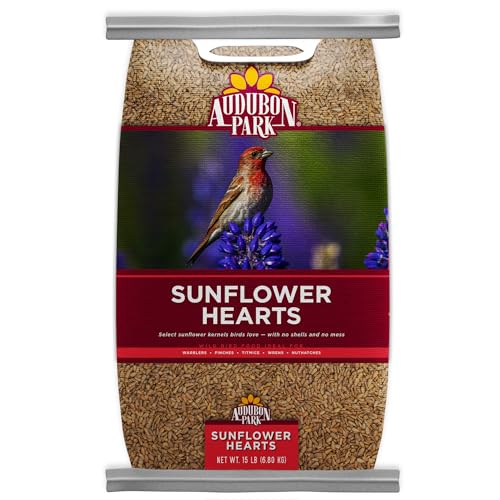
What We Like
- 100% pure sunflower kernels
- No-mess shell-free formula
- Attracts finches, nuthatches, chickadees
- High energy source for birds
Trade-offs
- Single ingredient limits bird variety
- 15-pound bag is heavy to refill
A 15-pound bag of pure sunflower kernels means every seed is edible energy, with shells already removed for less backyard mess. That no-mess formula is the main reason this bag works for anyone who wants to feed finches, chickadees, and nuthatches without the litter. It fits tube, hopper, or platform feeders and provides a high-energy source that birds can use quickly. The ingredient list is exactly one item long, so you know exactly what you’re putting out.
Pure sunflower kernels mean zero hulls or mess, so your patio stays clean while finches, nuthatches, sparrows, juncos, and chickadees get a high-energy meal. A blend like Kaytee Western Regional Wild Bird Seed may attract a wider variety of birds, but it also brings hulls and waste. With this bag, you trade some diversity for less cleanup. If your main goal is attracting sunflower-loving birds and keeping your feeding area tidy, this is a straightforward choice. The 15-pound bag provides ample supply for regular feeding.
Product photos
How We Evaluated Bird Seeds For Colorado
We started with the ingredient list. Every blend was checked for fillers like milo or red millet that Colorado birds tend to ignore, and for the presence of high-value seeds such as black oil sunflower, safflower, and sunflower hearts. Manufacturer data on seed composition and regional testing informed the rankings.
The three criteria that mattered most were regional relevance, mess level, and feeder versatility. A blend designed for Western birds should match the species actually visiting Colorado feeders. Mess matters because hulls and discarded filler seed attract rodents and rot in damp spots. Feeder compatibility determines whether a mix works in tubes, hoppers, or trays without jamming or wasting seed.
An evaluation cannot replace watching your own feeder for a season. Bird preferences vary by microclimate, elevation, and neighboring habitat. We present the best information and let your backyard be the final judge.
What To Look For In Bird Seeds For Colorado
Colorado birders face a dry climate and a mix of mountain and plains species. The right seed blend brings more birds to your feeder with less waste.
Choose a regional blend that matches Colorado’s Western bird species, prioritize shell-free options for patios, and check that the seed size works with your feeder type.
Regional Formulation
A blend designed for the Western U.S. Typically includes black oil sunflower, safflower, and sunflower chips while skipping milo and wheat that local birds avoid. The Kaytee Western Regional blend was field tested in the region and attracted significantly more birds than straight sunflower seed. For Colorado, a regional mix reduces waste and keeps feeder visits from species like pine siskins and evening grosbeaks.
Mess Level and Seed Type
Shell-free blends like sunflower hearts or chips produce no hulls under the feeder. This matters on decks, patios, or near windows where cleanup is a hassle. The trade-off is that shell-free seed spoils faster in humid weather, though Colorado’s dry climate makes that less of a concern. If ground-feeding birds like juncos or doves visit, include some cracked corn or millet in a separate tray.
Feeder Compatibility
Tubes with small ports work best with sunflower chips or hearts. Hopper and platform feeders handle larger blends with whole sunflower and safflower. A mix with oversized nuts or raisins can jam tube ports. Check the seed size against your feeder’s openings before buying a 20- or 30-pound bag.
- Look for “Western regional” or “Colorado” on the label
- Avoid blends listing milo or wheat in the first three ingredients
- Choose shell-free for patio or balcony feeders
- Match bag size to your feeder capacity and storage space
- Store seed in a metal can to keep out mice and moisture
A 20-pound bag of regional blend typically lasts a single feeder two to three weeks with regular visits.
Bird Seeds For Colorado Compared
The table below compares all nine picks on region, seed type, mess level, and best use so you can match a blend to your feeder setup and birding goals.
| Product | Weight | Dimensions | Key Seeds / Ingredients |
|---|---|---|---|
| Kaytee Western Regional Wild Bird Seed | 7.0 pounds | 2.5 x 10.5 x 18.0 inches | Western Regional Blend |
| Wagner's Western Regional Blend Wild Bird Food | 20 pounds | 22 x 13 x 3 inches | Sunflower and safflower |
| Morning Song Clean & Free No Mess Wild Bird Seed | 12.0 pounds | 16.0 x 13.0 x 3.0 inches | Sunflower chips, peanuts, canary seed |
| Audubon Park Extreme Variety Wild Bird Seed | 15 lb | 20.0 x 13.0 x 3.0 inches | Sunflower, peanuts, raisins, nuts |
| Cool Birds All Birds Wild Bird Seed | 10 pounds | 16.0 x 13.0 x 3.0 inches | Sunflower, millet, safflower, peanuts, sunflower hearts |
| Wagner's Wild Bird Food 30-Pound Bag | 30.0 pounds | 4.0 x 14.0 x 22.0 inches | All Purpose Blend |
| Kaytee Essentials Blend Wild Bird Seed Mix | 9.5 pounds | 17.4 x 10.6 x 4.2 inches | Black oil sunflower seeds |
| Cool Birds Hearts on Fire Hot Bird Seed | 10 lb | 16.0 x 13.0 x 3.0 inches | Chili Pepper Oil |
| Audubon Park Sunflower Hearts Wild Bird Seed | 15 pounds | 20.0 x 13.0 x 3.2 inches | 100% sunflower kernels |
Frequently Asked Questions
What is the best bird seed for Colorado backyards?
The Kaytee Western Regional Wild Bird Seed is the top choice because it was designed and tested for Western bird species. It attracts more birds than standard sunflower seed and reduces waste from uneaten filler.
Should I use a regional bird seed blend in Colorado?
Yes. Regional blends skip seeds that Colorado birds ignore, like milo and wheat, and include the black oil sunflower and safflower that local species prefer. This means less waste and more birds at your feeder.
What birds will I see with a Western regional blend?
Expect mountain chickadees, pygmy nuthatches, Cassin’s finches, pine siskins, evening grosbeaks, and common backyard species like house finches and dark-eyed juncos. A variety blend adds cardinals and titmice.
How do I keep squirrels away from my bird feeder?
A spicy hot bird seed like the Cool Birds Hearts on Fire blend uses chili oil that deters squirrels but does not bother birds. Squirrels taste the capsaicin and leave the feeder alone while songbirds feed normally.
Can I use a no-mess bird seed in a tube feeder?
Yes. Shell-free sunflower hearts and chips work well in tube feeders with small ports. The Morning Song Clean & Free and Audubon Park Sunflower Hearts both flow freely through standard tube openings without jamming.
The Bottom Line
For most Colorado birders, the Kaytee Western Regional Wild Bird Seed is the best overall pick. It was tested by university researchers, preferred by local birds over straight sunflower, and formulated to reduce waste from uneaten filler. This is the blend to start with if you want a scientifically grounded choice for your backyard.
If you need a no-mess option for a patio or balcony, the Morning Song Clean & Free eliminates hull cleanup entirely. For those who want to attract the widest variety of species with one bag, the Audubon Park Extreme Variety blend adds raisins and nuts that bring in cardinals, nuthatches, and titmice.
The single most important factor is regional formulation. A blend designed for Colorado’s birds will outperform a generic mix every time, and the difference shows in both the number of birds and the amount of seed left on the ground.
