
10 Best Dog Food For Dogs With Yeast Allergies in 2026
This post contains affiliate links. As an Amazon Associate, we earn from qualifying purchases.
The best overall dog food for dogs with yeast allergies is The Honest Kitchen Wholemade Fish Dehydrated Dog Food. It uses a single source of wild-caught white fish and just six whole-food ingredients to minimize allergic triggers. For owners who want a formula specifically designed to reduce yeast growth, the Ps for Dogs Hypoallergenic Dog Food takes the Best Yeast Prevention award. If you prefer a straightforward kibble, the Natural Balance Limited Ingredient Salmon Dog Food is our Best Limited Ingredient Salmon pick.
Yeast allergies in dogs usually show up as itchy skin, recurring ear infections, and that telltale corn-chip smell on the paws. The real challenge is that yeast is opportunistic. It overgrows when the immune system is already reacting to a food protein, so finding a diet with a single, novel protein source and no simple carbohydrates is the most effective way to break the cycle.
This guide is based on a close look at ingredient lists, protein sources, carbohydrate profiles, and manufacturer quality standards across ten formulas. We focused on what matters most for a yeast-allergy diet: limited ingredients, low-glycemic carbohydrates, and novel or hydrolyzed proteins that reduce the chance of an immune reaction.
Top 10 Dog Foods For Dogs With Yeast Allergies in the Market
Certain content that appears on this site comes from Amazon. This content is provided "as is" and is subject to change or removal at any time.
The Best Dog Foods For Dogs With Yeast Allergies, Reviewed
The Honest Kitchen Wholemade Fish Dehydrated Dog Food
What We Like
- Single source protein from wild-caught white fish
- Only 6 allergy-friendly whole food ingredients
- Human grade dehydrated formula
- Supports healthy digestion with pumpkin and chickpeas
Trade-offs
- Requires adding warm water and waiting to rehydrate
- Dehydrated format is less convenient than kibble
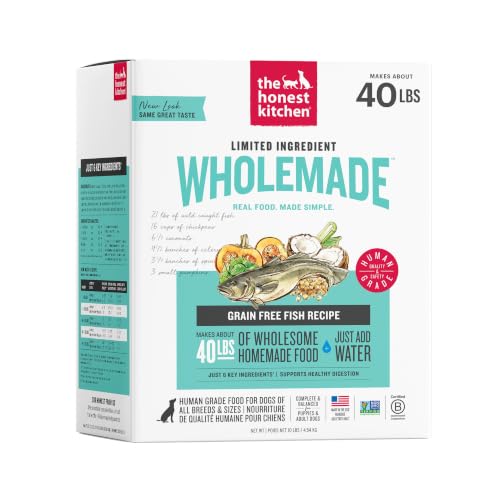
A 10-pound box turns into about 40 pounds of food once you add warm water, which means you’re carrying mostly water weight home from the store if you buy it dry. That compact, shelf-stable format makes this a practical option for anyone who wants real whole food nutrition without needing freezer space or worrying about spoilage on a road trip. The single protein source, wild-caught white fish, and just five other recognizable ingredients like coconut and pumpkin give you a limited-ingredient recipe that minimizes triggers for dogs with food sensitivities. It’s the kind of straightforward label that makes a skeptical ingredient-checker like me nod along.
Dehydrated food isn’t grab-and-go like kibble. You have to plan ahead by about five minutes to mix it with warm water and let it rehydrate, which might be a dealbreaker if you’re used to pouring a scoop into a bowl and walking away. For owners who prioritize ingredient transparency and are willing to spend those few extra minutes, this is a clean, simple foundation for managing food sensitivities.
Ps for Dogs Hypoallergenic Dog Food
What We Like
- Low glycemic formula reduces yeast growth
- Human-grade New Zealand Lamb as single protein
- Grain-free and high protein recipe
- Air-dried for soft, palatable texture
Trade-offs
- Only 2 lb bag means frequent repurchasing
- Not suitable for dogs needing a hydrolyzed protein diet
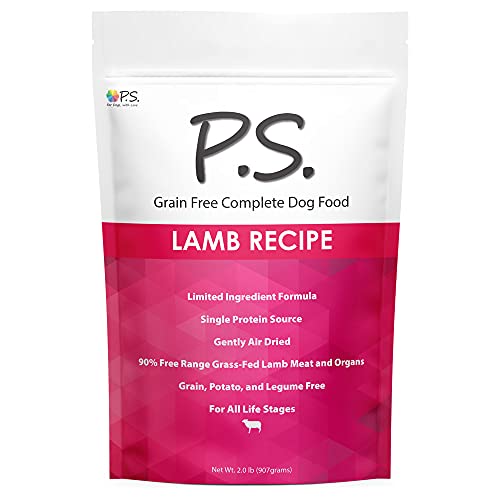
A low-glycemic, air-dried formula built around a single human-grade protein source. New Zealand lamb, directly targets the yeast overgrowth that drives paw licking and skin itching in allergic dogs. That makes it a focused tool for owners who want to stop the cycle without relying on prescription diets or medications. The soft, meaty texture also helps if your dog turns up its nose at typical hypoallergenic kibble.
The trade-off is portion size: at just 2 pounds, this bag disappears fast, especially for larger breeds. Compared to the 24-pound bag of Natural Balance Limited Ingredient Salmon, you’ll be reordering far more often. But if yeast prevention is your primary goal and your dog tolerates lamb, the targeted formulation here gives you a cleaner shot at symptom relief than a broader limited-ingredient kibble.
Product photos
Natural Balance Limited Ingredient Salmon Dog Food
What We Like
- Single animal protein source
- Grain-free for sensitive stomachs
- Supports skin and coat health
- Vet recommended formula
Trade-offs
- Only one protein source limits rotation
- Not suitable for dogs needing a chicken-based diet
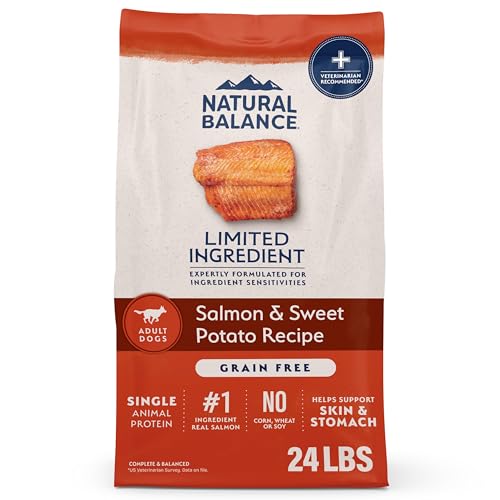
Salmon is the sole animal protein here, which cuts down on potential triggers for dogs with dietary sensitivities. The grain-free kibble uses easily digestible ingredients to support sensitive stomachs and promote balanced digestion. It also targets skin and coat nourishment, helping maintain healthy skin and a shiny coat. For dogs that need a straightforward diet without extra additives, this bag delivers dependable nutrition.
Salmon is the sole protein source here, which works great if your dog tolerates it but leaves no room to rotate proteins without switching bags entirely. Compared to the Wellness Simple Limited Ingredient Turkey Dog Food, this Natural Balance recipe offers a different base protein. If your dog does well on salmon and you want a vet-recommended, grain-free option that supports skin health, this is a solid fit for a sensitive diet.
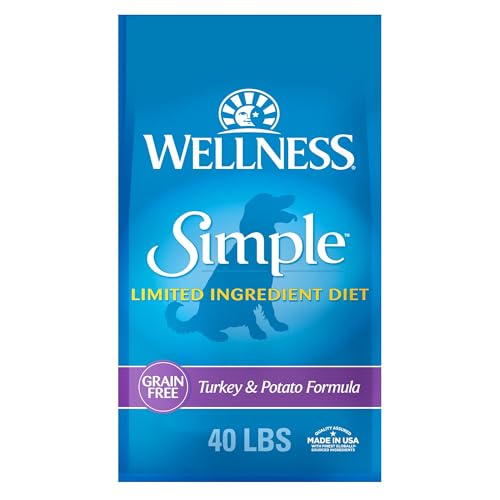
Wellness Simple Limited Ingredient Turkey Dog Food
What We Like
- Single source turkey protein
- Grain free with no corn, wheat, soy
- Contains natural prebiotics and omega fatty acids
- No poultry by-products or artificial additives
Trade-offs
- Manufactured in a facility that also processes grains
- Not suitable for dogs with grain allergies
A single source of turkey protein and a short ingredient list make this a straightforward option for dogs with dietary sensitivities. By sticking to turkey and potatoes, Wellness avoids corn, wheat, soy, and chicken, ingredients that are often excluded in limited-ingredient diets. The addition of natural prebiotics and omega fatty acids supports digestive health and skin condition, two areas that tend to be affected by food sensitivities. This is a practical, no-nonsense recipe for anyone who wants to know exactly what their dog is eating without parsing a long label.
The potato base may not work for every dog with food sensitivities, since some dogs may not tolerate potatoes well. Compared to a hydrolyzed protein formula like Royal Canin HP, this is a less clinically stripped option, but it’s also a more natural, whole-food approach for dogs whose allergies are manageable with ingredient avoidance alone. If your dog tolerates potatoes well, this 40-pound bag offers a lot of straightforward nutrition for the money.
Royal Canin HP Hypoallergenic Hydrolyzed Dog Food
What We Like
- Hydrolyzed soy protein for low allergy risk
- EPA + DHA support skin and digestion
- Formulated to support skin barrier
- Veterinary-exclusive for food sensitivities
Trade-offs
- Prescription-only access requires vet visit
- Veterinary-exclusive, requires a vet visit to purchase
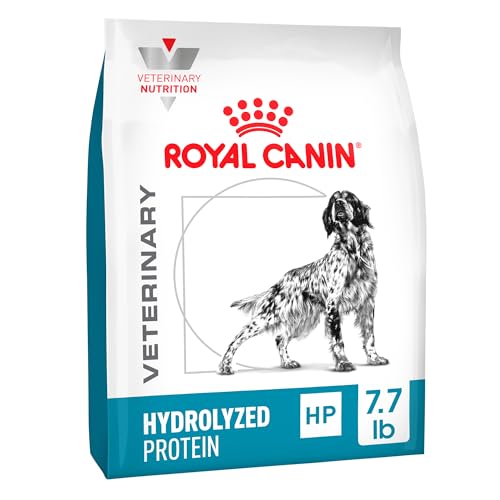
Hydrolyzed soy protein is broken into low molecular weight peptides, making it highly digestible and designed for adult dogs with food sensitivities. That makes this a go-to for supporting gastrointestinal and dermatological health when you need to strip down ingredients. The EPA and DHA fatty acids are a practical bonus: they help maintain healthy skin and digestion, which matters when food sensitivities show up as itchy, inflamed skin. If your dog’s food sensitivities have been a guessing game, this formula gives you a clean slate to work from.
Royal Canin HP Hypoallergenic Hydrolyzed Dog Food is a veterinary-exclusive dry food, so you’ll need a prescription to buy it. That means it’s not available on the regular pet store shelf like the Natural Balance Limited Ingredient Salmon recipe. The hydrolyzed soy protein breaks proteins into low molecular weight peptides, making them highly digestible for dogs with dietary sensitivities. It’s designed to support both gastrointestinal and dermatological health, with added EPA and DHA fatty acids to maintain healthy skin and digestion.
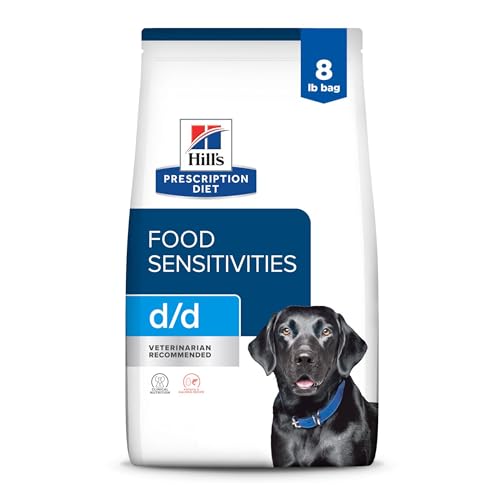
Hill's Prescription Diet d/d Salmon Dog Food
What We Like
- Single animal protein source
- Free from soy protein
- Helps maintain healthy skin barrier
- Formulated to avoid food reactions
Trade-offs
- Requires veterinary prescription to purchase
- Only available in one protein source
A single animal protein source helps avoid reactions to food, which is the whole point when you’re dealing with food sensitivities. Hill’s Prescription Diet d/d Salmon Dog Food is built around that limited-ingredient logic, with salmon as the sole protein and no soy protein to muddy the waters. The formula also helps maintain a healthy skin barrier, a smart angle since skin health is often a concern for dogs with sensitivities. This is the kind of food that makes sense for dogs whose food sensitivities have been identified by a vet and need a clean, controlled diet to avoid reactions.
A prescription from your veterinarian is required before purchasing this food, which means a trip to the clinic is necessary before you can even begin feeding it. This extra step ensures the diet is appropriate for your dog’s specific sensitivities, as the formula is designed to help avoid reactions to food. The limited ingredient recipe relies on a single animal protein source and is free from soy protein, supporting a healthy skin barrier. While it adds a layer of planning, the veterinary oversight helps confirm that this specialized nutrition is the right fit for your pet’s needs.
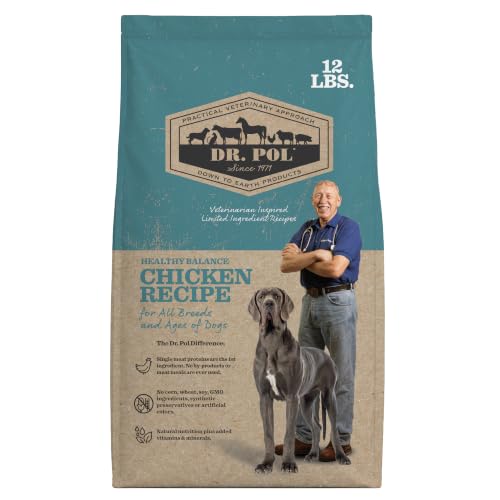
Dr. Pol Limited Ingredient Chicken Dog Food
What We Like
- Single meat source reduces allergen confusion
- Free of yeast, GMOs, and artificial additives
- Includes prebiotics and probiotics for digestion
- Formulated by a veterinarian
Trade-offs
- Contains brown rice, not grain-free
- Not suitable for dogs that need a grain-free diet
A 12-pound bag of dry kibble that lists real chicken as its single protein source is formulated to be free of yeast, GMOs, synthetic preservatives, and artificial colors. This makes it a straightforward option if you’re trying to cut out common triggers from your dog’s bowl. Dr. Pol’s formula skips corn, which means fewer variables to sort through when your dog’s skin is flaring up. The added prebiotics and probiotics are a practical touch for supporting gut health, something that often goes hand-in-hand with food sensitivities. This is a limited-ingredient diet built around one meat, one grain, and not much else, so you can actually read the bag and know what’s inside.
This formula isn’t grain-free; brown rice is the second ingredient, so if you’ve already ruled out grains for your dog, this won’t fit. Compared to Natural Balance’s Limited Ingredient Salmon & Sweet Potato, which uses a different protein, Dr. Pol’s chicken-and-rice approach covers a narrower set of elimination diets. For someone starting a yeast-allergy elimination trial and wanting a clean, vet-formulated starting point without corn or yeast, this is a sensible first step.
Product photos
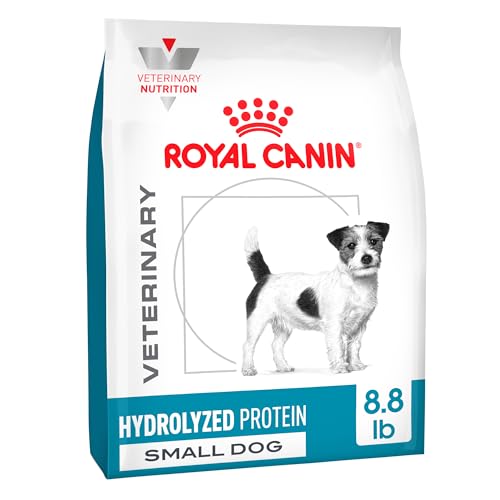
Royal Canin HP Small Adult Hydrolyzed Dog Food
What We Like
- Hydrolyzed protein reduces immune reaction risk
- Supports skin and GI health
- Kibble shape promotes dental brushing effect
- Formulated for small breed jaws
Trade-offs
- Only for dogs under 22 lb
- Single protein source limits variety
The hydrolyzed protein in this formula is broken down to a size that’s less likely to be recognized by the immune system. This helps reduce skin reactions and GI health issues that may result from food sensitivities. Designed specifically for adult small breeds under 22 pounds, the kibble shape and texture also help clean teeth during chewing, adding a dental benefit that many limited-ingredient diets overlook. This makes it a targeted option for owners managing food sensitivities in their small dog.
This 8.8-pound bag of dry dog food is designed for adult small dogs under 22 pounds with food sensitivities, using hydrolyzed protein to minimize the risk of immune reactions. The protein is broken down into pieces less likely to be recognized by the immune system, which can help reduce skin reactions and gastrointestinal issues. It also supports urinary tract health and dental care with kibble shaped to fit small jaws and promote a brushing effect while chewing.
Product photos
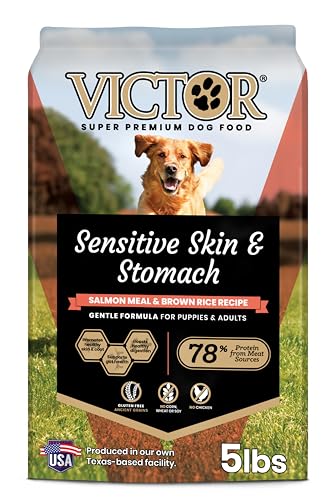
Victor Sensitive Skin Salmon Dog Food
What We Like
- Salmon meal first ingredient
- Contains prebiotics and probiotics
- No chicken for allergy dogs
- Omega 3, 6, and Vitamin E
Trade-offs
- Contains grains, not grain-free
- Not suitable for dogs needing a completely grain-free diet
A salmon meal first ingredient means this formula puts animal protein front and center, which is exactly what you want when you’re trying to avoid common triggers like chicken. The addition of prebiotics and probiotics supports gut health and digestion, both vital for a strong immune system. With omega-3, omega-6, and vitamin E working on skin and coat, this kibble covers the basics for a dog that needs a clean, simple protein source without the filler proteins that set off reactions.
This isn’t a grain-free recipe. Brown rice is a gluten-free grain, but some dogs with sensitivities do better on a completely grain-free diet, so you’ll want to see how your dog responds. Compared to Natural Balance Limited Ingredient Salmon & Sweet Potato, which skips grains entirely, Victor’s formula offers probiotics that support digestive health, so if your dog tolerates rice, you get extra digestive support here.
Product photos
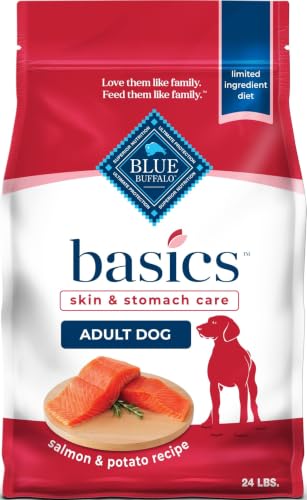
Blue Buffalo Basics Salmon Skin Care Dog Food
What We Like
- Real salmon as first ingredient
- No chicken or poultry by-products
- Free of corn, wheat, soy
- Contains antioxidant-rich LifeSource Bits
Trade-offs
- Contains grains, not grain-free
- Not suitable for dogs needing a grain-free diet
Real salmon is the number one ingredient here, not a meat meal or by-product, so you’re starting with a single, recognizable protein source that avoids common poultry triggers. That matters for a dog with yeast allergies, where limiting ingredient complexity can help narrow down what’s causing the reaction. This bag also skips corn, wheat, and soy, three fillers that often show up in cheaper foods and can aggravate sensitive stomachs. The omega-3 and -6 fatty acids are a practical addition, supporting skin repair from the inside out without needing a separate supplement. It’s a straightforward, limited-ingredient approach that prioritizes what’s in the bowl over marketing fluff.
Real salmon is the first ingredient, so your dog gets a high-quality protein source that supports muscle maintenance. The 24-pound bag is substantial, meaning you’ll need a dedicated storage bin or a sturdy pantry shelf to keep it accessible. This formula includes wholesome grains, which can be a plus for dogs that digest them well, but it’s not suitable if you’re specifically seeking a grain-free diet for your pet.
Product photos
How We Evaluated Dog Foods For Dogs With Yeast Allergies
This guide draws on manufacturer ingredient disclosures, veterinary nutrition guidelines for food allergy management, and patterns reported by owners managing yeast-prone dogs. Each formula was assessed against the criteria that matter most for a yeast-allergy diet.
The four criteria that carried the most weight were protein source novelty, carbohydrate glycemic load, ingredient list transparency, and the presence of skin-supporting nutrients like omega-3 fatty acids. A single novel protein, one the dog has never eaten, is the fastest way to rule out food triggers. Low-glycemic carbohydrates like chickpeas or lentils are important because yeast feeds on sugar, so a formula that spikes blood glucose can worsen the problem.
A research-led evaluation has limits: it cannot predict how an individual dog will react to any given ingredient. What it can do is identify the formulas most likely to succeed based on their composition. We prioritized foods that list every ingredient clearly, avoid vague terms like “meat meal,” and use named protein sources.
What To Look For In Dog Foods For Dogs With Yeast Allergies
Choosing a food for a dog with yeast allergies means reading the ingredient panel like a detective, not a shopper. The front of the bag sells the dream; the back tells you whether the protein is truly novel and whether the carbohydrates will feed the yeast or starve it.
Look for a single novel protein source you have never fed before, a grain-free or low-glycemic carbohydrate profile, and a formula free of yeast, sugar, and common fillers like corn and wheat. Avoid foods with multiple protein sources or ambiguous ingredient names.
Single Novel Protein Source
The single most important factor is a protein your dog has never eaten. If your dog has always eaten chicken, a salmon or turkey formula is a good starting point. If they have eaten both, you need something truly novel like lamb, white fish, or a hydrolyzed protein that is broken down so small the immune system cannot recognize it. The Honest Kitchen Wholemade Fish uses wild-caught white fish, and the Ps for Dogs formula uses human-grade New Zealand lamb. Both are uncommon enough to be novel for most dogs.
Low-Glycemic Carbohydrates
Yeast (Malassezia) thrives on sugar. Carbohydrates with a high glycemic index, white rice, potatoes, corn, break down into glucose quickly and can feed yeast overgrowth. Look for low-glycemic options like chickpeas, lentils, or green peas. The Ps for Dogs formula is specifically designed as a low-glycemic recipe, which is why it earned the Best Yeast Prevention award. Avoid any food that lists sugar, molasses, or cane syrup on the ingredient panel.
Limited Ingredient Count and Transparency
A shorter ingredient list means fewer chances for a hidden trigger. The best formulas for yeast allergies have 10 or fewer main ingredients and name every single one. Avoid foods that use collective terms like “fish meal” or “poultry fat”, you need to know exactly which animal the protein came from. The Natural Balance Limited Ingredient Salmon formula and the Wellness Simple Limited Ingredient Turkey formula are both good examples of transparent, short lists.
- Check the first five ingredients: the protein should be first, followed by a low-glycemic carbohydrate.
- Look for a named, single protein source, “salmon,” “turkey,” “lamb”, not “meat meal” or “animal digest.”
- Confirm the food is free of yeast, corn, wheat, soy, and artificial preservatives.
- Verify the carbohydrate source is low-glycemic (chickpeas, lentils, peas) rather than high-glycemic (potatoes, rice, corn).
- If the dog has severe reactions, consider a hydrolyzed protein formula like Royal Canin HP, which requires a vet prescription.
A good rule of thumb: if you cannot pronounce every ingredient on the list, keep looking.
Dog Foods For Dogs With Yeast Allergies Compared
The table below compares the ten formulas side by side on the criteria that matter most for a yeast-allergy diet: protein source, carbohydrate type, grain-free status, and whether a prescription is needed.
| Product | Protein Source | Form | Weight |
|---|---|---|---|
| The Honest Kitchen Wholemade Fish Dehydrated Dog Food | Wild-caught white fish | Dehydrated | 10 lb Box Makes 40 lbs |
| Ps for Dogs Hypoallergenic Dog Food | Human-grade New Zealand Lamb | Air-dried soft pieces | 2.0 pounds |
| Natural Balance Limited Ingredient Salmon Dog Food | Salmon | Dry Kibble | 24 lb |
| Wellness Simple Limited Ingredient Turkey Dog Food | Turkey | Dry Kibble | 40 lb |
| Royal Canin HP Hypoallergenic Hydrolyzed Dog Food | Hydrolyzed soy protein | Dry Kibble | 7.7 lb |
| Hill's Prescription Diet d/d Salmon Dog Food | Salmon | Dry Kibble | 8.0 lb |
| Dr. Pol Limited Ingredient Chicken Dog Food | Real Chicken | Dry Kibble | 12 lb |
| Royal Canin HP Small Adult Hydrolyzed Dog Food | Hydrolyzed protein | Dry Kibble | 8.8 lb |
| Victor Sensitive Skin Salmon Dog Food | Salmon Meal | Dry Kibble | 5 lb |
| Blue Buffalo Basics Salmon Skin Care Dog Food | Salmon | Dry Kibble | 24.2 pounds |
Frequently Asked Questions
What is the best dog food for a dog with a yeast allergy?
The best choice is a limited-ingredient diet with a single novel protein and low-glycemic carbohydrates. The Honest Kitchen Wholemade Fish Dehydrated Dog Food is our top pick because it uses wild-caught white fish as the only protein and chickpeas as the carbohydrate source, giving yeast less fuel to grow.
Can diet alone cure a yeast infection in dogs?
Diet can manage the underlying food allergy that allows yeast to overgrow, but an active yeast infection usually requires veterinary treatment with antifungals or medicated washes. Once the infection clears, a yeast-friendly diet helps prevent recurrence by removing the food triggers that weaken the skin barrier.
Is grain-free dog food better for yeast allergies?
Not always, but often. Yeast feeds on sugar, and many grains (like rice and corn) have a high glycemic index that can spike blood glucose. A grain-free formula with low-glycemic carbohydrates like chickpeas or lentils is typically better, but some dogs do well on a grain-inclusive diet if the grains are low-glycemic and the protein is novel.
What ingredients should I avoid in dog food for yeast allergies?
Avoid any food that lists yeast, sugar, molasses, cane syrup, or corn syrup on the label. Also avoid foods with multiple protein sources, unnamed meat meals, or high-glycemic carbohydrates like white potatoes, white rice, and corn. Stick to a single novel protein and a short, transparent ingredient list.
How long does it take for a new diet to help a dog with yeast allergies?
Most dogs show improvement in skin and ear symptoms within 4 to 8 weeks on a proper elimination diet. It takes time for the old food allergens to leave the system and for the skin barrier to heal. If you see no improvement after 8 weeks, the protein or carbohydrate source may still be triggering a reaction.
The Bottom Line
For most dogs with yeast allergies, the fastest path to relief starts with a single novel protein and a low-glycemic carbohydrate. The Honest Kitchen Wholemade Fish Dehydrated Dog Food checks both boxes with wild-caught white fish and chickpeas. That makes it the best overall choice for owners willing to add warm water and wait a few minutes for rehydration.
If your dog is a dedicated paw-licker and you want a formula built specifically to starve yeast, the Ps for Dogs Hypoallergenic Dog Food is worth the smaller bag size. For owners who prefer a straightforward kibble, the Natural Balance Limited Ingredient Salmon Dog Food delivers a single salmon protein in a grain-free format. And for dogs with confirmed, severe food allergies, the Royal Canin HP Hypoallergenic Hydrolyzed Dog Food offers the most controlled option, but it requires a vet visit.
The single most important factor in choosing a food for a yeast-allergic dog is the protein source. Pick one your dog has never eaten, stick with it for at least eight weeks, and read the ingredient list on every bag, not the marketing copy on the front.
