
10 Best Dry Cat Food To Lose Weight in 2026
This post contains affiliate links. As an Amazon Associate, we earn from qualifying purchases.
The best dry cat food to lose weight is Purina Pro Plan Weight Management Dry Cat Food, which delivers 43% protein from real chicken while cutting fat by 20% versus the standard formula. For slightly overweight cats, Royal Canin Weight Care shows 90% of cats lost weight in two months, and the budget-friendly Purina ONE Indoor Advantage uses real turkey with 10% less fat.
Helping a cat drop pounds means balancing calorie reduction with enough protein to preserve muscle mass. Many weight-loss kibbles lean too hard on fiber alone, leaving cats hungry between meals or losing lean tissue instead of fat.
This guide is research-based: we compared manufacturer specifications, ingredient lists, and nutritional profiles across ten products, then cross-referenced patterns in owner feedback and expert recommendations. You will find a clear pick for every weight-loss scenario.
Top 10 Dry Cat Foods For Weight Loss in the Market

Certain content that appears on this site comes from Amazon. This content is provided "as is" and is subject to change or removal at any time.
The Best Dry Cat Foods For Weight Loss, Reviewed
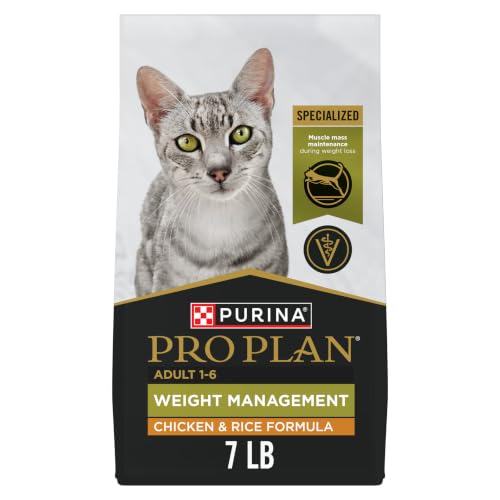
Purina Pro Plan Weight Management Dry Cat Food
What We Like
- High protein (43%) with real chicken first
- 20% less fat than Complete Essentials formula
- Live probiotics for digestive and immune health
- Omega-6 and vitamin A for skin and coat
Trade-offs
- 7 lb bag is smaller than some weight control options
- Not suitable for cats needing a low-protein diet
A 43% protein formula with real chicken as the first ingredient is the kind of label detail that actually matters when you’re trying to help a cat lose weight without losing muscle. That protein density, paired with 20% less fat than the standard Pro Plan Complete Essentials, shifts the calorie ratio in a direction that supports fat loss while maintaining lean body mass. The guaranteed live probiotics and prebiotic fiber add digestive support, which is a practical bonus for cats whose systems get touchy during diet changes.
The trade-off is that this formula uses chicken and rice, which works for most cats but isn’t ideal for those with specific poultry or grain sensitivities. Compared to Royal Canin Weight Care, which uses a different protein base and is designed for slightly overweight cats, the Purina Pro Plan takes a higher-protein, lower-fat route. That approach may work better for cats needing more substantial muscle preservation during weight loss. The 7-pound bag is a moderate size, so if you have multiple cats or a heavy eater, you’ll be reordering more often than with larger bags from Blue Buffalo or Hill’s.
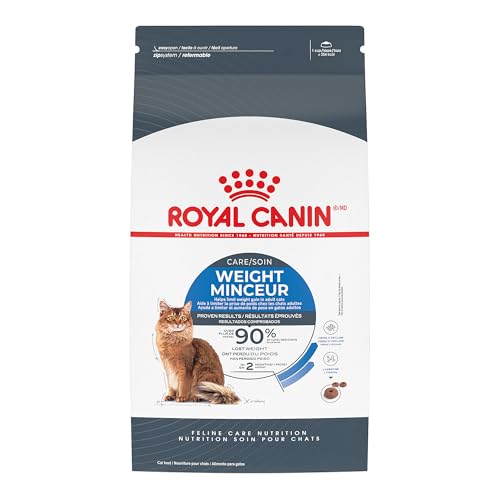
Royal Canin Weight Care Adult Dry Cat Food
What We Like
- 90% of cats lost weight in 2 months
- L-carnitine supports fat metabolism
- Fiber blend helps cats feel full
- Maintains lean muscle mass
Trade-offs
- Only 3 lb bag, small for multi-cat homes
- Targets only slightly overweight cats
Over 90% of slightly overweight cats fed this formula lost weight within two months, a number that stands out even among weight-management diets. That success rate comes from a deliberate nutritional approach: L-carnitine to help with fat metabolism, adapted protein to preserve muscle mass, and a blend of soluble and insoluble fiber to keep a cat feeling full between meals. This is a targeted tool for the cat that needs to drop a few pounds, not a crash diet. The kibble is designed to complement the wet food version for mixed feeding, so you can tailor the routine to what your cat will actually eat.
This bag is small at 3 pounds, so for a household with more than one cat or a cat with a big appetite, you’ll find yourself ordering again sooner than with a larger bag like Purina Pro Plan’s 7-pound weight management option. That smaller size makes sense for a single slightly overweight cat, but it’s worth checking your feeding pace. Royal Canin keeps the formulation focused: it’s for cats that need a gentle nudge back toward a healthy weight, not for severe obesity cases that might require a prescription diet. If your cat is just a bit over, this is a well-designed, veterinarian-developed option that provides a targeted approach to weight management.
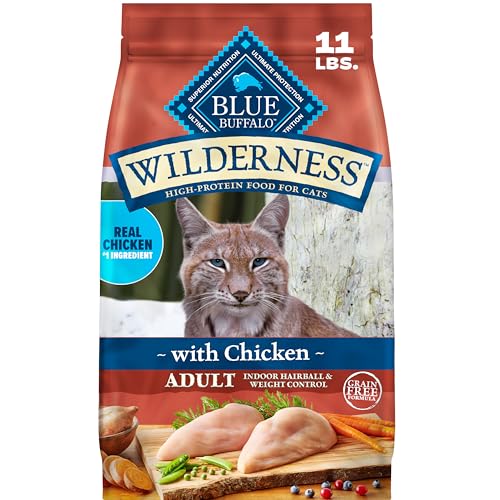
Blue Buffalo Wilderness Weight Control Dry Cat Food
What We Like
- Real chicken as first ingredient
- Grain free with no corn, wheat, soy
- Includes LifeSource Bits for immune support
- No poultry by-product meals
Trade-offs
- Targets indoor cats, not all weight-loss cats
Real chicken is the first ingredient, which supports strong, lean muscles and healthy weight management for indoor adult cats 1-7 years. The grain-free recipe contains no corn, wheat, or soy, and the exclusive LifeSource Bits provide a blend of antioxidants, vitamins, and minerals for immune system health. For a cat that needs to slim down while eating a meat-forward, grain-free diet, this is a straightforward, no-nonsense option.
The 11.1-pound bag of this grain-free dry cat food is formulated specifically for indoor adult cats. So if your cat goes outdoors or has different calorie needs, the carefully balanced calories may not be ideal. The recipe uses real chicken as the first ingredient and includes LifeSource Bits, antioxidants, vitamins, and minerals formed at a lower temperature to preserve potency, to support immune health. Compared to the Purina Pro Plan Weight Management option, which also features chicken and rice, this Blue Buffalo formula is grain-free and its Amazon title mentions hairball control, making it a potential fit for indoor cats prone to hairballs, though the bag is heavier than some alternatives.
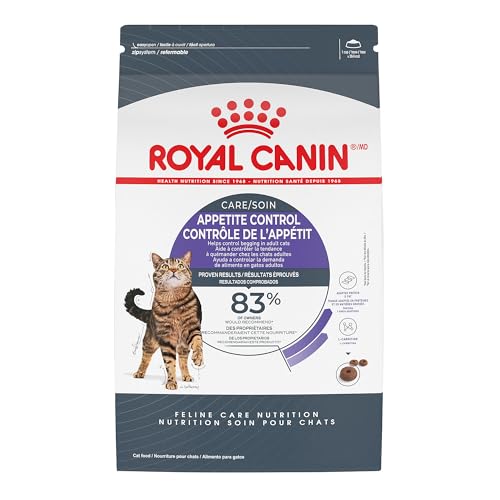
Royal Canin Appetite Control Care Dry Cat Food
What We Like
- High fiber helps cats feel full
- L-carnitine supports healthy metabolism
- Formulated for spayed/neutered cats
- Complete and balanced nutrition
Trade-offs
- Only for adult cats 1-7 years old
- Targets appetite control, not severe weight loss
- Kibble only; wet food sold separately
A high-fiber formula with L-carnitine targets the specific challenge of a spayed or neutered cat’s increased appetite, helping them feel full while supporting a healthy metabolism. The fiber content works to satisfy that appetite without drastic calorie restriction. The kibble is designed to be paired with Royal Canin’s wet formulas for variety, and it’s formulated to help maintain a healthy weight in cats 1-7 years old.
This food is designed for appetite control in moderately active adult cats. If your cat is already overweight, a more targeted weight-loss formula like Royal Canin Weight Care Adult Dry Cat Food might be a better fit, as it is specifically formulated for slightly overweight cats. This product works best as a maintenance tool for cats who need help managing their hunger after spaying or neutering.
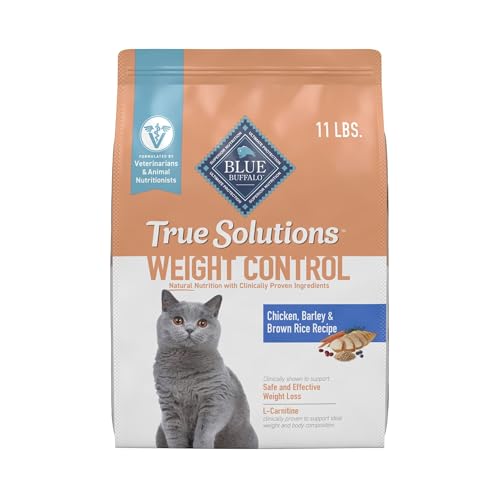
Blue Buffalo True Solutions Weight Control Dry Cat Food
What We Like
- Real chicken as first ingredient
- L-Carnitine supports body composition
- Enriched fiber helps satiety
- No corn, wheat, or soy
Trade-offs
- Bag is heavier than some weight-control alternatives
- Not suitable for cats with poultry sensitivities
A formula built around L-Carnitine and enriched fiber means this food targets body composition and fullness rather than just cutting calories. Real chicken leads the ingredient list, so protein quality stays a priority while the fiber helps a cat feel satisfied between meals. That combination makes sense for a cat that needs to drop weight without acting hungry all day. The veterinarian-formulated label reflects a design that leans on clinical reasoning, not marketing fluff, which is exactly what I look for when reading a bag.
The trade-off: at 11.1 pounds, the bag is heavier than the 7-pound Purina Pro Plan Weight Management option, so if you have limited storage or prefer smaller quantities, that difference matters. For someone who wants a vet-designed recipe with real chicken and added satiety support, this is a straightforward, no-nonsense pick.
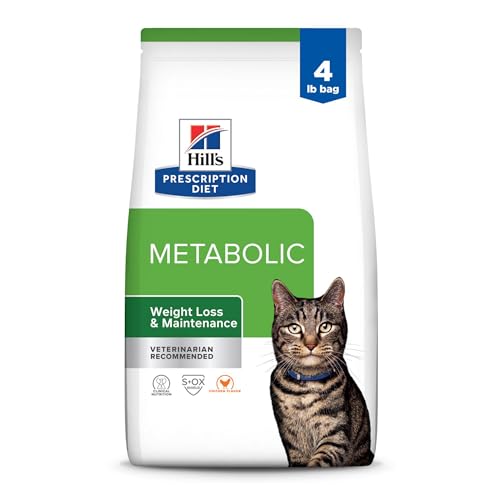
Hill's Prescription Diet Metabolic Weight Management Dry Cat Food
What We Like
- Activates metabolism for weight loss
- Helps keep lost weight off long-term
- Provides energy for active play
Trade-offs
- Requires veterinary consultation before use
- Small 4 lb bag size for larger cats
- Prescription-only limits over-the-counter access
This is a prescription diet, so you’ll need a vet’s okay before buying, and the 4 lb bag runs small for multi-cat households or larger breeds. Compared to the Purina Pro Plan Weight Management, which is available over the counter and comes in a 7 lb bag, the Hill’s offers a more specialized metabolic approach but less flexibility. If your cat’s weight issues are stubborn and your vet is on board, the clinical design here is hard to beat, but it’s not a grab-and-go solution.
Product photos
Purina Pro Plan Vet Diets OM Overweight Management Dry Cat Food
What We Like
- Low in fat and calories
- High protein-to-calorie ratio preserves lean muscle
- Natural fiber helps promote satiety
- Available in dry and canned forms
Trade-offs
- Only 6 lb bag limits quantity for multi-cat homes
- Dry food only, no canned option in this bag
A high protein-to-calorie ratio is the key metric here: it promotes loss of body fat while helping maintain lean muscle mass, which is exactly what you want when trimming an overweight cat. This formula is low in both fat and calories, and includes natural fiber to help your cat feel full between meals. It suits owners who want a clinically designed weight management diet backed by veterinary nutrition science, without relying on marketing fluff. The dry and canned options give you flexibility in feeding, which can make sticking to a weight-loss plan easier for picky eaters.
This bag is only 6 pounds, so for a home with several cats or a very hungry feline, you’ll need to restock more often compared to larger bags like the Purina Pro Plan Weight Management Dry Cat Food, which comes in a 7-pound size. That said, the OM formula is more specifically calibrated for weight loss rather than just weight maintenance, so the smaller size is a reasonable compromise for the targeted nutrition. If your cat needs a veterinary-supervised approach to shedding pounds, this is the one to discuss with your vet.
Product photos
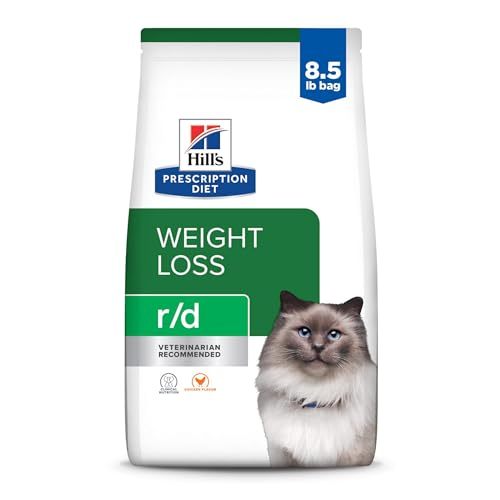
Hill's Prescription Diet r/d Weight Reduction Dry Cat Food
What We Like
- Clinically tested for weight loss in 4 weeks
- Therapeutic L-carnitine helps metabolize fat
- Fiber blend helps cat feel full
- Clinically proven antioxidants support immunity
Trade-offs
- Requires veterinary prescription to purchase
Clinically tested nutrition that delivers healthy weight loss in just 4 weeks is the headline here. The therapeutic L-carnitine levels help metabolize fat while preserving lean muscle, and the blend of soluble and insoluble fiber works to keep your cat feeling full between meals. This is a targeted, prescription-strength option for owners who need rapid, measurable results and are willing to follow a veterinarian’s guidance closely.
The clinical evidence behind this formula is what sets it apart: it’s designed by Hill’s nutritionists and veterinarians to support weight management, with clinically tested nutrition for healthy weight loss in just 4 weeks. That means if your cat needs to drop pounds quickly and safely, this diet has the research to back it up. You will need a prescription to buy it, which is a restriction, but the targeted approach is hard to beat for aggressive weight reduction.
Product photos
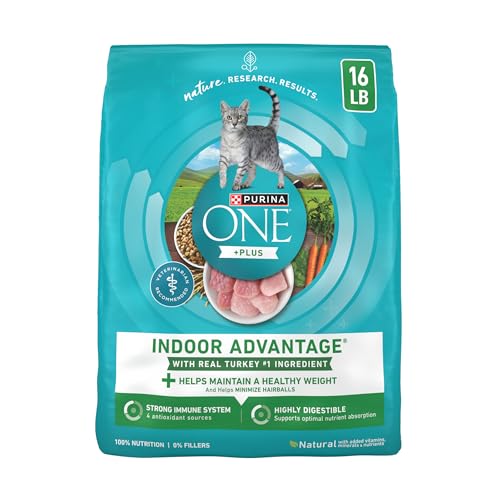
Purina ONE Indoor Advantage Weight Control Dry Cat Food
What We Like
- Real turkey as first ingredient
- 10% less fat for weight control
- Natural fiber blend reduces hairballs
- Four antioxidant sources for immunity
Trade-offs
- Designed for indoor, less active cats only
Real turkey is the first ingredient, which is a positive for a weight-control dry cat food. The formula has 10% less fat than the standard Purina ONE adult maintenance diet, and the natural fiber blend helps minimize hairballs while supporting digestive health. That combination makes this a straightforward option for indoor cats that need to drop a few pounds without switching to a prescription diet.
The biggest takeaway is that this food is built for indoor cats that aren’t very active, so if your cat is more energetic or has a faster metabolism, it might not supply enough calories. Compared to the Purina Pro Plan Weight Management formula, which has 43% protein, this one uses a fiber blend to help your cat feel full, but the exact protein level isn’t listed. The label says you could see improvements in skin, coat, and immune health in as little as 28 days, but some owners may not notice changes that quickly.
Product photos
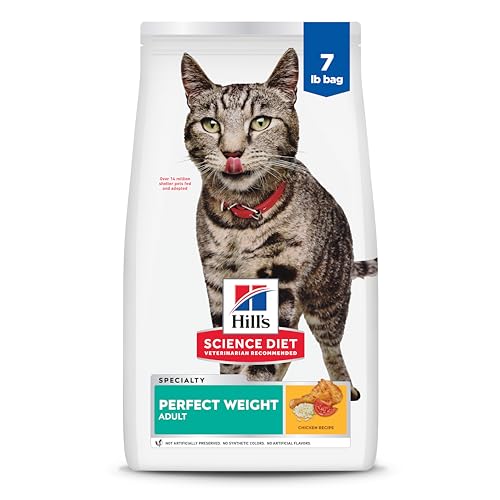
Hill's Science Diet Adult Perfect Weight Dry Cat Food
What We Like
- #1 Veterinarian Recommended
- Visible results within 10 weeks
- Natural ingredients plus added vitamins
- Supports healthy metabolism
Trade-offs
- 7 lb bag is smaller than some weight-control options
- Results require 10 weeks to show
A #1 Veterinarian Recommended formula means this isn’t guesswork, it’s built on clinical nutrition science aimed at overweight cats. The breakthrough approach targets cell function to support healthy metabolism, and the brand promises visible weight loss within 10 weeks. That timeline gives you a concrete benchmark: if your cat isn’t leaning out by then, you’ll know to adjust. Made in the USA with natural ingredients and added vitamins, it’s a straightforward, vet-approved option for owners who want a reliable starting point rather than a trendy bag with a wolf on the front.
Bag size is the main consideration: at 7 pounds, it’s lighter than Blue Buffalo Wilderness Weight Control’s 11 lb bag, so you’ll reorder sooner. That’s fine if you’re testing the formula, but for multi-cat households or long-term use, the bigger bag from Blue Buffalo might mean fewer trips to the store. Compared to Royal Canin Weight Care’s 3 lb bag, though, this is the more practical everyday size. If you want a science-first approach and can wait the full 10 weeks to judge results, this is a sensible pick.
Product photos
How We Evaluated Dry Cat Foods For Weight Loss
We started with the numbers that matter most for feline weight loss: protein percentage, fat content, fiber sources, and calorie density per cup. Every product’s guaranteed analysis and ingredient list came from the manufacturer’s published data, not from third-party claims. We then checked each formula against the nutritional needs of overweight cats, prioritizing high-protein-to-calorie ratios that help maintain muscle during calorie restriction.
Three criteria drove our rankings. First, protein quality and quantity: a dry cat food for weight loss should keep protein high to support lean body mass. Second, fat reduction matters, but cutting too low can leave a cat listless. Third, the fiber and satiety strategy matters, some formulas use L-carnitine for fat metabolism, others use a fiber blend to stretch fullness between meals.
A research-led evaluation has limits. We did not feed these foods to cats or measure weight loss ourselves. What we can do is read the ingredient panel the same way a nutritionist would, flagging the trade-offs that matter. Those include prescription-only formulas, bag sizes that work for multi-cat homes, and whether a food targets indoor activity levels. Every diet dry cat food option here has a specific job, and we matched each to the cat it fits best.
What To Look For In Dry Cat Foods For Weight Loss
Picking a weight-loss kibble means reading past the front-of-bag claims and checking three numbers: protein percentage, fat percentage, and calorie count per cup. The right formula keeps your cat full, preserves muscle, and trims fat gradually.
Choose a dry food with high protein, moderate fat, and fewer calories per cup. Look for real meat as the first ingredient and a clear satiety strategy, either fiber or L-carnitine.
Protein Percentage and Source
Protein is the most important number on a weight-loss label. Cats need a high-protein-to-calorie ratio so they burn fat instead of muscle when calories drop. Look for a high crude protein content, with a named meat like chicken, turkey, or fish as the first ingredient. Avoid foods that lead with corn, wheat, or unnamed “meat meal.”
The best weight control dry cat food formulas push protein high. That extra protein also helps with satiety, cats feel fuller on a high-protein meal than on one padded with carbohydrates.
Fat Content and Calorie Density
Weight-loss cat food should have less fat than a maintenance formula, but not so little that the food tastes bland. Most effective options fall within a moderate crude fat range. Calorie density matters more than bag size: two foods with the same serving size can have very different calorie loads.
Check the “calories per cup” figure on the bag. A true cat food for weight loss should deliver under a moderate number of calories per cup. If the bag does not list calories, the manufacturer’s website usually has a feeding chart with that detail.
Satiety Strategy and Special Additives
Some weight-loss kibbles rely on a fiber blend to make cats feel full; others add L-carnitine, an amino acid that helps the body use fat for energy. Both approaches work, but they suit different cats. A cat that begs constantly between meals may do better with a high-fiber formula. A cat that loses weight slowly may benefit from L-carnitine plus a moderate fiber level.
- Check whether the food uses a named fiber source (peas, beet pulp, cellulose) versus vague “natural fiber.”
- Look for L-carnitine in the guaranteed analysis or ingredient list if your cat needs metabolic support.
- Confirm the food is complete and balanced for adult maintenance, not just a supplement.
- Note the bag size: a 3 lb bag works for one cat, but multi-cat homes need at least 7 lb.
- Read the feeding guidelines carefully, some weight-loss foods recommend smaller portions than standard kibbles.
A cat should lose no more than 1-2% of its body weight per week. Faster loss can cause hepatic lipidosis, a serious liver condition.
Dry Cat Foods For Weight Loss Compared
The table below compares the ten dry cat foods side by side, highlighting protein content, fat reduction, and the specific weight-loss strategy each formula uses.
| Product | First Ingredient | Key Additives | Weight |
|---|---|---|---|
| Purina Pro Plan Weight Management Dry Cat Food | Real Chicken | Guaranteed live probiotics | 7.0 pounds |
| Royal Canin Weight Care Adult Dry Cat Food | N/A | L-carnitine | 3.0 pounds |
| Blue Buffalo Wilderness Weight Control Dry Cat Food | Real Chicken #1 | N/A | 11.1 pounds |
| Royal Canin Appetite Control Care Dry Cat Food | N/A | L-carnitine | 6.0 pounds |
| Blue Buffalo True Solutions Weight Control Dry Cat Food | Real Chicken #1 | L-Carnitine, Enriched Fiber | 11.1 pounds |
| Hill's Prescription Diet Metabolic Weight Management Dry Cat Food | N/A | N/A | 4.0 pounds |
| Purina Pro Plan Vet Diets OM Overweight Management Dry Cat Food | N/A | Natural fiber | 6.0 pounds |
| Hill's Prescription Diet r/d Weight Reduction Dry Cat Food | N/A | Therapeutic L-carnitine | 8.5 pounds |
| Purina ONE Indoor Advantage Weight Control Dry Cat Food | Real turkey | Natural fiber blend | 16.0 pounds |
| Hill's Science Diet Adult Perfect Weight Dry Cat Food | N/A | N/A | 7.0 pounds |
Frequently Asked Questions
How much dry cat food should I feed my overweight cat?
Start with the feeding guide on the bag, then reduce the portion by a modest percentage if your cat is not losing weight. Most weight-loss formulas suggest a small to moderate cup amount per day for a ten-pound cat. Use a kitchen scale or measuring cup rather than eyeballing it, and split the daily portion into two meals to reduce begging.
Can I mix wet and dry cat food for weight loss?
Yes, mixing can help. Wet food adds moisture and volume for fewer calories, which helps a cat feel full. Look for a wet cat food for weight loss that matches the protein and calorie profile of your dry kibble. Just adjust the portion sizes so the combined meal stays within your cat’s daily calorie target.
How quickly should my cat lose weight on a diet food?
A safe rate is 1-2% of body weight per week. For a 12 lb cat, that means losing about 2 to 4 ounces weekly. Faster loss can stress the liver and cause serious health problems. If your cat is not losing weight after four weeks on a measured portion, consult your veterinarian before switching foods.
What is the best way to transition my cat to a weight-loss food?
Switch gradually over a week to ten days to avoid digestive upset. Start with a small portion of new food mixed with a larger portion of old food, then increase the new food by a small percentage every few days. A sudden switch can cause vomiting or diarrhea, which makes it harder to tell if the new food agrees with your cat.
Should I use a prescription weight-loss cat food or an over-the-counter formula?
Prescription diets like Hill’s Prescription Diet Metabolic or Purina Pro Plan Vet Diets are formulated for cats with stubborn obesity or medical conditions. They require a vet’s approval because they are more calorie-restricted and may not suit every cat. Over-the-counter options work well for slightly overweight cats that need a gentle calorie reduction. Your vet can help decide which tier is right.
The Bottom Line
The Purina Pro Plan Weight Management Dry Cat Food is the best overall choice for most cat owners because it combines high protein (43%) with 20% less fat and digestive-supporting probiotics. It suits cats that need to lose weight while keeping muscle, and it works for both indoor and outdoor cats without requiring a prescription.
If your cat is only slightly overweight, the Royal Canin Weight Care formula is a gentler option with strong owner-reported results. For budget-minded shoppers, the Purina ONE Indoor Advantage delivers real turkey and hairball control at a lower price point. And if your vet has recommended a metabolic approach, the Hill’s Prescription Diet Metabolic line is worth discussing during your next visit.
The single most important factor in any weight-loss plan is portion control. No kibble can outrun an overfilled bowl. Measure every serving, limit treats, and pair the food with regular play to help your cat reach a healthy weight gradually.
