
How to Feed a Picky Cat: 5-Step Plan
This post contains affiliate links. As an Amazon Associate, we earn from qualifying purchases.
How to feed a picky cat, in order: rule out a medical cause with your vet, measure calories on a digital gram scale, cap treats and toppers at 10% of daily intake, and offer food in short windows instead of free-feeding.
The how to feed a picky cat ten percent sounds generous until you count what actually lands in the bowl. A topper here and a treat there can eat most of that budget before dinner, and the cat then fills up on extras while eating less of the complete diet that carries the vitamins.
What follows is the order I use at the counter: the vet check first, then the math, then the schedule, and then the two places where the veterinary sources genuinely disagree with each other.
Key Takeaways
- Rule out illness first. VCA puts an underlying medical cause ahead of any behavior fix.
- Weigh food in grams, not cups. The AAFP/ISFM feeding guideline recommends a digital gram scale because cup measuring is inaccurate.
- Cap treats and toppers at 10% of total daily calories, which is a calorie ceiling and not a volume one.
- Keep a 3 to 5 day food diary that includes treats, snacks, and any food used to hide medication.
- Wet food left down dries out and loses the aroma that pulls a cat to the bowl in the first place.
Rule Out the Medical Cause Before You Change Anything
Pick up the phone before you pick up a new bag. VCA’s guidance is blunt about the order of operations: rule out an underlying medical cause with your veterinary team before anyone labels the cat picky.
A cat that refuses food is either unwell or genuinely rejecting that specific diet. Cats attach no social value to eating, so a refusal carries no message about the owner and no message about affection. The refusal is information: something about the food or something about the cat’s health is wrong.
That last point comes from the Encyclopedia of Feline Clinical Nutrition, and it reframes the whole problem. A cat has no social reason to eat, so a refusal is a report about the food or about the cat’s body. Neither one is a personality flaw.
VCA lists medical conditions that can suppress appetite and points owners back to their vet for that workup. I won’t try to name them for you.
Here’s my honest limit. I read labels for a living and I’m not a clinician. Therapeutic and prescription diets for conditions like kidney disease or urinary crystals sit outside what I can responsibly advise on, and a cat with a real appetite problem belongs with a veterinarian rather than with me.
Is Your Cat Actually Picky, or Just Full?
Obesity estimates for cats run from 25% to 40% depending on the study, a range reviewed in the JAVMA timely topics in nutrition series. That number matters here because of a point VCA makes that most picky-cat advice skips entirely: picky cats are commonly slightly or more than slightly overweight, and the cat may simply be overfed and full.
A full cat doesn’t eat. That’s not fussiness, and no amount of topper fixes it.
| What you’re seeing | What it usually means | First move |
|---|---|---|
| A few bites, then walks away, returns later | Normal grazing, or a full cat | Weigh the whole day’s portion |
| Eats well but the ribs are hard to find | Overfed, not picky | Get a calorie target from the vet |
| Refuses everything except one brand | Genuine preference or neophobia | Offer the accepted food beside a new one |
| Stops eating entirely | Possible medical problem | Call the vet |
When you compare a how to feed a picky cat, I check body condition before I check flavor. Handfeel along the ribs tells you more than a long conversation about which pouch the cat likes.
Have your vet team work out daily calorie needs from weight, body condition, life stage, and activity level. Then convert that number into a portion using the calorie content of the specific diet you’re feeding. VCA recommends exactly this sequence, and it’s the step that turns a vague “feed less” into a number you can actually weigh.
The 5-Step Plan for a Cat That Walks Away From the Bowl
Five steps, in this order. Skipping one usually breaks the next.
- Get the calorie target from your vet. VCA recommends the veterinary team calculate daily calories from weight, body condition, life stage, and activity level. Skip this and every portion decision downstream is a guess dressed up as a plan.
- Weigh the food in grams. The AAFP/ISFM feeding guideline recommends a digital gram kitchen scale over volume cups, and notes plainly that owners are inaccurate with the cup method. Skip it and you can be off by a wide margin without ever seeing it happen.
- Run a 3 to 5 day food diary. VCA suggests recording everything that goes into the cat’s mouth, including treats, snacks, and any food used to hide medication. Skip it and you’ll blame dinner while the treats do the damage.
- Set meal times and take the bowl up. VCA recommends offering food at specific times and leaving it out only for short intervals rather than providing free access. Skip it and you never learn when your cat is actually hungry.
- Cap treats and toppers at 10% of daily calories. That’s the ceiling in the VCA guidance. Skip it and the complete diet gets diluted while the cat fills up on the extras.
Why cups are the wrong tool
A measuring cup measures volume. Kibble varies in density from bag to bag and even within a bag, because pieces settle and break. A gram scale measures the thing you actually care about, which is food energy going into the cat.
Common mistake: Treating the feeding chart on the bag as a target. I treat it as a ceiling. Those charts are written for a range of cats and they’re generous by design, and a cat that sits at the top of the chart for two years is a cat with a weight problem you’ll spend a year undoing.
Timed Meals or Free-Feeding?
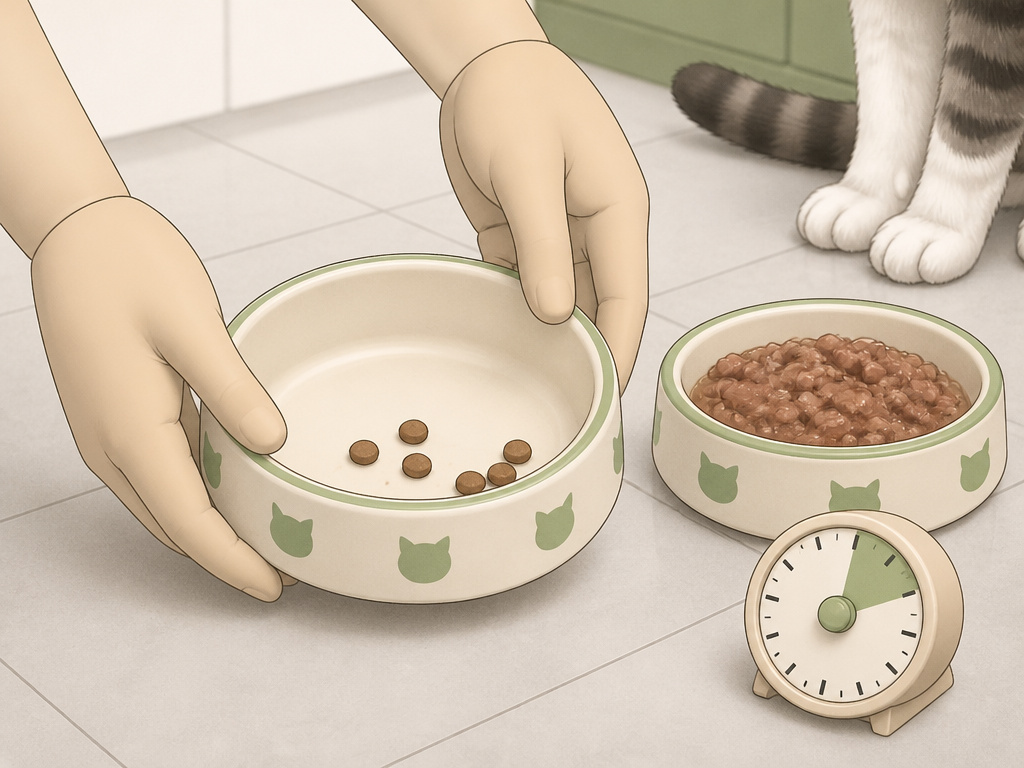
The sources split on this, and they split by cat rather than by ideology. VCA endorses measuring out the entire day’s dry portion in the morning for a cat that grazes but won’t finish at once, since dry food won’t spoil as long as other pets can’t reach it. The same VCA guidance also recommends limited-interval feeding. IVIS leans the other way, favoring timed meal feeding several times a day with bowls removed between sessions.
I default to timed meals for any cat I’m trying to get weight down, and the reason is information. A bowl that’s always full tells you nothing. You can’t separate appetite from habit. Take the bowl up and you learn something by the next morning.
Here’s what timed feeding looks like in practice:
- Feed at set times, and split the daily portion across several small meals rather than one big one.
- Put the bowl down, give the cat a window, then take it up. The window is short, not all afternoon.
- Wet food comes up faster than dry, because it dries at the edges and stops smelling like food.
- Dry food can be measured for the whole day at once if no other pet can get to it.
If you’re feeding dry and want to stay there, the dry cat food for picky eaters comparison is the place to check calorie density before you set the portion. Two bags can differ a lot per gram, and that changes the number you weigh out.
The Variety Trap Nobody Warns You About
A cat gets a different pouch every night for a month. By week five it turns its nose up at the plain chicken it used to finish, and the owner buys three more flavors trying to find one that works.
VCA names this directly: the huge variety of cat foods can inadvertently create a picky eater. The same source notes that many foods undergo palatability testing before they’re sold, and some cats are still picky anyway. Palatability testing predicts an average cat, not your cat.
The sources disagree here, and the disagreement is worth showing rather than smoothing over.
| Source | Position on variety | What it’s describing |
|---|---|---|
| IVIS Encyclopedia of Feline Clinical Nutrition | No flavor variety needed day to day | A cat on a complete, balanced diet |
| PMC7415653 review | Offer new foods beside accepted ones, and rotate to prevent neophobia | A cat that refuses anything unfamiliar |
| VCA Animal Hospitals | Too much variety can create a picky eater | A cat holding out for favorites |
Both positions hold up, and they answer different questions. IVIS is talking about a cat on a balanced diet that doesn’t need novelty. The feeding cats for mental well-being review is talking about neophobia, the reluctance to try anything unfamiliar, which is a separate problem from boredom. VCA is describing a cat that has learned a better offer might arrive.
How to run a slow transition
IVIS recommends offering the new diet next to the old one so the cat becomes familiar with it, and mixing can help. If the two foods have very different textures, match the texture where you can, because a big jump from pate to shreds is its own refusal trigger.
The practical version of how to switch cat food is slower than most people expect. Put both down. Let the cat choose. Reduce the old food across days rather than hours.
If you’re cycling textures on purpose rather than transitioning off something, rotating cat food textures covers how to do it without teaching the cat to hold out.
Temperature, Texture, and a Clean Bowl
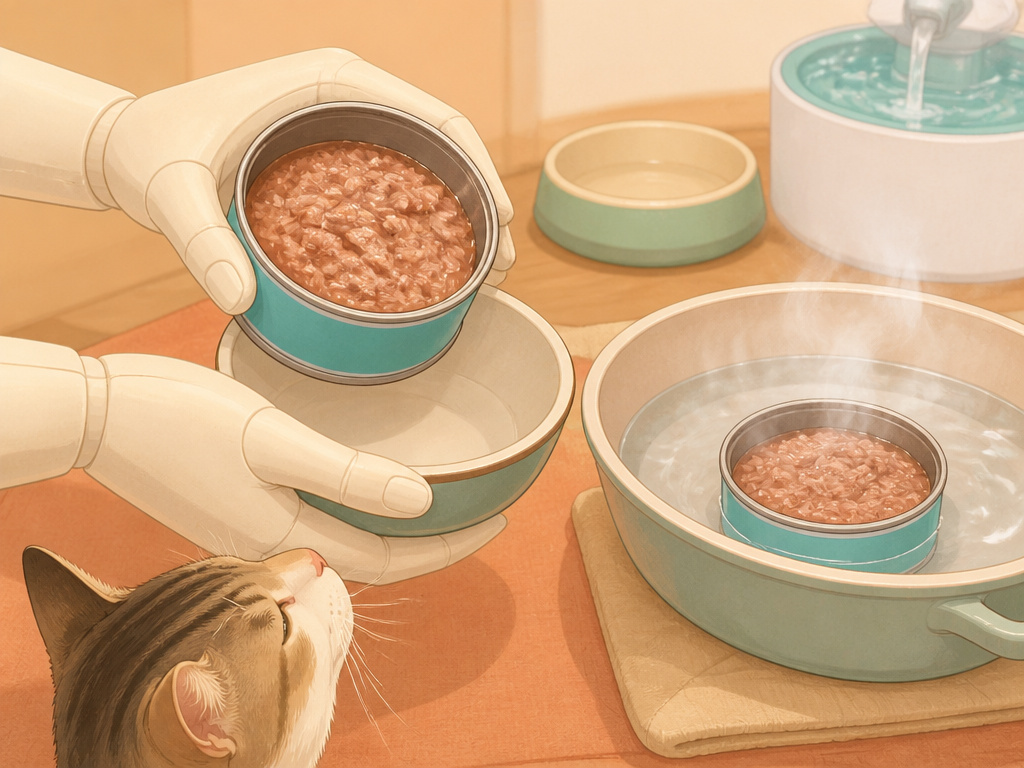
Aroma drives the first bite. The PMC review notes that chilled food has less aroma, and that some cats prefer food at room temperature or warmer.
Open a can straight out of the fridge and almost nothing comes off it. Let it sit for a few minutes and the smell rises, and the cat arrives before you’ve set the bowl down. Same food, different response. I’ve watched cats walk away from fridge-cold food and then clean the bowl when it was warmed.
Wet food left out has the opposite problem. It dries, the surface goes matte, the rim crusts, and the aroma that did the work is gone. That’s the mechanical reason a bowl of wet food stops being food after a while.
Four things to check before you buy another brand:
- Temperature. Room temperature or slightly warm, not cold from the fridge.
- Texture. Match the texture the cat already accepts before you change the flavor.
- The bowl itself. Wash food and water dishes daily. The same review notes pet food bowls rank among the most bacteria-laden kitchen surfaces, so wash food and water dishes daily rather than leaving one down all week.
- Water. Cats on dry kibble drink more than cats on canned food, and IVIS suggests raising water intake by adding water to canned food or offering fish-flavored water. Some cats drink more from a running faucet or a fountain.
Warm food beats new food. Before you buy a fourth brand, put the current one in a warm water bath for a few minutes and see what happens. It costs you nothing and it answers the temperature question in one meal.
If you’re moving toward moisture anyway, the wet food for picky cats shortlist is where I’d start, since canned food gives you temperature and aroma to work with that kibble can’t.
Treats and Toppers: The 10% Ceiling
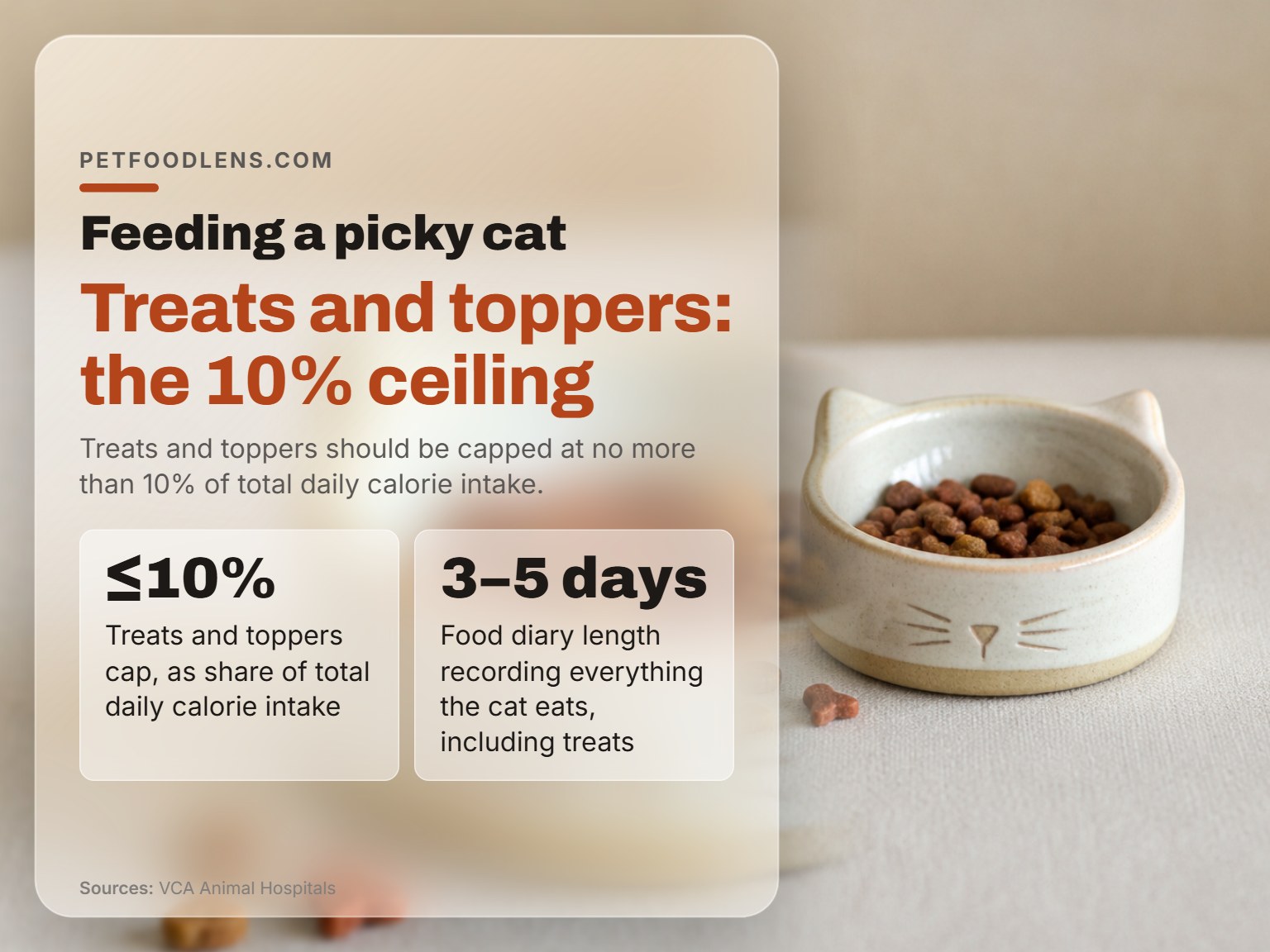
The 10% figure in the VCA guidance is a calorie number, not a volume number. Ten percent of a small cat’s daily calories is a very short list of treats, and it disappears fast if you’re not counting.
What counts toward that ceiling:
- Anything from the treat bag, including dental chews and training rewards.
- Any wet food used as a topper on dry kibble.
- Human food, which VCA warns cannot meet a cat’s nutrient requirements on its own.
- The food you use to hide a pill.
VCA recommends avoiding high-calorie treats and snacks, and suggests using a preferred canned food as a top dressing on dry kibble instead. Gravy-based canned food may raise interest at mealtime, which makes it a useful tool when the goal is getting the cat back to the bowl.
For the treat side, treats for picky cats is worth a look, but weigh them into the daily total rather than treating them as free. For the topper side, cat food toppers covers the options, and how to choose a cat food topper is the piece I’d read before spending anything, because a topper that adds a lot of calories changes the portion math you just did.
One more note on homemade food. VCA is clear that homemade diets need an appropriate vitamin and mineral supplement, must follow a recipe with specific amounts of each ingredient, and that ingredients can’t be substituted. The same source notes most homemade cat diet recipes found online aren’t designed by nutritionists or veterinarians and have been found deficient in one or more essential nutrients. I’d leave that route alone unless a board-certified veterinary nutritionist is involved.
When You Have More Than One Cat
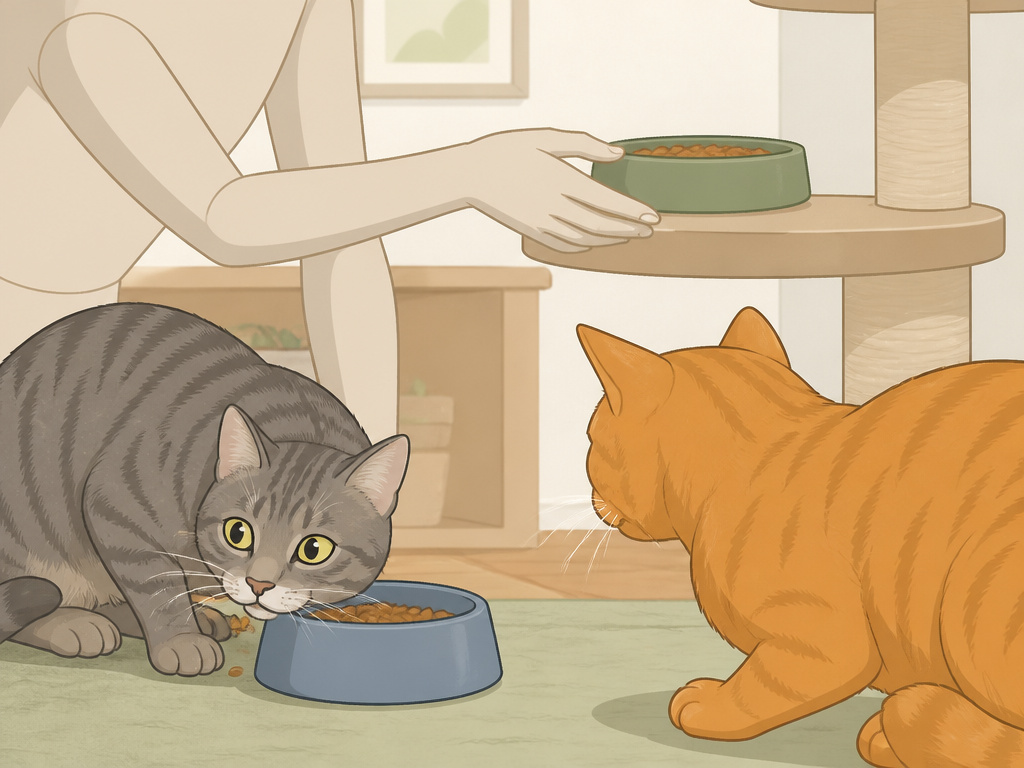
I’ve walked into more than three multi-cat households where the “picky” cat was being run off its bowl. The fix was separate feeding stations or timed meals, and now I ask about the household setup before I ask about the food.
The feline feeding programs behavioral needs guideline requires that owners be taught to recognize food-bowl guarding and inter-cat tension that can suppress intake. That’s a formal way of saying a cat may be eating less because of another cat, not because of the food.
A guarded cat doesn’t refuse loudly. It hovers at the edge of the bowl, eats in fast snatches, and leaves before the other cat arrives. Watch the room, not just the bowl.
IVIS offers two workable fixes. Use timed meal feeding several times a day, separate the cats during feeding, and put the bowls away until the next session. Or, if one cat is simply more agile, put the thinner cat’s bowl in an elevated spot the heavier cat can’t reach.
The best cat food for picky eaters shortlist only helps once you’ve ruled this out. A food change won’t fix a cat that’s being stared off its dinner.
When to Stop Trying at Home
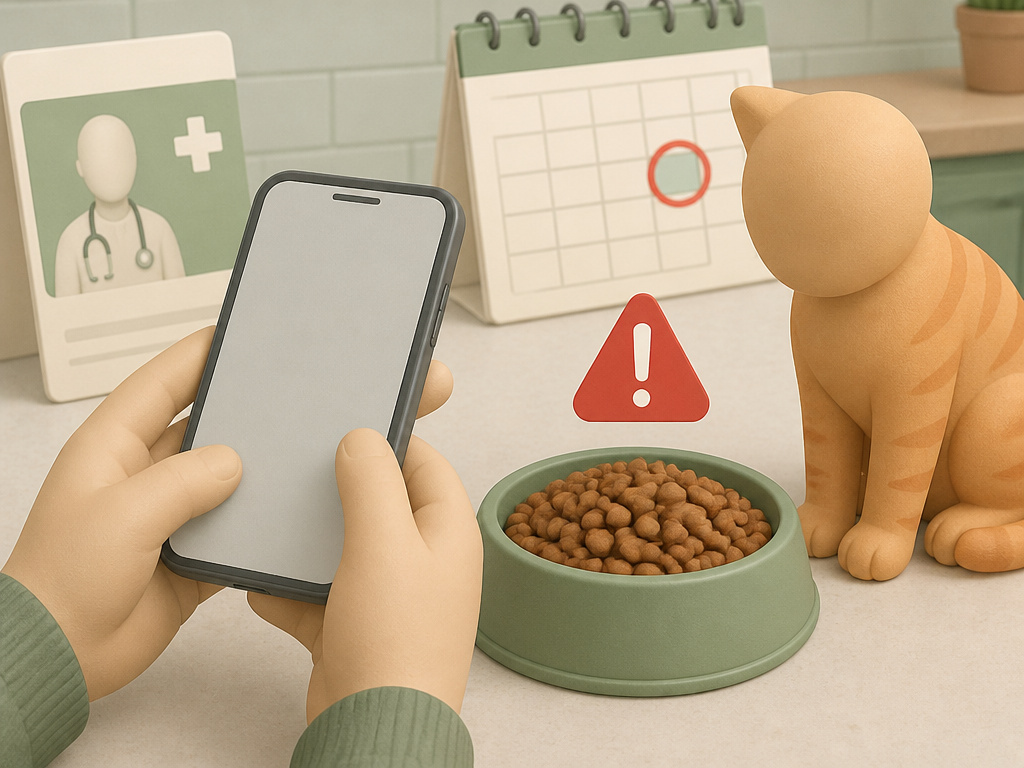
Stop guessing at some point. VCA notes that hepatic lipidosis, a dangerous fat accumulation in the liver, most commonly occurs in overweight or obese cats that stop eating for several days. That’s the failure mode behind the casual advice to “let the cat get hungry.”
The PMC review makes the same point from a different angle: reduced appetite shouldn’t be treated as normal behavior until health issues have been addressed or ruled out.
Where this goes sideways: Letting an overweight cat skip meals to build appetite. VCA ties hepatic lipidosis to overweight cats that stop eating for several days, and that cat has the least room to wait and the most to lose.
The AAFP/ISFM guideline adds a group that needs tighter watching. Aged, debilitated, and chronically ill cats need closer monitoring of weight and body condition, and free-feeding assumptions that work for a healthy young cat fail for them.
The signs that mean call the vet today
A cat that stops eating entirely, a cat that’s losing weight while still picking at food, and a cat that’s vomiting or hiding after meals all belong in a clinic rather than on a feeding schedule. So does any cat on a prescription diet who refuses it, because that’s a conversation with the prescribing vet rather than a topper problem.
Frequently Asked Questions
Should I warm my cat’s food?
It’s worth trying before you change anything else. Chilled food carries less aroma, and the PMC review notes some cats prefer food at room temperature or warmer. A short warm water bath around the can does the job without cooking anything.
How long can I leave wet food down?
Long enough for the cat to eat and not much longer. Wet food left out dries and loses appeal, so a bowl that sat all afternoon is a bowl the cat has already rejected on smell alone. Offer small amounts at a time instead.
Is it normal for a cat to skip a meal?
The sources don’t fully agree. VCA says it’s okay for healthy cats to miss a meal occasionally if they’re at a healthy weight with normal stools and good energy. The PMC review says reduced appetite shouldn’t be considered normal until health issues are ruled out. If your cat is overweight, older, or unwell, treat a skipped meal as a question for your vet.
Should I cut out treats entirely?
No, but count them. VCA caps treats and toppers at 10% of total daily calories and recommends avoiding high-calorie treats and snacks. Weigh them into the day’s total instead of adding them on top.
My cat only eats one flavor. Is that a problem?
Not automatically. IVIS states that cats don’t need flavor variety from day to day as long as the diet is well balanced. The problem is the reverse case, where constant rotation teaches a cat to hold out for something better.
When should I switch foods?
When the current diet isn’t working and your vet has ruled out a medical cause. Transition slowly, offer the new food next to the old, and match texture if the two foods differ a lot.
The Bottom Line
If your cat is older, on medication, or managing a chronic condition, everything above gets tighter. The AAFP/ISFM guideline is explicit that aged, debilitated, and chronically ill cats need closer monitoring, and the free-feeding assumptions that suit a healthy young cat fall apart for them.
This week, do one thing: write down everything the cat eats for 3 to 5 days, treats and medication vehicles included. Start with three and see what shows up. Most owners find the answer in the diary before they find it in a new bag.
And if the weight is climbing while the appetite looks fine, the fix usually isn’t a new food. It’s a smaller number on the gram scale and a bowl that comes up off the floor.
